
Surge in Logistics Costs Squeezes Profit Margins of Sacrificial Cattle Farmers
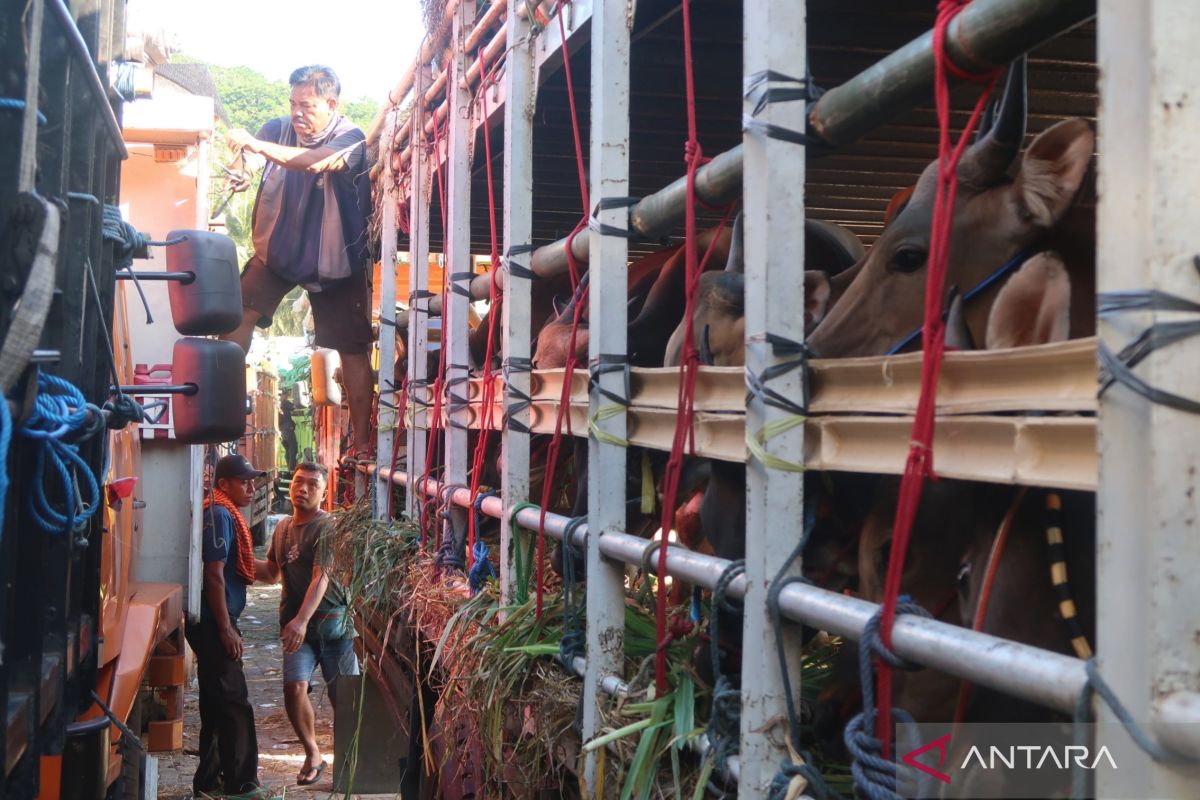
Mataram (ANTARA) - The Association of Cattle Breeders and Traders of Bima Dompu Indonesia (APPSBDI), based on Sumbawa Island in West Nusa Tenggara (NTB), has noted that a surge in logistics costs ahead of Eid al-Adha is squeezing the profit margins of sacrificial animal farmers.
APPSBDI Chairman Furqan Sangiang stated that increases in truck and lorry rental rates by tens of percent are eroding cattle farmers’ incomes.
“Rental for a fuso truck on normal days is at most Rp18 million per unit, but now it has risen to Rp24 million. Tronton lorry rentals, which were around Rp25 million, have now increased to Rp32 million,” he said in a statement in Mataram on Monday.
Furqan explained that the need for transport fleets for sacrificial cattle from Bima, Dompu, and Sumbawa regions is substantial every year, with around 20,000 head of cattle sent to Jabodetabek to meet Eid al-Adha demands.
If one tronton lorry can carry 25 to 30 head of cattle, then about 600 tronton lorries are needed each shipping season from Sumbawa Island to Jabodetabek (Jakarta, Bogor, Depok, Tangerang, and Bekasi).
During the peak distribution period, which occurs a month before the Eid al-Adha celebration, he added, logistics movements can reach 45 trucks per day, equivalent to more than 1,100 head of cattle shipped daily by farmers in West Nusa Tenggara.
“Vehicle owners sometimes come from East Java, sometimes Surabaya, sometimes Lombok, even Bali. They can make three to four round trips with the same vehicle due to the high demand for fuso and tronton trucks every year in NTB,” said Furqan.
He further suggested that local governments have a significant opportunity to reduce logistics costs by facilitating coordination with major transport companies.
A one-stop scheme could provide price certainty while ensuring vehicle availability for farmers from island regions like Sumbawa.
The Association of Cattle Breeders and Traders of Bima Dompu assesses that the 2026 sacrificial animal distribution is relatively better compared to previous years, with shorter queues and reduced risk of cattle mortality.
Based on data from the NTB Quarantine Agency, cattle distribution from West Nusa Tenggara from January to 27 April 2026 was dominated by shipments to Jabodetabek, reaching 25,974 head with 1,046 shipment frequencies.
Meanwhile, cattle distribution outside Jabodetabek was recorded at 3,257 head, and to the Lombok region only 3,020 head, indicating that the concentration of livestock distribution from NTB is mostly directed to Java Island.