
Surge in Israeli Tourists Raises Concerns Among Southeast Asian Destinations
BANGKOK — Southeast Asia’s tropical beaches, long a magnet for tourists from around the world, are facing a new challenge. In several destinations, particularly Thailand, a surge in Israeli arrivals and the growth of businesses linked to Israelis have sparked debate over economic sovereignty, compliance with the law and the impact of the Gaza war on relations between local communities and foreign visitors.
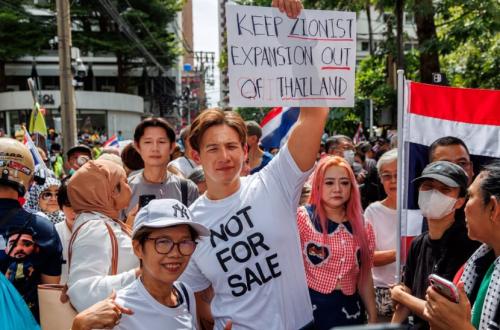
The unease is no longer confined to social media. The Thai government has begun tightening scrutiny of foreign nationals’ business activities, while hundreds of demonstrators gathered outside the Israeli Embassy in Bangkok in September 2026. They called on foreign tourists to respect local laws and culture, with particular attention on several incidents involving Israelis.
In Indonesia, a similar debate has emerged in Bali. Social media posts have drawn attention to Israelis holidaying on the island and alleged involvement in restaurant businesses. The Bali provincial government said it would coordinate with the central government to examine the matter.
Data from Thailand’s Ministry of Tourism and Sports show a sharp increase in Israeli arrivals in recent years. More than 400,000 Israelis visited Thailand in 2025, a rise of 46 per cent on the previous year. This came as overall foreign arrivals fell by around seven per cent.
The trend continued in 2026. The Associated Press reported that more than 277,000 Israelis visited Thailand between January and August 2026, up around seven per cent on the same period a year earlier.
Israeli tourists also make a significant economic contribution. According to an AP report in September 2026, they generated about US$1.2 billion of Thailand’s US$48 billion in tourism receipts in the previous year.
The figures highlight two sides of the issue. Visitors bring in foreign currency and support accommodation, restaurant and travel businesses. But a concentration of tourists in particular areas can also change the character of local communities, especially when accompanied by property investment and businesses serving the same visitor group.
Koh Phangan has become a focal point. The island in southern Thailand, known for its Full Moon parties, beaches and yoga retreats, is now a popular destination for Israeli tourists, including young people travelling after completing military service and witnessing, or even taking part in, the genocide in the Gaza Strip.
A Bloomberg report published by several Asian media outlets on 5 October 2026 said Israelis had become the largest tourist group on Koh Phangan. Their presence is visible in kosher restaurants with Hebrew-language menus, as well as in memorial symbols for victims of the Hamas attack on 7 October 2023 and Israel’s war in Gaza.
Some local residents have complained about the changes, saying Israeli businesspeople are building a kind of enclave for their own tourists.
“They come to build villas and serve their own community,” Koh Phangan restaurant owner Pattharachai Ruangsiri told Bloomberg. “I’m sure the money paid for the rooms doesn’t come here at all or circulate in Thailand’s economy.”
The opening of Chabad Houses — Orthodox Jewish community centres affiliated with the New York-based Chabad-Lubavitch movement — has become another source of tension. Local residents see them as an attempt by Israelis to establish a long-term community. An unlicensed childcare centre serving Israeli children was shut down in early 2026, and several people were arrested.
The government has launched an investigation into the expanding Chabad House network, which has seven locations across Thailand, as well as other sites, including a Jewish cemetery.
In Thailand, concerns over Israeli tourists intersect with a wider issue: allegations that local companies are being used as intermediaries to circumvent restrictions on foreign ownership.
According to Bloomberg, nearly 70 per cent of about 16,800 companies registered on Koh Phangan and Koh Samui have foreign shareholders. On Koh Phangan, Israelis are the main group involved in such shared ownership, while French nationals are prominent on Koh Samui.
The Thai government has also said it identified more than 240 businesses on the two islands suspected of using nominee arrangements. Under this practice, local residents are listed on paper as majority shareholders, while actual control or economic interests lie with foreign parties.
The government is investigating thousands of other businesses as well. An enforcement operation known as the “Phangan model” has been extended to seven provinces, resulting in more than 110 arrests and dozens of arrest warrants, according to a Bloomberg report in October 2026.
The crackdown is not targeting Israelis alone. Russian, German, Swiss and French nationals have also been named in investigations into alleged company-ownership arrangements.
In Thailand, economic concerns have converged with political tensions over the Gaza war. Israel’s offensive in Palestinian territory has provoked public anger in many countries, including among people who view the Palestinian issue through a humanitarian and anti-colonial lens. In this context, Israeli visitors have become more politically sensitive than before.
Several incidents involving foreign visitors have further intensified public attention. The AP reported that a prominent case involved an Israeli national who was convicted of threatening a zoo owner on Koh Samui after the venue displayed a Palestinian flag. The Thai government subsequently ordered his deportation.
The case was one of the factors behind demonstrations in Bangkok on 10 September 2026. Protesters called on foreign tourists to respect Thai law and not act as if visitor status or economic means entitled them to special treatment.
The Thai government also conveyed its concerns to Israel’s ambassador, Alona Fisher-Kamm. Foreign Minister Sihasak Phuangketkeow stressed that welcoming tourists did not mean they were free to disregard local traditions, culture and laws.
Source: jawawa.id (https://jawawa.id/newsitem/surge-in-israeli-tourists-raises-concerns-among-southeast-asian-destinations-1791942658)
Originally published by Republika (https://analisis.republika.co.id/berita/tmvdqt393/banjir-turis-israel-niradab-seablings-mulai-risau), translated from Indonesian