
Surge in Indonesia's Ultra-Wealthy Flows into Property Investment
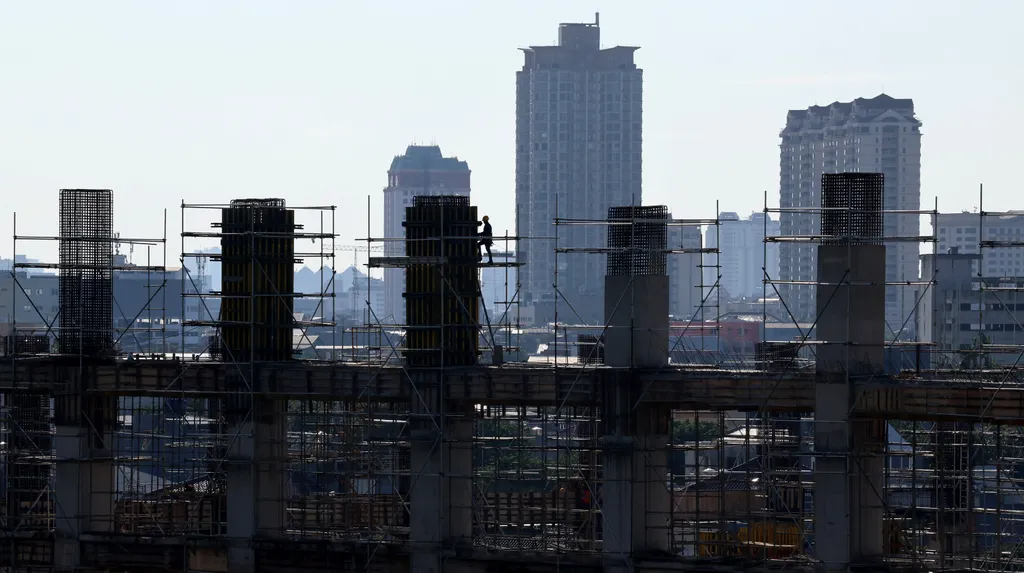
The population of super-wealthy individuals in Indonesia is predicted to continue soaring over the next five years. However, the surge in the number of crazy rich (UHNWI) is still considered not to have boosted property demand in Jakarta and other major cities in Indonesia.
Knight Frank Research released a projection that ultra-wealthy individuals in Indonesia with a net worth above 30 million US dollars, or around Rp 540 billion, will jump 81.7 percent by 2031, from 3,833 people in 2026 to 6,966 people. The growth rate of Indonesia’s crazy rich (ultra-high-net-worth individuals/UHNWI) is the highest in the Asia Pacific region, followed by Vietnam growing 59 percent and Australia 58.5 percent.
Head of Research Knight Frank Asia Pacific Christine Lie revealed that the high UHNWI growth in the three countries is driven, among other things, by government policies and the transfer of wealth or assets in several parts of the world. At the global level, the proportion of ultra-wealthy residents in Asia Pacific reached 30.7 percent, or 219,310 people, the highest after the North American region (37 percent).
“The pace of UHNWI development in Indonesia is the fastest in the entire Asia Pacific region. This is, among other things, because Indonesia’s population is very large, resources are abundant, and there are long-term capital investment opportunities,” explained Christine, at the Jakarta Property Highlights H1 (January-June) 2026, Thursday (6/8/2026).
Meanwhile, the largest UHNWI population in Asia Pacific up to 2026 comes from China, namely 121,677 people, India (19,877 people), and followed by Japan (18,914 people). In the next five years, the ultra-wealthy population of China is predicted to grow 18.8 percent, India 26.9 percent, and Japan 14.4 percent.
Although the ultra-wealthy population in Indonesia is growing rapidly, this is considered not yet in line with the development of property investment in Jakarta. Domestic demand for some properties in Jakarta is actually lower compared to several major world cities, such as Tokyo, Manila, Seoul, and Mumbai.
Christine assessed that changes in the lifestyle of the ultra-wealthy are also driving a shift in property choices. They no longer always choose properties based on city location. In an era of increasingly high mobility, many ultra-wealthy individuals move from one city to another around the world. This shifts the old paradigm of property investment that prioritises location.
“Lifestyle has changed. Many individuals with very high wealth travel the world so they no longer depend on the property location mindset. This is different from the past, when property investment considered location, location, location,” Christine continued.
Property investment trends, including housing, among super-wealthy individuals now tend to aim for ease and comfort. A trend of premium housing that is rich in facilities, quality services, applies privacy, and green principles is more preferred to support their lifestyle.
In the context of residential area development, the shift in property choice trends opens opportunities and encourages housing that does not have to be in the city centre. “Developers need to capture this phenomenon by implementing strategies that focus on developing complete premium facilities,” said Christine.
According to Christine, property developers need to take advantage of the momentum by attracting more foreign investment. Regionally, successful property markets, such as Malaysia, India, and Vietnam, have proven to attract a lot of FDI.
“Direct investment from abroad is the key to bringing capital, infrastructure development, and ultimately driving demand,” she said.
Senior Research Advisor Knight Frank Indonesia Syarifah Syaukat mentioned that property investment in Indonesia targeted by the ultra-wealthy is dominated by three sectors, namely office buildings, industrial and logistics estates, and housing. Currently, the upper-class housing market with prices above Rp 5 billion continues to move. Meanwhile, Indonesia faces a housing backlog of 13 million units.
“Investment in the housing subsector is still in demand because it continues to grow, with the dominance of landed houses and student accommodation in agglomeration areas and major cities,” said Syarifah.
The increase in prosperity is believed to bring capital. This momentum needs to be utilised so that the pace of wealth does not only move in individual wealth, but becomes productive capital and drives the manufacturing industry, whose impact rolls over to other economic driving sectors, including property.
The movement of investment and the economic engine will also drive demand for premium office buildings. Office buildings with higher quality standards and equipped with entertainment areas will be chosen by investors operating in Indonesia. This opportunity needs to be captured by presenting quality projects, including urban facilities.
“When the economic engine runs, the need for luxury homes increases. Those investors will definitely look for luxury homes,” said Syarifah.
From Knight Frank Indonesia data, the total supply of office buildings in Jakarta’s central business district (CBD) is 7.32 million square metres, or tends to be stagnant since 2024. The office occupancy rate is 80 percent, or up slightly by 0.7 percent in the first semester (January-June) 2026. Potential tenants in office space include companies in IT, technology, logistics, and government.
Meanwhile, the supply of condominiums or strata title apartments in Jakarta has now almost reached 250,000 units. The main driver of the condominium market in Jakarta is the middle segment (43 percent), followed by the upper-middle and upper-class (premium) segments. Until 2029, new projects are predicted to enter as many as 2,800 units, dominated by the upper class.
General Manager Knight Frank Indonesia Frank Tumewa assessed that the potential for housing investment to be targeted by the ultra-wealthy includes the Menteng and Sudirman areas (Jakarta) as well as Uluwatu and Canggu (Bali) with unit prices above Rp 150 billion. “The ultra-wealthy seek security and comfort so Bali remains an investment target,” he said.
On the other hand, the penetration of property investment in Indonesia by the ultra-wealthy requires regulatory certainty, especially regarding property ownership for foreigners. “Although regulations already exist, implementation still faces many obstacles,” he continued.
Source: jawawa.id (https://jawawa.id/newsitem/surge-in-indonesias-ultra-wealthy-flows-into-property-investment-1786103419)
Originally published by kompas.id (https://www.kompas.id/artikel/laju-ultra-kaya-indonesia-belum-sejalan-dengan-investasi-properti), translated from Indonesian