
Surge in digital Eid al-Adha sacrifices, Unair expert warns on the importance of Sharia standards
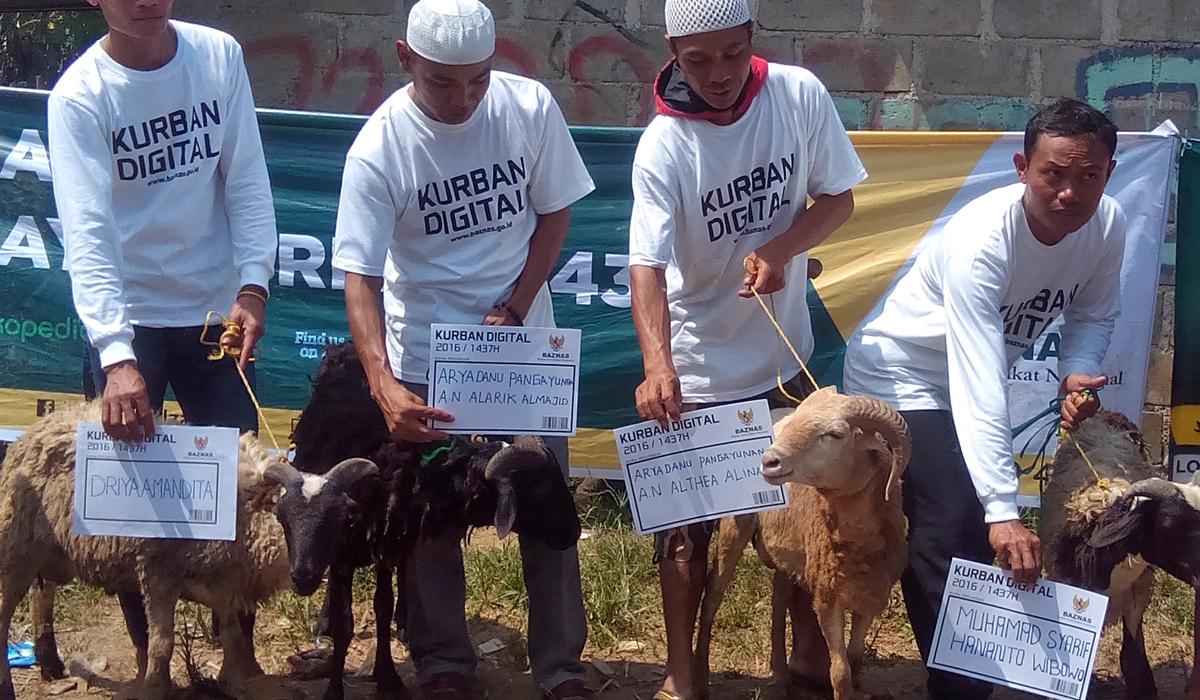
Ahead of Eid al-Adha, the trend of offering kurban (sacrifice) in urban communities is shifting toward digital sacrifice platforms that are more efficient. Prof. Tika Widiastuti, an Islam Economics lecturer at the Faculty of Economics and Business, Universitas Airlangga (Unair), highlighted the importance of regulation and the validity of Sharia on these platforms.
“The development of digital kurban platforms in Indonesia in recent years has accelerated quite rapidly. This is supported by the growing digital literacy of the public, ease of online payments, and the Islam-based philanthropic trend driven by applications,” said Tika Widiastuti in Surabaya, on Saturday (23/5).
According to her, rapid technological development has given rise to digital kurban platforms offering convenience and efficiency. However, this phenomenon has a significant impact on the governance of Sharia economics in Indonesia.
Currently, platforms ranging from e-commerce, Sharia fintech, to zakat offices are providing digital kurban services with more transparent systems. According to Prof. Tika, changes in consumer behaviour since the pandemic era show that Sharia economics can adapt to modern technology without losing its essence.
From a fiqh perspective, Prof. Tika explained that digital kurban is basically permissible provided it meets the rukun and syarat of the sacrifice. The most crucial aspect is the implementation of wakalah, i.e., delegation of authority from the donor (mudahi) to the institution or platform to purchase, slaughter, and distribute the sacrificial animals.
“However, there are differences of opinion among scholars regarding the aspect of musyahadah or witnessing the slaughter. Some scholars view direct witnessing as not mandatory, so digital documentation is considered sufficient. Meanwhile, others emphasise the importance of emotional and spiritual involvement in the sacrifice.”
Therefore, she suggests that digital kurban platforms approach these differences with an open and educational approach, not merely business-oriented. Platforms must explain the akad used, the transparency of the slaughtering process, and provide options such as live streaming or visual reports for donors who want to witness the process.
On the other hand, Prof. Tika did not state that the current digital kurban business model is not fully aligned with Sharia economic principles. The challenges related to price transparency, clarity of fund management, and the potential commercialisation of worship are still often found. Regulation to govern Sharia supervision standards and operational audits is deemed urgently needed.
“Such regulation is important to regulate the clarity of the akad, consumer protection, distribution standards, Sharia audits, transaction security, and reporting on fund usage. This is crucial to maintain public trust,” she affirmed.
Despite regulatory challenges, the phenomenon of digital kurban has proven to contribute positively to strengthening the Sharia economy. One of the most significant impacts is the equitable distribution of meat to remote regions that have historically been hard to reach.
“The digital kurban broadens access to worship services, boosts halal economic transactions, and strengthens the integration between technology and Sharia finance,” she added.
Looking ahead, the potential for integrating digital kurban with other Sharia instruments—such as digital zakat, online charity, and productive endowments (wakaf) within a single ecosystem—remains very large. However, Prof. Tika offers a critical note that this digitalisation should not marginalise small-scale farmers in remote areas. Digital platforms must build direct partnerships with local farmers, not rely solely on large suppliers.
“The platforms need to ensure fair purchase prices, provide livestock quality training, and empower local farmers. Otherwise, local farmers will lose their central role in the digital kurban economy,” she said. (H-3)
The younger generation is drawn to digital kurban ahead of Eid al-Adha 1447 AH. The West Java’s Ministry of Religious Affairs reminds of the Sharia aspects, the legality of institutions, and the use of environmentally friendly packaging.
Deputy Chairman of BAZNAS RI, Zainut Tauhid Sa’adi, appreciated the innovative kurban features in the Aladin application that allow people to perform the sacrifice more easily.