
Surakarta’s Dense Settlement Transformed
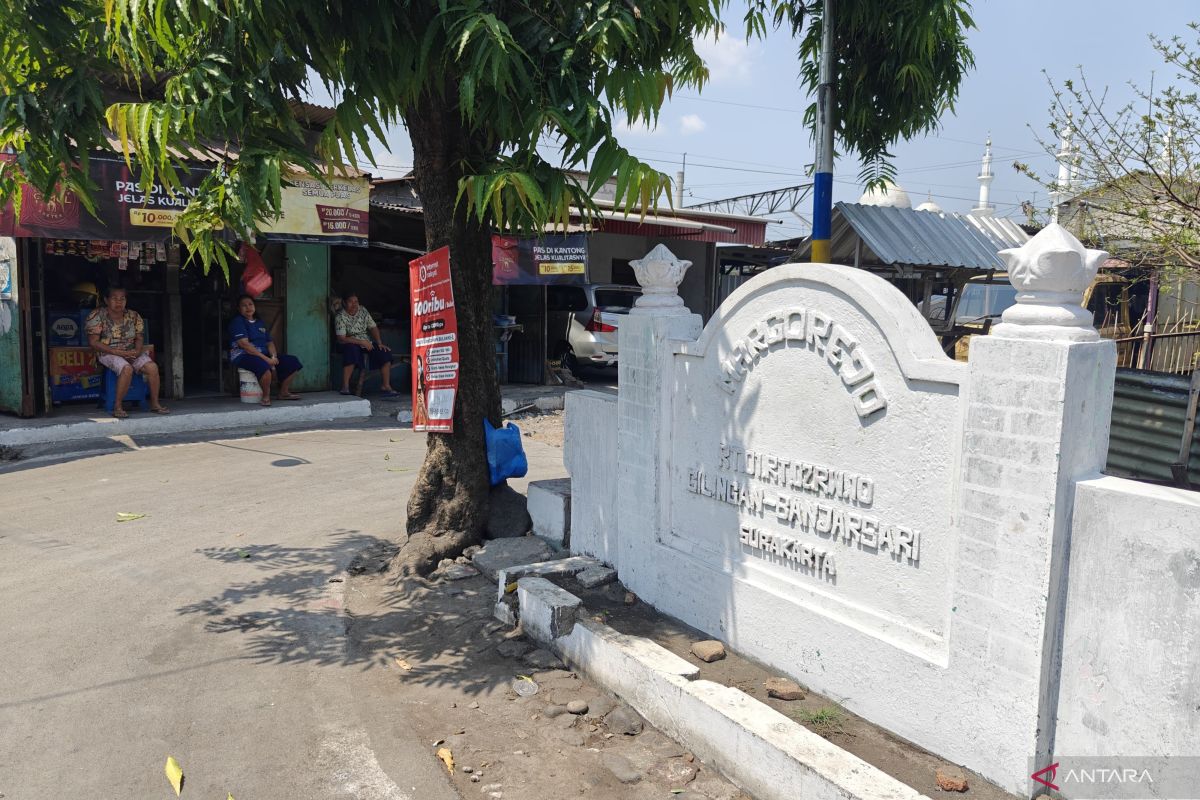
The narrow alleyways of Margorejo have truly been transformed. The foul smells and piles of rubbish that once made the area oppressive have been replaced by rows of thriving potted plants and taps delivering a steady supply of clean water to residents’ kitchens.
Surakarta, Central Java (ANTARA) — From the living room of a 6-by-12-metre house in Margorejo, Gilingan ward, Banjarsari district, Surakarta, 77-year-old Suwarno watches children playing as residents come and go.
In the relatively cramped home, the retired civil servant shares a roof with five children and several grandchildren. For years, the cost of obtaining clean water for drinking and cooking steadily ate into his family’s daily budget.
Like most residents of densely populated Margorejo, Suwarno’s family has its own bore well. Surakarta lies in a fertile basin bordered by Mount Merapi, Mount Merbabu and Mount Lawu, making shallow groundwater easy to access by drilling only a dozen or so metres.
But the abundance of groundwater brings problems. Well water is often cloudy and chalky, and its quality deteriorates sharply as supplies dwindle during prolonged dry spells.
Poor well-water quality forced Suwarno to spend as much as Rp80,000 a month on four branded five-gallon bottles of drinking water. He had little choice if he wanted to protect his family from the risk of digestive illnesses.
For a pensioner supporting a large family, spending tens of thousands of rupiah on drinking water is no small expense. Moreover, shallow wells in densely populated neighbourhoods pose a latent threat far more serious than mineral deposits.
Periodic laboratory tests by the relevant agencies have repeatedly detected Escherichia coli (E. coli) contamination in shallow wells in densely populated parts of Surakarta, including Gilingan, Semanggi, Mojo, Joyontakan, Sangkrah and Kadipiro.
Septic-tank soakaways may be only a few handspans from bore wells beneath residents’ floors, allowing faecal contamination to enter their water supplies. Water contamination and poor environmental sanitation also led the Surakarta City Government to designate RW 10 in Gilingan as a priority area for stunting interventions.
In these circumstances, low-income residents such as Suwarno have few options. Connecting to the municipal water utility, PDAM, can be costly and complicated by questions over land ownership, while government technical agencies have strictly prohibited deep-well drilling to conserve urban groundwater.
A turning point for Margorejo residents came with the introduction of a communal master-meter scheme using pumped water, through a partnership between PDAM Surakarta, Coca-Cola Foundation Indonesia (CCFI) and the Institute for Rural Technology Development (LPTP). A health-standard main water pipe now supplies the densely populated neighbourhood, with the supply divided among individual meters managed by the Margorejo Community Self-Help Group (KSM).
The master-meter system immediately cut water costs for low-income households by as much as 70 per cent. Suwarno has seen the benefits since his home was connected to the PDAM pumping system a year ago. His monthly spending has fallen from Rp80,000 to just Rp25,000, now covering both drinking and cooking water. The supply is also more hygienic, disinfected with chlorine, free from chalky deposits and no longer affected by dry-season shortages.