
Surakarta Palace Revitalisation Accelerated, Culture Ministry Conducts Data Collection and Strengthens Legal Aspects
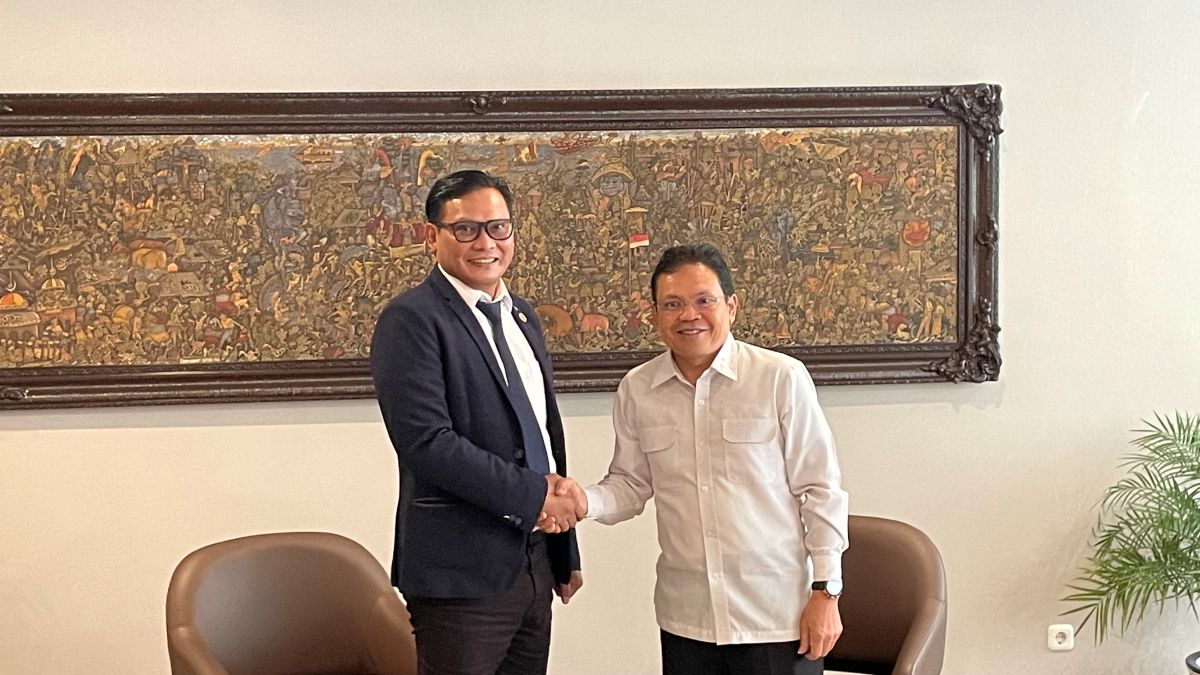
The Ministry of Culture (Kemenbud) is accelerating efforts to revitalise and protect national cultural heritage, including within the Surakarta Kasunanan Palace complex. As part of this initiative, the ministry is collaborating with legal practitioners experienced in handling cultural heritage issues to strengthen the legal framework of the revitalisation programme.
Legal counsel and cultural heritage observer Teguh Satya Bhakti stated that the Ministry of Culture bears a significant responsibility in safeguarding and reviving the nation’s cultural legacy. He noted that various revitalisation and restoration efforts often encounter complex legal problems. “Many cultural heritages were once forgotten and must now be revived through revitalisation and restoration. However, in its implementation, the Ministry of Culture faces quite complex legal issues,” Teguh said during a press conference at the Ministry of Culture office on Monday (22/6).
Drawing from his experience in providing legal assistance, Teguh assessed that the challenges faced by the government are not only related to legal aspects but also internal conflicts that frequently occur within palace and sultanate environments. He cited the situation at the Surakarta Kasunanan Palace as an example, where family disputes over assets often intersect with the state’s efforts to protect cultural heritage. “In its development, the problems faced by other palaces, including the Surakarta Palace, are almost the same. For instance, family conflicts related to assets, while those assets are part of the cultural heritage,” he said.
Therefore, Teguh proposed that the Ministry of Culture strengthen legal support, including providing legal aid to indigenous communities and parties involved in cultural preservation. “We propose that the Ministry of Culture provide free legal assistance to indigenous communities so that the ministry’s duties and authority in preserving culture can be carried out more effectively,” he stated. Teguh also emphasised that the government needs to separate cultural heritage preservation matters from internal family conflicts occurring within the palace environment. “The state must be able to step in to revitalise and protect cultural heritage without interfering in internal family matters. Internal family issues must be separated from governmental affairs so that cultural preservation efforts can proceed well,” he said.
Meanwhile, Director General of Cultural and Tradition Protection at the Ministry of Culture, Restu Gunawan, affirmed that the government’s current focus is on revitalising the Surakarta Kasunanan Palace area, including its museum and several historical buildings within the complex. “This year our focus is on revitalising the Surakarta Palace, the museum, and several buildings within that area. The presence of Mr Teguh and his colleagues gives us more strength to coordinate with various parties,” Restu said.
He explained that before the revitalisation is carried out, the Ministry of Culture is first conducting comprehensive data collection and inventory of various cultural objects within the palace environment. “We are conducting data collection and inventory, working together with parties at the Surakarta Palace. Manuscripts, objects of cultural advancement, and cultural heritage will all be systematically recorded,” he stated. This data collection has been ongoing since April 2026. The Ministry of Culture has coordinated with the Surakarta Palace to inventory various cultural collections, including heirlooms and historical attributes stored in the palace museum. “Since April, we have entered and written to the Solo Palace to conduct data collection of various cultural objects there, especially those related to heirlooms and museum collections. We have inventoried many collections, which will soon be designated as National Cultural Heritage,” he said.
In addition to the Surakarta Palace revitalisation, the Ministry of Culture is also accelerating the designation of National Cultural Heritage sites across various regions. The government is targeting the designation of 1,000 National Cultural Heritage sites throughout this year. “Last month we designated around 430 cultural heritage sites, and now the number has reached approximately 460 in process. Our target this year is 1,000 National Cultural Heritage sites, and I am optimistic that this target can be achieved, even exceeded,” he revealed. According to him, this acceleration is supported by the increased awareness of regional governments in proposing cultural objects for national cultural heritage designation. Furthermore, the Ministry of Culture will continue to accelerate the designation of intangible cultural heritage as part of efforts to preserve Indonesia’s cultural wealth. “Our cultural heritage potential is enormous. The national museum collection alone reaches more than 194,000 items, not including those in the regions. Therefore, we will continue to accelerate the designation of national cultural heritage and intangible cultural heritage,” he concluded.