
Surabaya's Digital Social Protection Trial Successfully Reduces Mistargeted Aid
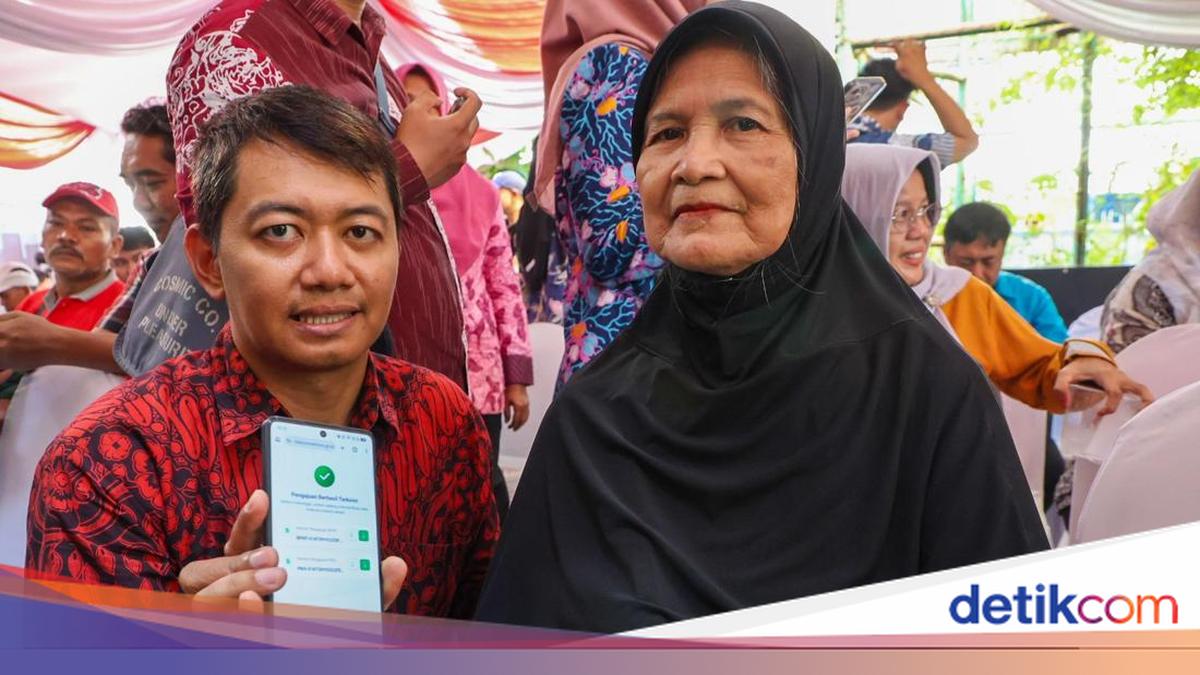
The city of Surabaya has recorded a near-perfect achievement in the trial registration of the 2026 Digital Social Protection (Perlinsos) system. As one of 42 national pilot regions, Surabaya successfully completed data collection up to 99.94 per cent, while simultaneously increasing the accuracy of social assistance (bansos) distribution by reducing targeting errors.
The trial, which took place from 20 June to 7 July 2026, is part of a national transformation of the digital-based social protection system. Through the integration of data across ministries and agencies, the verification process for aid recipients now utilises National Identification Numbers (NIK), Digital Population Identity (IKD), and facial recognition technology.
The Mayor of Surabaya, Eri Cahyadi, stated that the implementation of Digital Social Protection is a vital step towards building a faster, more accurate, and transparent social protection system. “Through the implementation of this system, the verification process, which previously took months, is expected to be significantly reduced to approximately 15 to 45 minutes. The verification results will immediately indicate an individual’s eligibility as a social assistance recipient,” said Mayor Eri.
To support the programme, the Surabaya City Government deployed 13,094 Social Protection agents, comprising civil servants, Family Hope Programme (PKH) facilitators, District Social Welfare Officers (TKSK), neighbourhood heads (RT/RW), and various community members.
This success was commended by the Head of the Indonesian Government Communication Agency (Bakom RI), Muhammad Qodari, during an inspection of the application trial at the Tambaksari District Office. According to Qodari, the digitalisation of social assistance is a strategic programme by President Prabowo Subianto to ensure that the social protection budget of Rp1,300 trillion—approximately 30 per cent of the State Budget—is distributed accurately.
“The principle must be fairness to those entitled to receive it, and those ineligible must not receive it. Previously, there were inclusion errors where the undeserving were included, and exclusion errors where the deserving were missed,” Qodari noted.
Based on data from the ‘Sayang Warga’ application, out of more than one million households (KK) in Surabaya, 334,560 households were registered via agents, while 62,673 households registered independently. Overall, the data collection achievement reached 99.94 per cent. From the results, 119,000 households were declared eligible for social assistance. Notably, 359,856 households voluntarily declined assistance after realising they were not eligible.
Qodari explained that the new system significantly improves data accuracy. Previous data recorded approximately 101,000 households as recipients, but the new audit found an inclusion error of about 25 per cent, meaning roughly 25,000 households were removed from the list. Conversely, the Digital Social Protection system identified approximately 51,000 households—about 43 per cent of the 119,000 eligible recipients—who were previously unrecorded despite being entitled to aid (exclusion error).
“Imagine, there were about 51,000 households, or the equivalent of 175,000 individuals, who should have received aid but did not. Today, they are receiving justice through the digitalisation of social protection,” Qodari asserted.
During his inspection, Qodari tested the registration process using facial recognition technology linked to electronic ID cards. The system automatically performs cross-verification of asset ownership through various agencies, including the state electricity company (PLN), the Police, and the Ministry of Agrarian Affairs and Spatial Planning/National Land Agency (ATR/BPN). “This system is very fair because the response comes from machines and cross-ministerial data. There is no longer any subjectivity. If there is an objection, it can be submitted directly through the system,” he explained.
The Head of Surabaya’s Communication and Information Office (Dinkominfo), Eddy Christijanto, stated that by the end of the trial, data collection reached 99.94 per cent, leaving only about 605 households unrecorded. Out of 1,004,298 households in Surabaya, 1,003,693 have been recorded via the Sayang Warga application. The City Government also facilitated registration for residents who do not yet possess a Digital Population Identity (IKD).
Eddy acknowledged that there was a system slowdown at the beginning of the trial. However, following infrastructure upgrades, the verification process is now much faster. “Currently, the verification process yields immediate results. We have about 605 households left to record. God willing, the 100 per cent target will be completed in the future,” said Eddy. He added that the remaining 605 households are a priority as discrepancies in domicile data risk causing budget misallocation for residents who no longer reside in Surabaya.