
Surabaya Wins Top Award for Uninhabitable Housing Programme, Targets 7,196 Home Renovations by 2027
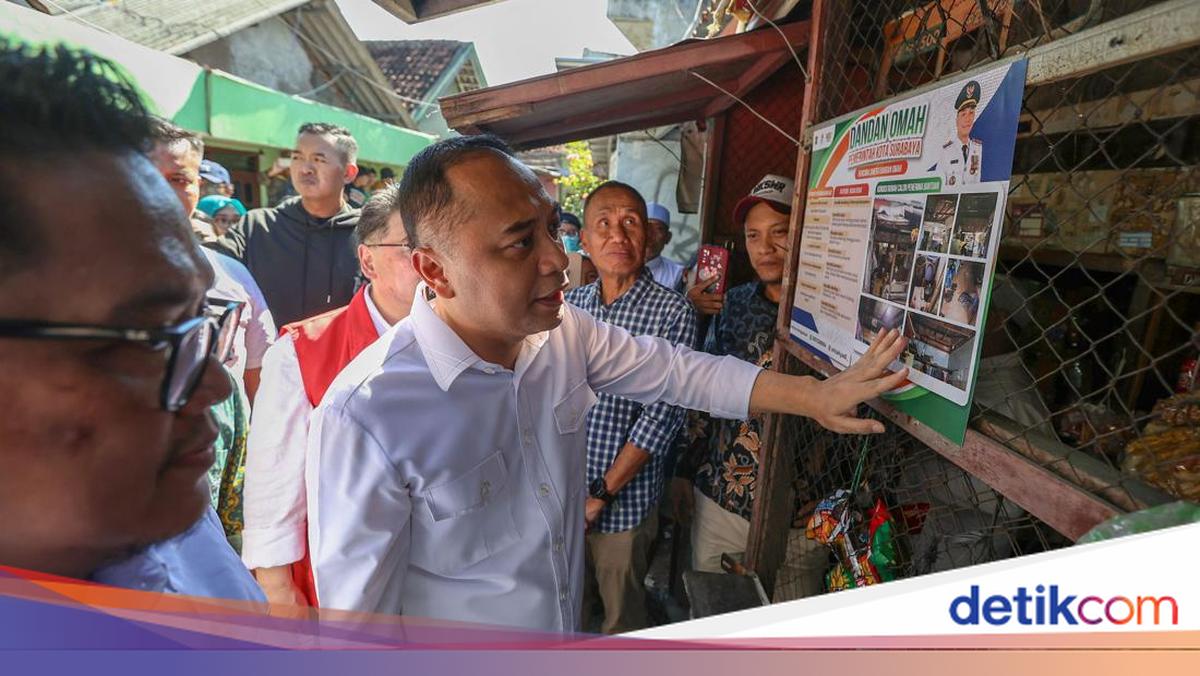
The Surabaya City Government (Pemkot) has won the Best I Award in the Local Government Category for the Highest APBD-Supported Uninhabitable Housing (RTLH) Programme. Surabaya Mayor Eri Cahyadi stated that the development of the City of Heroes cannot rely solely on the APBD. Therefore, his administration continues to strengthen collaboration with various parties to accelerate the implementation of the Uninhabitable Housing (Rutilahu) programme. The collaboration involves several institutions, including the Buddha Tzu Chi Foundation, Ciputra, Pakuwon, Baznas Surabaya, Bangga Surabaya Peduli, and Nurul Hayat. “A country will not be strong if only the government moves. But today it is proven that the strength of mutual cooperation can become a great unity,” Eri said in a statement on Tuesday (23/6/2026). The award was presented at the East Java Construction Expo 2026 held at the Grand City Convex Hall on Tuesday (9/6). Based on Pemkot Surabaya data, there are currently around 7,196 uninhabitable housing units still requiring intervention. To address this, Pemkot Surabaya targets resolving all these issues within the next two years. “In 2026, we will complete 3,242 units. The remaining approximately 3,896 units will be finished in 2027. The hope is that within two years, Rutilahu in Surabaya will be 100 per cent complete,” he said. To support this target, 2,240 housing units will be repaired through the Surabaya City APBD. Meanwhile, 1,002 other units will be handled through non-APBD funding or CSR support. Additionally, there is stimulant assistance from the Ministry of Housing and Settlement Areas (PKP) through the Self-Help Housing Stimulant Assistance (BSPS) programme totalling 200 units. Eri explained that Rutilahu repairs focus on the main components of the house, such as roofs, floors, walls, and toilets. The programme is prioritised for Surabaya ID card holders who fall into the low-income group and have legal land status not in dispute. “The target recipients are Surabaya ID card holders included in decile 1-5 data with legal land status or not in dispute,” he stated. Meanwhile, Head of the Surabaya Public Housing, Settlement Areas, and Land Agency (DPRKPP) Iman Kristian emphasised that handling Rutilahu is one of Pemkot Surabaya’s main focuses in improving the quality of public housing. “In Surabaya, the slum areas have decreased. So one of the focuses of Pemkot Surabaya is handling the Rutilahu,” Iman said. According to Iman, the RTLH award received by Surabaya is a form of appreciation for the city government’s commitment to providing more adequate housing for the community. The award also demonstrates the city government’s success in building cross-sector collaboration to support the Rutilahu programme. “Including involving various sectors for handling this Rutilahu,” he said. As part of this commitment, Pemkot Surabaya targets the repair of 3,242 housing units in 2026. This total consists of 2,240 units financed through the APBD and 1,002 units supported through non-APBD funding sources. “In 2026, we have a plan for around 3,242 units to be implemented in Surabaya City, with the APBD portion at 2,240 and non-APBD at 1,002,” he explained. Iman also underscored that the Rutilahu programme does not only rely on the APBD but also receives support from various parties through corporate social responsibility (CSR) programmes. The involvement of the private sector, social organisations, and humanitarian institutions is considered an important factor in accelerating Rutilahu handling in Surabaya. “So the Rutilahu programme is not only handled by Surabaya APBD funds, but also by CSR funds,” he said. Besides support from the APBD and CSR, the programme also receives assistance from the central government through the BSPS of the PKP Ministry. Currently, the allocated assistance has reached 200 housing units and still has the potential to increase according to central government policy. “As for BSPS, currently it is 200 units,” he added. Iman also explained that Rutilahu programme recipients must meet several established requirements. Besides being in the decile 1-5 group based on the National Single Socio-Economic Data (DTSEN), prospective recipients must also have clear land legality that can be proven administratively. “Have a certificate, then have a basis of right, that basis of right can be in the form of a lease to someone or IPT and the like,” he said. Therefore, Pemkot Surabaya cannot carry out repairs on buildings standing on illegal land. This policy is applied to ensure government assistance is given to residents who meet the provisions and does not cause legal issues in the future. “So the basis of right must be clear first, (buildings) cannot (stand) on illegal land,” he stressed. Regarding long-term targets, Iman said that Eri targets all Rutilahu repair proposals to be completed by 2027. Currently, the number of recorded proposals reaches around 7,100 housing units and will be handled gradually over the next two years. “By the end of 2026, we will handle around 3,200 (units), maybe in 2027 around 3,800 (units). So, the hope is that within these two years, the Rutilahu issue in Surabaya will be clear,” he stated. Going forward, DPRKPP Surabaya hopes that more companies and institutions will participate through CSR programmes so that the coverage of Rutilahu handling can be wider and faster. “Our hope is that more (stakeholders) get involved, more CSR gets involved,” Iman said. On the other hand, Iman reaffirmed that the main goal of the Rutilahu programme remains focused on providing healthy, safe, and adequate housing for the community. Through this programme, Pemkot Surabaya hopes that residents’ quality of life will improve as their living conditions get better. “Our target is to provide adequate housing for residents. Previously, there might have been no natural lighting, less healthy, and so on.”