
Surabaya Proves NIK-Based One Data System Boosts Regional Economic Growth
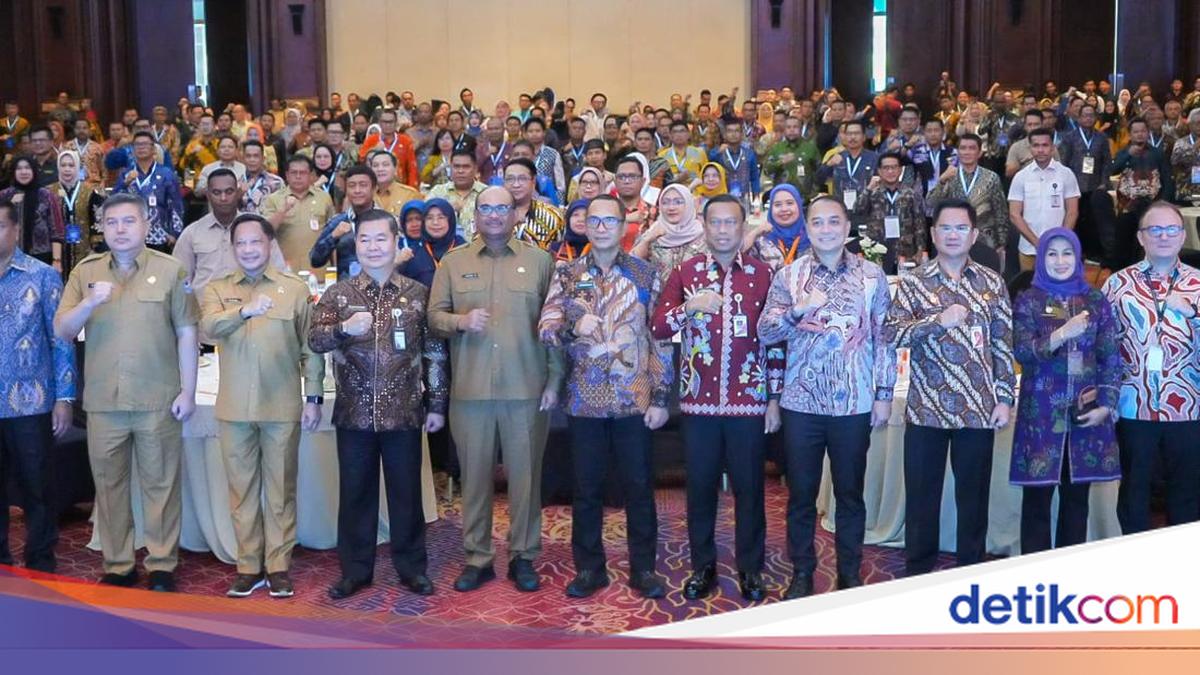
The Surabaya City Government’s efforts to build a Single Data system based on the Population Identification Number (NIK) are beginning to show increasingly broad impacts.
The integration of population data not only strengthens the accuracy of public services and the distribution of social assistance, but also contributes to economic growth, a reduction in poverty rates, and an improvement in the quality of life of the community.
These achievements led the Surabaya City Government to win two national awards at the 2026 National Coordination Meeting on Population and Civil Registration (Rakornas Dukcapil) held in Jakarta.
Surabaya received the Dukcapil Prima Award from the Ministry of Home Affairs (Kemendagri) for the category of large-population regencies/cities. In addition, the City of Heroes also won First Place Nationally for Face Recognition (FR) Achievement in Social Protection (Perlinsos) at the 2026 Perlinsos Dukcapil Prima Award, while also making it into the national top 10 for the activation of Digital Population Identity (IKD).
The Dukcapil Prima Award was presented directly by Home Affairs Minister Tito Karnavian to Surabaya Mayor Eri Cahyadi. Meanwhile, the First Place FR Perlinsos award was received by the Assistant for General Administration of the Surabaya Regional Secretariat, Anna Fajrihatin, from the Director General of Dukcapil at the Ministry of Home Affairs, Teguh Setyabudi.
Surabaya Mayor Eri Cahyadi emphasised that the digital transformation of population administration is the main entry point to ensure that all government policies and assistance are precisely targeted through the principle of ‘One Data, One Map, One Policy’.
“Population data is the first door for the government to know who its citizens are, what their conditions are, and what interventions should be provided. IKD must develop into a secure entry point for public services, ranging from social services, health, education, to licensing,” said Eri in a written statement on Friday (7/8/2026).
To accelerate this implementation, the Surabaya City Government continues to bring digital-based population administration services closer to the community hall (Balai RW) level so that residents can more easily record electronic KTPs and register for IKD.
“This effort is expected to make it easier for the public to obtain services without being constrained by distance and time,” said Eri.
The implementation of the NIK-based Single Data system has also had an impact on various development indicators in Surabaya City. Based on data from Statistics Indonesia (BPS) 2025, Surabaya has been able to maintain economic growth while improving community welfare.
The economic growth rate increased from 5.76% in 2024 to 5.87% in 2025. In the same period, the poverty rate fell from 3.96% to 3.56%, far lower than the East Java average of 9.50% and the national average of 8.47%.
In addition, BPS also recorded that economic growth was accompanied by a decrease in the Open Unemployment Rate (TPT) from 4.91% to 4.84%, as well as a reduction in income inequality as reflected in the Gini Ratio from 0.380 to 0.369.
On the other hand, the Labour Force Participation Rate (TPAK) increased from 70.49% to 70.59%. The Human Development Index (HDI) also rose from 84.69 to 85.65, above the East Java average (76.13) and the national average (75.90).
Head of the Surabaya Population and Civil Registration Agency (Disdukcapil), Irvan Wahyudrajad, said the two awards are proof of the Surabaya City Government’s seriousness in building a digital ecosystem based on NIK and IKD.
“NIK is not merely a personal identity, but the main basis for integrating public services, from licensing, revenue, levies, to land services at the National Land Agency (BPN) and Social Protection at the Ministry of Social Affairs. This IKD Award from the Ministry of Home Affairs spurs us to continue pursuing the activation percentage target of the total population required to have a KTP,” said Irvan.
Based on data as of 3 August 2026, IKD activation achievement in Surabaya has reached 37.24% of the total population required to have a KTP and is almost touching 38%. Meanwhile, when calculated from residents who already have smartphones, the IKD implementation rate has reached 76%.
Irvan acknowledged that there are still a number of challenges in accelerating IKD activation, ranging from limited devices, network constraints, to the lack of public understanding about the benefits of IKD.
“Not having a mobile phone, to concerns about data leakage. However, regarding data security issues, we ensure that the IKD activation process must be carried out through direct verification by the NIK owner concerned,” explained Irvan.
Going forward, Surabaya Disdukcapil will expand IKD integration with various public service provider institutions and develop self-service population administration features within the IKD application.
“In accordance with the direction of Mayor Eri Cahyadi, the next target is to continue pursuing the number of activations and attract more user institutions. Within the next month, we are targeting IKD activation to reach 100% for all residents who have supporting mobile devices,” Irvan asserted.
Surabaya’s success in securing the top position in the national biometric-based Social Protection trial was demonstrated through the highest registration figures. Throughout mid-June to July 2026, Surabaya recorded 1,215,768 applicants or heads of families (KK) who utilised FR technology and Social Protection registration through IKD to improve the accuracy of aid recipient data.
Head of the Surabaya Communication and Information Agency (Diskominfo), Eddy Christijanto, said the Social Protection system has been integrated with 14 ministries and agencies (K/L), enabling more objective distribution of assistance.
“Through this data interoperability, it will be automatically visible whether someone is eligible or not to receive assistance. This greatly helps sub-district and urban village officials determine recipients objectively without any element of kinship, corruption, collusion, or nepotism (KKN),” said Eddy.
Eddy explained that Social Protection data is currently used for the Family Hope Programme (PKH) and Non-Cash Food Assistance (BPNT). In the future, this data will become a reference for various government programmes.
“Starting from BPJS Employment, education assistance, electricity subsidies, to Uninhabitable Housing (Rutilahu), with priority given to communities in Deciles 1 to 4,” Eddy explained.
According to Eddy, the success of Social Protection registration reaching 100% in early August 2026 was supported by several key strategies. These included the involvement of all regional apparatus (PD) and civil servants (ASN), as well as the empowerment of RT/RW as registration agents.
“The third is utilising print, electronic, and social media, as well as engaging local Surabaya influencers, and the fourth is strict and regular supervision and control by Mayor Eri Cahyadi over the regional apparatus,” he concluded.
Source: jawawa.id (https://jawawa.id/newsitem/surabaya-proves-nik-based-one-data-system-boosts-regional-economic-growth-1786096456)
Originally published by detikcom (https://news.detik.com/berita/d-8608709/surabaya-buktikan-satu-data-nik-pacu-pertumbuhan-ekonomi-daerah), translated from Indonesian