
Surabaya Mayor Apologises as City Hit by Floods for Two Consecutive Days
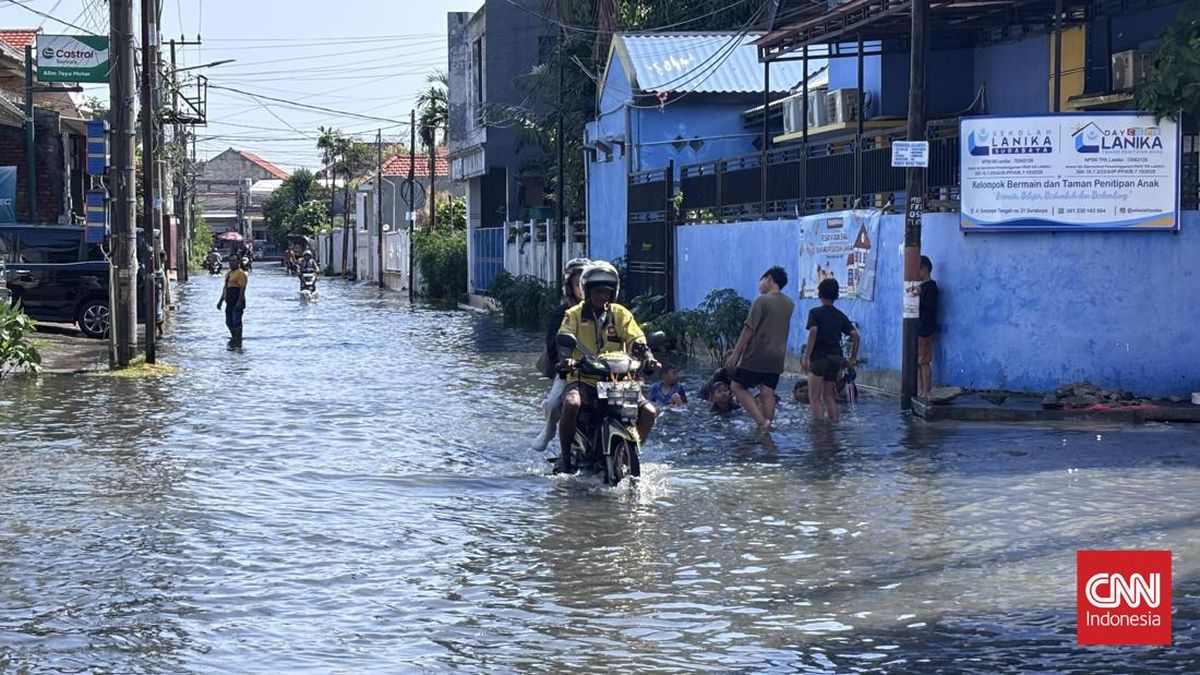
Surabaya Mayor Eri Cahyadi has apologised to residents after flooding and waterlogging hit several areas of the East Java provincial capital for two consecutive days, on Monday (22/6) and Tuesday (23/6). He assured that all flood mitigation measures are being optimised so that residents’ activities can continue as normal. “I apologise to the people of Surabaya for the inconvenience caused. We are currently working at maximum capacity in the field,” Eri said in a written statement.
He said his administration is dealing with flooding and waterlogging triggered by heavy rain that fell on the City of Heroes over the two days. According to him, the high-intensity rainfall, which fell evenly from the early hours, occurred outside the usual seasonal pattern, considering Surabaya should already be entering the dry season.
“To accelerate the response, the city government has deployed 21 fire engines and around 10 vehicles from the Environmental Agency and other relevant regional apparatus. All these units and our personnel have been patrolling since 2.30 a.m. Western Indonesian Time to pump water at flood-prone locations,” he stated.
The PDI-P politician explained that the flooding was also influenced by a number of ongoing construction and drainage normalisation projects across the city. These works include channel dredging, box culvert installation, and repairs to pump houses at several locations such as Jalan Ahmad Yani, Tanjungsari, Simo, MERR, Imam Bonjol (Dinoyo pump house), and Rungkut. During the construction process, some channels are temporarily closed to accelerate infrastructure development, preventing water flow from operating optimally when high-intensity rain occurs suddenly.
“In this situation, we are faced with two choices: halt the projects or continue them for the sake of long-term benefit. We chose to keep going while maximising on-the-ground handling,” he said.
Besides high rainfall, he noted that high sea tides also compounded the difficulties. Elevated sea levels obstruct river flows towards the sea, and in some conditions, water that has been pumped out is pushed back onto land. This situation prevents the drainage system from working at full capacity.
“As a precautionary measure, we are maximising the function of boezems, or temporary retention ponds, as water buffers before it is channelled away when conditions allow. Several plots of land are also being optimised as additional storage to reduce the burden on main channels,” Eri explained.
A number of flood sites began to recede on Tuesday morning, although some locations are still being handled, particularly areas affected by damage to river retaining walls. The Surabaya city government has ensured that all teams remain on standby until conditions fully return to normal. He stressed that the ongoing drainage projects are not abandoned works but are part of flood control infrastructure development that requires several months to complete.
“Amid these conditions, we are also continuously evaluating and making adjustments in the field so that waterlogging can be handled more optimally. The government is also targeting the completion of all drainage projects and pump house repairs before the peak of the rainy season in November-December 2026,” he asserted.
Eri confirmed that all handling measures continue to be optimised to keep residents’ activities running normally while strengthening the city’s drainage system for the long term. Previously, the Water Resources and Highways Agency had emphasised that it was carrying out optimal flood management following the heavy rain that began on Monday (22/6). By 9.00 a.m. Western Indonesian Time on 22 June 2026, a number of locations in the City of Heroes had begun to show a reduction in waterlogging, although the recession process was still gradual due to the influence of high tides.
The agency’s Drainage Division Head, Adi Gunita, explained that the conditions were affected by high sea tides since the early hours, which obstructed river flows to the sea and prevented pump houses from operating at full capacity. A backwater phenomenon, or reverse flow, also occurred in several areas such as Tanjungsari, Tambak Mayor, Greges, and Petekan, with water levels that had previously reached nearly 200 centimetres gradually dropping to a range of 170 to 180 centimetres. He added that officers were also checking drainage channels to ensure there were no blockages and were deploying water suction units together with the Fire and Rescue Service to affected locations such as Tanjungsari, Kyai Tambak Deres, Bratang, and Tambak Mayor.