
Surabaya DPRD Urges Kampung Pancasila to Become Waste Management and Economic Solution
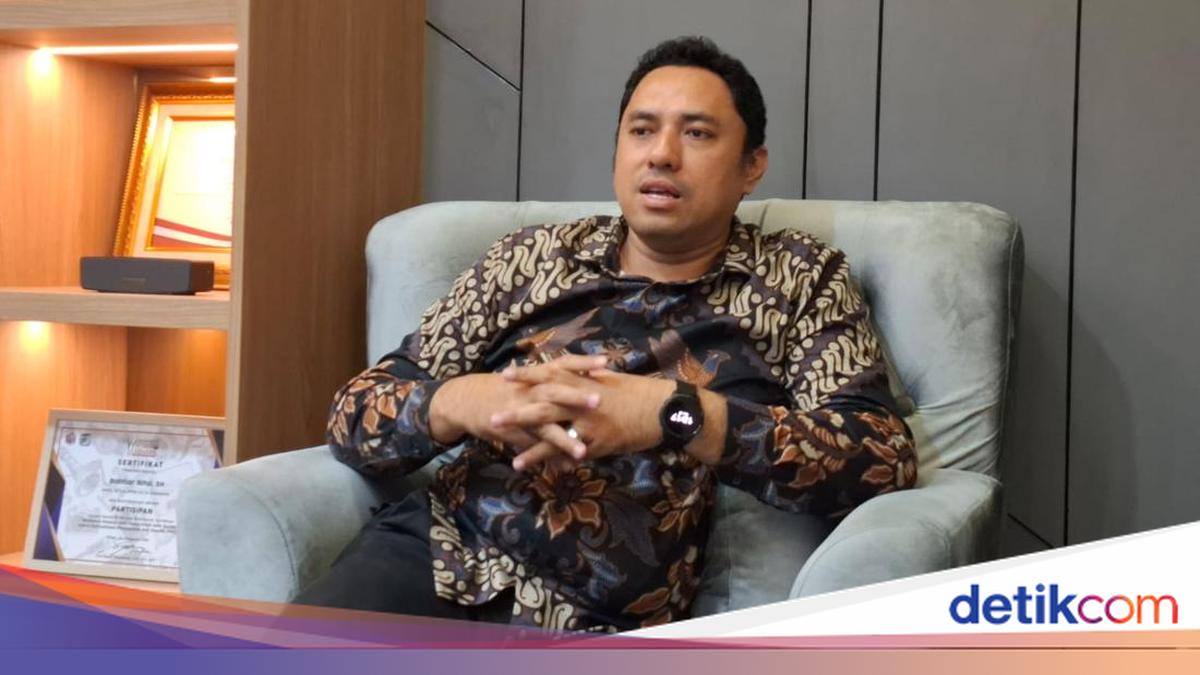
The Kampung Pancasila programme run by the Surabaya City Government is seen as having the potential to solve waste problems while boosting residents’ welfare. However, officials argue it must be strengthened with facilities, mentoring, and market access to ensure waste management does not stop at the sorting stage. Deputy Speaker of the Surabaya Regional House of Representatives (DPRD), Bahtiyar Rifai, stated that the programme, currently implemented across all districts, focuses on four main areas: environment, social, economy, and strengthening mutual cooperation (gotong royong). He noted that while residents have been encouraged to sort plastic, paper, and organic waste, a major weakness remains the lack of storage facilities for the separated materials. “On the environmental issue, mentoring has actually been carried out. Residents are asked to sort plastic, paper, and organic waste. But I still see a weakness, namely the absence of facilities to store the sorted waste,” Bahtiyar said in a written statement on Monday (22/6/2026). The Gerindra Party politician stressed that Surabaya’s waste issue requires serious attention, given the daily volume reaches 1,000 to 1,500 tonnes. He urged the city government, through the Environmental Agency (DLH) and sub-district funds, to provide supporting facilities. If the regional budget is limited, procurement of such infrastructure could involve the private sector through Corporate Social Responsibility (CSR) programmes. Bahtiyar emphasised that public education must not stop at encouraging waste sorting. Residents also need coaching and hands-on practice so that managed waste can generate economic added value. “Residents should not just be told to sort and manage waste without any economic impact. The city government must provide education, coaching, and even shredding or processing machines so this waste can become economically valuable products,” he said. Furthermore, he assessed that the government needs to prepare a market for processed waste products through cooperation with third parties. This step is crucial so residents do not struggle to market their products. “When it has economic value, I hope there is already a designated market. They shouldn’t have to search for one. The city government must cooperate with third parties so residents’ processed waste can be absorbed,” he added. Bahtiyar proposed starting with pilot projects at the neighbourhood level (RW). He noted that most RWs in Surabaya already have secretariat buildings that can serve as community-based education and waste processing centres. “We cannot start directly in 1,300 RWs. We can begin with a few pilot RWs first. If successful, it can be expanded gradually. Because almost 90 percent of RWs in Surabaya already have secretariats that can become education centres,” he explained. The role of civil servants (ASN) assisting Kampung Pancasila down to the RT level also needs strengthening. Mentoring should not stop at socialisation but must extend to the production stage where products have saleable value. “If residents are only asked to collect waste, they will be indifferent. But if there is processing and it becomes economically valuable, I am sure residents will compete to manage waste. Because there are many derivatives, not just plastic bottles, but also food scraps and even cigarette butts can be processed,” he said. Bahtiyar hopes 2026 will be the momentum to design a management model based on Kampung Pancasila. Consequently, starting in 2027, the programme can be implemented simultaneously to reduce the volume of waste entering the final disposal site (TPA). “Our spirit is that Kampung Pancasila should not only be an educational movement. It must also become a community-based economic movement whose results can be directly enjoyed by residents,” he concluded.