
Surabaya DPRD Speaker Urges Community-Authority Synergy to Maintain Security
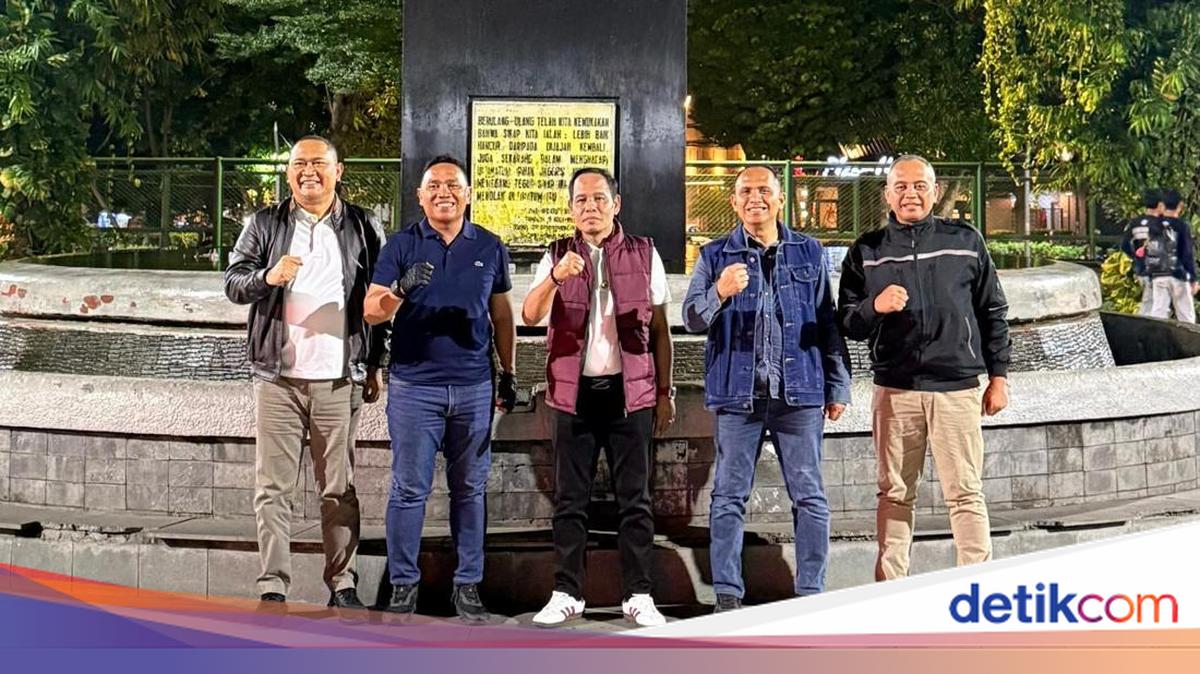
The Speaker of the Surabaya Regional House of Representatives (DPRD), Syaifudin Zuhri, has stated that security is the key to ensuring Surabaya continues to grow as a metropolitan city and economic centre in East Java. According to him, a conducive urban environment can only be achieved if all elements of society participate, rather than relying solely on security forces.
“Surabaya is a metropolitan city. Various races, ethnicities, religions, and groups live side by side. Therefore, we must be able to carry out mitigation, prevention, and build early detection of any potential security disturbances,” he said in a press statement on Wednesday.
The man familiarly known as Kaji Ipuk said that urban security is not solely the responsibility of the government, the Indonesian National Armed Forces (TNI), or the National Police. He assessed that collective public awareness is the key to keeping Surabaya safe and conducive.
“Surabaya cannot be guarded only by the government, the Mayor, neighbourhood and community unit heads, or security forces. This city can only be safe if all components have a shared awareness to protect it,” he stressed.
He assessed that security stability has a significant influence on Surabaya’s economy, which serves as a centre for trade, services, investment, education, and the creative industry. “If Surabaya is not conducive, the economy will certainly be disrupted. Whereas the state is obliged to guarantee a sense of security, tranquillity, and public welfare,” he said.
To strengthen inter-institutional synergy, Kaji Ipuk initiated routine gatherings with the Regional Leadership Coordination Forum (Forkopimda). The meetings are held in rotation at various agencies to foster closer communication among leaders. “We are making the Forkopimda gatherings routine. Previously it was at the DPRD, next it could be at the District Military Command, then at the City Police headquarters. We take turns so that togetherness is truly built,” he said.
He believes that good relations among leaders will accelerate coordination when facing issues on the ground. “It is not just about meeting during formal sessions, but building togetherness as a shared responsibility to guard the city,” he added.
Furthermore, Kaji Ipuk encouraged a culture of informal communication through coffee gatherings or casual chats involving government elements, security forces, and community leaders. He argued that relaxed forums make communication more open, allowing various issues to be detected early. “When having coffee or casual chats, thoughts and input flow more freely. There are no barriers. From there, we can understand the needs of each region and resolve problems early on,” he said.
He hopes this communication pattern will also be implemented at the sub-district level by involving sub-district heads, police sector chiefs, military command officers, village heads, and community empowerment institutions. “Sub-district heads, police sector chiefs, military command officers, village heads, and community empowerment institutions must know each other. Do not only meet when there is a problem. Familiarity must be built from the start so that coordination is more effective,” he explained.
He stressed that maintaining security is not just about law enforcement, but also about fostering a sense of belonging to the city of Surabaya. In this way, all elements of society can work together to keep the City of Heroes safe, comfortable, and productive.