
Surabaya Council Recess: Paving, Drainage, and Street Lighting Top Residents' Requests
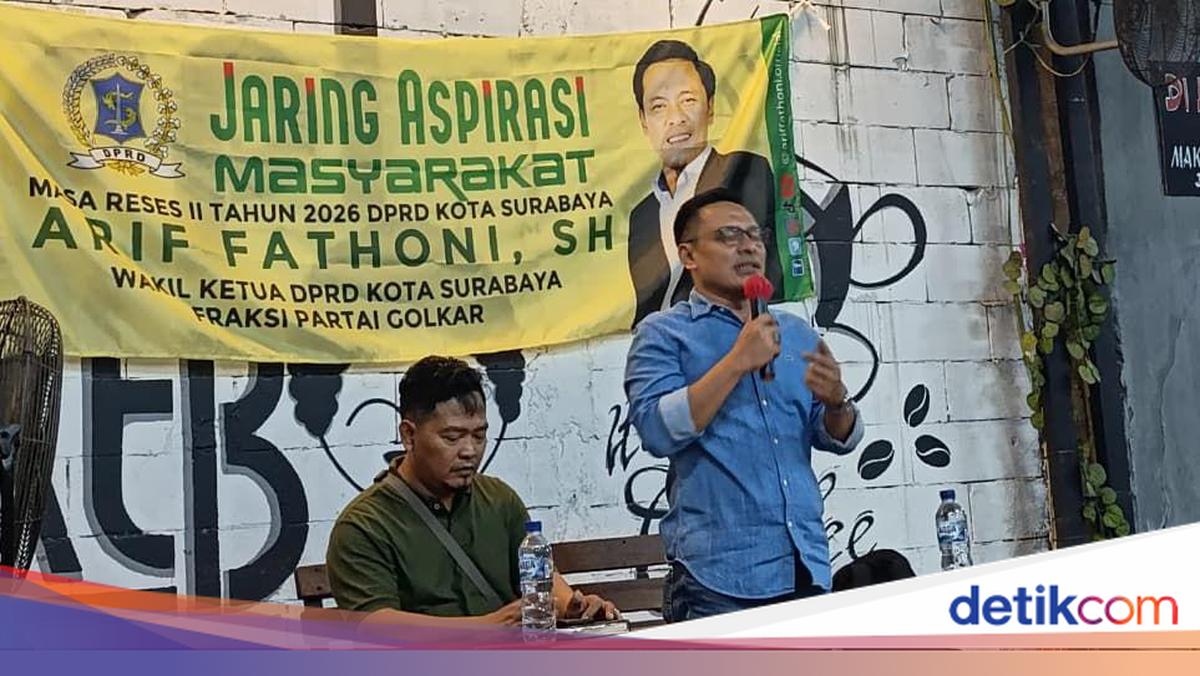
The Surabaya City DPRD has affirmed that the implementation of the recess is a mandate of legislation as well as a means of absorbing public aspirations for inclusion in regional development planning. Deputy Speaker of the Surabaya DPRD, Arif Fathoni, stated that every activity using the regional budget (APBD) must be carried out accountably and be accountable to the public, including recess activities conducted by council members. “Every single rupiah of activity sourced from the APBD must be executed according to the principle of accountability. Therefore, all members of the Surabaya DPRD carry out the recess as a form of implementing the mandate of legislation as well as a responsibility to the public,” Fathoni said in a written statement on Tuesday (9/6/2026). According to him, the recess is not merely a routine agenda, but a constitutional obligation of DPRD members to gather the aspirations of residents in their respective electoral districts. A total of 50 Surabaya DPRD members went directly to meet the public to absorb various issues faced by residents. These aspirations are then compiled and championed to be included in the regional development agenda. Fathoni revealed that the most frequently submitted proposals from the public still relate to environmental infrastructure development. These range from the repair of village road paving, drainage channels, public street lighting (PJU), to other basic needs. “The most dominant complaints in almost all electoral districts are environmental infrastructure development. Starting from paving, residential drainage, public street lighting, and various other basic needs of the community,” he said. Besides infrastructure, the education sector is also a concern for residents. Proposals for the construction of new state schools and the equal distribution of access to education often emerged in recess forums. Fathoni mentioned that a number of state primary school (SD Negeri) and state junior high school (SMP Negeri) constructions in Surabaya originated from public aspirations conveyed through the recess. “The push for the construction of state junior high schools and state primary schools in a number of areas far from state school zoning also comes from public aspirations conveyed through the recess. So what the DPRD fights for is essentially the voice of the residents,” he said. All aspirations resulting from the recess are then formulated into the DPRD’s Principal Thoughts (Pokir). However, Fathoni stressed that Pokir is not a project quota or budget allocation belonging to council members. “The DPRD’s principal thoughts are not the right of council members, nor are they a budget ceiling belonging to DPRD members. Pokir is the public’s aspirations that we fight for to be included in the local government’s development plan,” he asserted. These aspirations are subsequently entered into the Regional Government Information System (SIPD) to be verified and adjusted to development priorities and regional financial capacity. After that, the DPRD together with the local government discusses budget requirements and implementation schedules. Fathoni added that conveying the results of the recess to the public is a form of transparency in the use of the APBD as well as accountability to residents. “We conduct the recess using regional budget funds. Therefore, it is our obligation to convey to the public what is being fought for by DPRD members and how the process of these aspirations is championed in development planning,” he said. He affirmed that the results of the recess also serve as the main material for the budgeting, oversight, and legislative functions, including the formation of regional regulations. Not a few DPRD initiative bylaws were born from issues discovered directly when council members met with the public. “The recess is a bridge between the community and policy. From there we learn about the needs of residents, understand the situations they face, and then fight for them to become part of Surabaya City’s development,” Fathoni concluded.