
Surabaya City Government Organises 2026 Pancasila Village Competition Involving 1,360 Neighbourhood Units
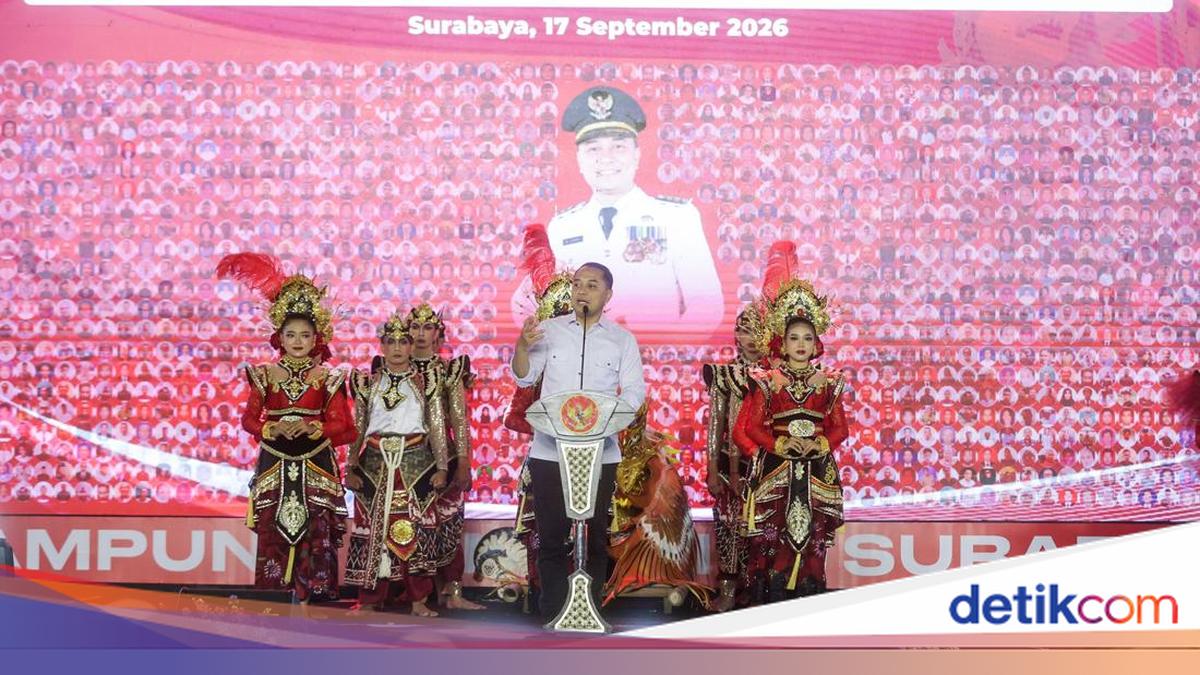
The Surabaya City Government is currently organising the 2026 Pancasila Village Competition. This city-wide competition involves 1,360 neighbourhood units (RW) spread across 153 sub-districts throughout Surabaya. This strategic move serves as an effort to strengthen the spirit of mutual cooperation (gotong royong), independence, and community welfare.
Surabaya Mayor Eri Cahyadi is using this competition as a moment to revive the noble values of Pancasila in daily life. According to him, the culture of mutual cooperation and the attitude of helping one another are the strengths of the citizens that must be maintained.
“The goal of the Pancasila Village Competition is to prioritise mutual cooperation, consistent with the philosophy of Pancasila. I hope that by returning to the Pancasila Village concept, mutual cooperation, helping one another, and maintenance will be upheld in Surabaya,” Eri stated in a written release on Monday (21/9/2026).
Eri recognises that various social issues within society cannot be resolved unilaterally by the Surabaya City Government. Synergy from all elements, starting from the RT (neighbourhood) and RW (neighbourhood unit) levels to the LPMK (community empowerment institution), is the primary foundation for building the city.
“Surabaya progresses not because of its mayor, but because of its citizens, supported by the mutual cooperation that is the hallmark of Pancaselli. The ones who can drive this are the RT, RW, LPMK, and all citizens of Surabaya,” he said.
The judging process for the Pancasila Village Competition relies on four main assessment pillars: environment, community, economy, and socio-culture. These four crucial pillars are expected to be implemented sustainably in the daily lives of residents.
“God willing, when this is running, the environment will be preserved, the economy will move, and the social spirit of helping one another will be active. Because the mayor cannot resolve any problems alone,” he added.
The Surabaya City Government is deploying its Regional Apparatus (PD) directly as active mentors in every village. The presence of government officials is considered essential to provide a real example, rather than merely drafting policies.
“The city government must be a part of this, not just commanding, but providing an example. That is why every regional apparatus serves as a mentor,” said Eri.
“Therefore, the mentors will look after their villages. Whether they can maintain the environment, ensure the economy moves, ensure socio-culture functions, and ensure mutual cooperation continues,” he continued.
The City Government is set to prepare a strict evaluation of the performance of every mentoring regional apparatus in the field. Eri emphasised that agencies that fail to foster their assigned areas will receive a severe reprimand in the form of a ‘black flag’ warning.
“Because the government’s duty is not only related to budgets and other matters, but also to restoring how mutual cooperation and the spirit of Pancasila are practised—not just read during ceremonies, but implemented in daily life,” he asserted.
Eri hopes this competition can produce positive and tangible changes in every corner of the villages.
“I hope the output and outcome of this Pancasila Village competition is a change towards villages that are safe, villages without motorcycle theft, villages that are child and women-friendly, and prosperous villages. I am confident this can be realised through Pancasila Villages. Truly, Surabaya possesses the ‘Arek’ culture, which is inherently about helping and cooperating,” he expressed.
Meanwhile, the Head of the Pancasila Village Task Force and Head of the Surabaya Disaster Management Agency (BPBD), Irvan Widyanto, detailed the technical aspects of the four assessment pillars.
“The Pancasila Village Competition is based on four pillars: environment, community, economy, and socio-culture,” said Irvan.
The environmental pillar focuses on waste reduction programmes through independent sorting practices. The community pillar includes neighbourhood security guarantees, such as the presence of CCTV and night patrol schedules. The economic pillar highlights the community’s concern for helping the underprivileged and the vitality of MSMEs (Micro, Small, and Medium Enterprises).
“This means, at the RT and RW level, how those who are capable can help those who are less fortunate. That is the philosophy,” Irton emphasised.
The socio-cultural pillar focuses on quality of life, such as access to healthcare, education, and attention to school dropouts. Irvan explained that the city-level competition stages will run from September to December 2026.
“The stages include the launch, online registration, and administrative selection,” explained Irvan.
The administrative selection stage will refer to the data records within the ‘Sayang Warga’ application.
“Following the assessment process, field verification will be conducted. This field verification will be carried out directly by a judging team consisting of city government officials, academics, media, and practitioners,” said Irvan.
“All pillars influence each other, but the largest assessment weight will come from the environmental and economic pillars,” he added.
On the other hand, the Head of the Surabaya Communication and Informatics Office, Eddy Christijanto, believes this competition programme is rooted in the original culture of its citizens.
“In reality, the lives of the people in Surabaya already have Pancasila values embedded in them. This is about how we want to revive them in a system so that the community can see how Pancasila values are applied in Surabaya. The important thing is that we want the impact of all programmes to reach the community—progressing together, prospering together, and staying healthy together,” said Eddy.
The Surabaya City Government has prepared a special prize budget for the 35 best RW units based on the classification of their constituent RT units.
“From the top 200, the top 35 will be selected. These 35 will be classified into RWs with 7 or more RTs, and those with fewer than 7 RTs,” explained Eddy.
“From the 200 RWs, 35 will remain. Once they reach the top 200, each of the remaining 165 RWs will receive an assistance grant of Rp 10 million,” he added.
The 2026 Pancasila Village Competition agenda is scheduled to conclude with a grand closing ceremony.
Source: jawawa.id (https://jawawa.id/newsitem/surabaya-city-government-organises-2026-pancasila-village-competition-involving-1-360-neighbourhood-units-1789973907)
Originally published by detikcom (https://news.detik.com/berita/d-8672153/pemkot-surabaya-gelar-lomba-kampung-pancasila-2026-libatkan-1-360-rw), translated from Indonesian