
Surabaya City Government Engages Thousands of Agents to Accelerate Social Assistance Data Validation
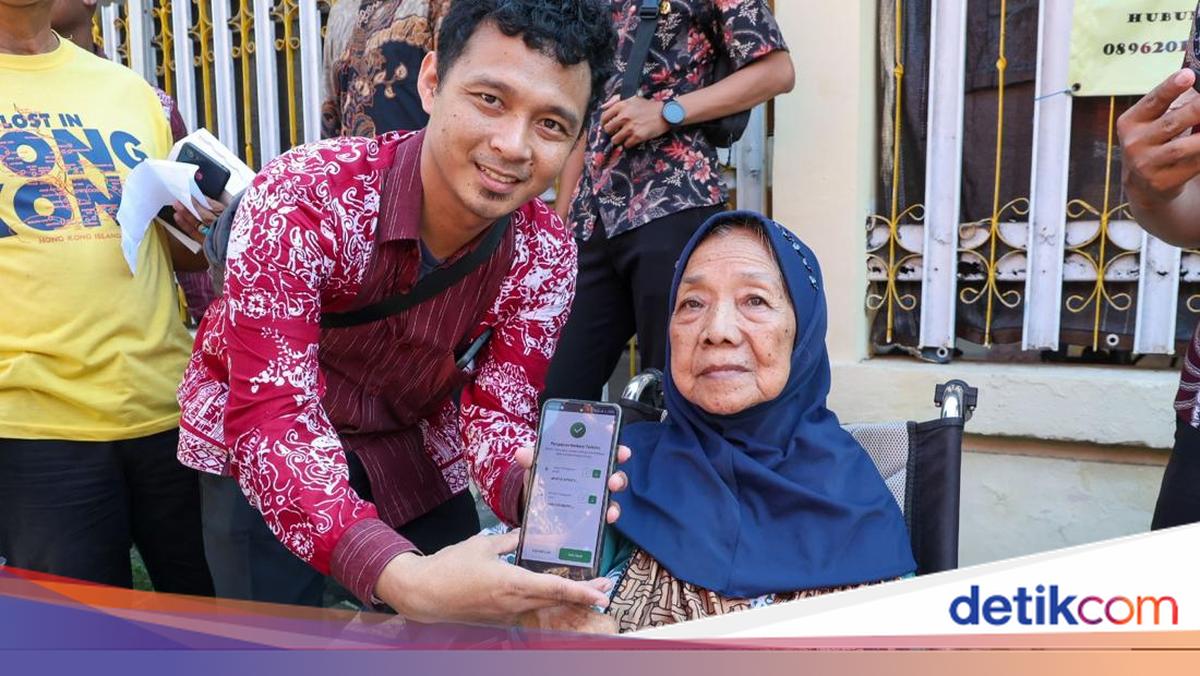
The Surabaya City Government (Pemkot) has begun intensifying the registration for Digital Social Protection (Perlinsos) as part of a national pilot programme. This programme aims to accelerate the validation of social assistance (bansos) recipient data so that aid distribution can be more targeted through an integrated data system.
The designation of Surabaya as one of 42 pilot areas for the 2026 Digital Perlinsos marks an important step in the transformation of Indonesia’s social protection system. This system integrates various databases from ministries and agencies by utilising the Population Identification Number (NIK), Digital Population Identity (IKD), and facial recognition technology to speed up the verification process of the community’s socio-economic conditions.
Through this system, the verification process, which previously took quite a long time, can now be reduced to around 15 to 45 minutes. The verification results then directly indicate a person’s eligibility level as a recipient of social assistance.
Surabaya Mayor Eri Cahyono stated that the implementation of Digital Perlinsos in the City of Heroes is scheduled to take place from 20 June to 7 July 2026. He mentioned that the system experienced technical issues during the trial phase but is continuously being refined by the central government through the National Economic Council (DEN).
“Alhamdulillah, Perlinsos is running up to today and we have two weeks. Because during a meeting with the National Economic Council (DEN) led by Mr Luhut B. Pandjaitan, I conveyed two weeks with a note that there are no troubles with the application,” Eri said in his statement on Thursday (25/6/2026).
To support the implementation, the Surabaya City Government has prepared 13,094 Perlinsos agents consisting of civil servants (ASN), Family Hope Programme (PKH) facilitators, District Social Welfare Workers (TKSK), and other supporting elements.
“13,094 agents, alhamdulillah, were confirmed yesterday, and we have started working. Although there were some obstacles, the National Economic Council was extraordinary, because when we conveyed them, they were immediately fixed,” he added.
He added that the entire registration and verification process is expected to be completed according to the target time so that all citizens have an equal opportunity to be verified in the Digital Perlinsos system.
“Hopefully by 7 July 2026 everything will be clear, not only for the poor, but for all residents of Surabaya,” he continued.
Head of the Surabaya City Social Service (Dinsos) Antiek Sugiharti explained that Digital Perlinsos is an integrated social protection system that connects various databases from ministries and agencies so that the assessment process for aid recipients no longer depends on a single data source.
She stated that Surabaya was chosen as a pilot area because of its digital ecosystem readiness, including the electronic KTP ownership rate which has reached nearly 99.75 percent.
In the initial stage, trials were conducted in Ketabang and Genteng sub-districts, then expanded to Pakis Sub-district, Sawahan District. Currently, registration can be carried out throughout Surabaya independently or through Perlinsos agents.
Residents who already have a Digital Population Identity (IKD) can register independently, while residents who do not have a device can still be assisted by agents prepared by the government.
In its implementation, Digital Perlinsos integrates data from various agencies such as the Ministry of Social Affairs, the National Police Traffic Corps (Korlantas Polri), the Ministry of Agrarian Affairs and Spatial Planning/National Land Agency (ATR/BPN), the Ministry of Manpower, BPJS Kesehatan, the National Civil Service Agency (BKN), and the State Electricity Company (PLN) to strengthen the validation of the community’s socio-economic data.
Nevertheless, residents are still given the opportunity to file an objection if the verification results do not match their actual conditions by attaching legally accountable evidence.
Head of the Surabaya City Communication and Informatics Service (Dinkominfo) Eddy Christijanto said that all Perlinsos agents have been activated and are ready to assist the registration process in the field.
He stated that there were data interoperability issues during the initial trial phase, but the system is now running more stably.
In addition, the Surabaya City Government is also strengthening the internet network in community halls (Balai RW) and public service points to support the smooth registration process.
“WiFi signal strengthening is also being carried out at Balai RW so that the registration process is not disrupted,” he said.
Head of the Surabaya Population and Civil Registration Service (Dispendukcapil) Irvan Wahyudrajat emphasised that population data is the main foundation in the implementation of Digital Perlinsos because verification is carried out based on NIK and facial recognition technology.
He stated that the electronic KTP recording achievement in Surabaya has reached 99.7 percent, while IKD activation continues to be intensified through various public services down to the RW level.
The main target of the Surabaya City Government is to ensure that people in deciles 1 to 5 can immediately carry out data validation so that aid distribution is more targeted.
“We hope they can enter the Perlinsos portal independently,” he concluded.