
Surabaya City Government Encourages Residents to Switch to Digital Parking for Easy Payment
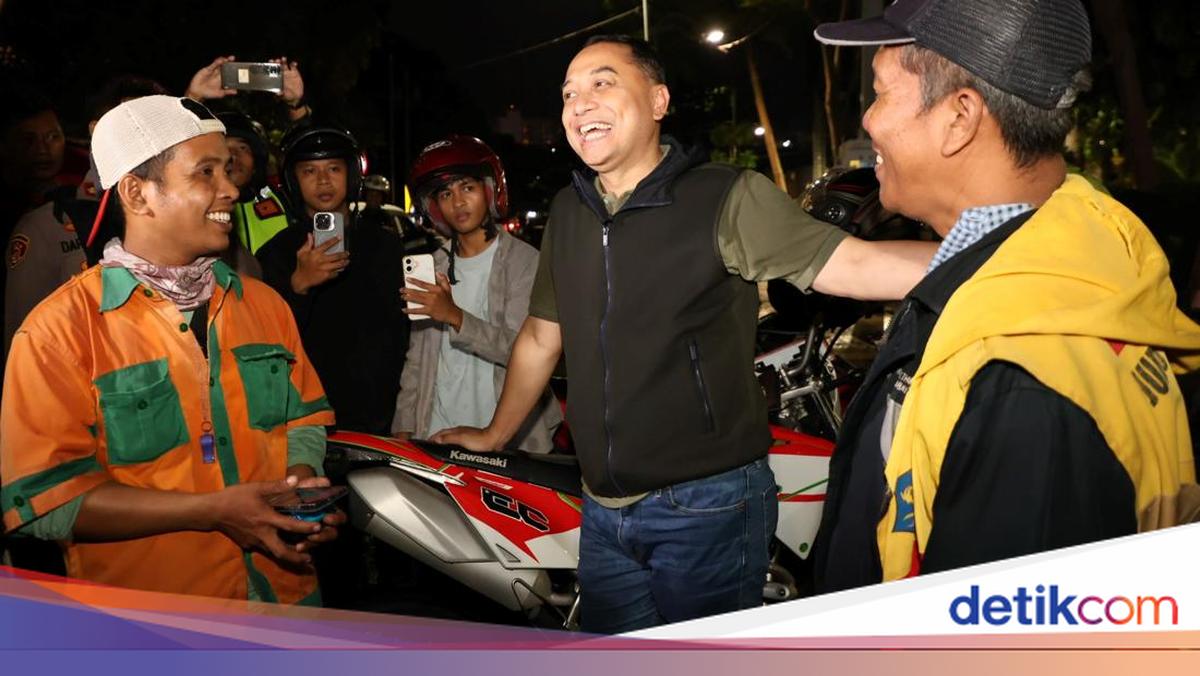
The Surabaya City Government is continuing to expand the implementation of digital parking, both on public roadsides and in off-street parking areas. This effort aims to meet the public’s need for a parking system that is more transparent, accountable, and easy to use through various cashless payment methods.
Mayor Eri Cahyadi stated that parking digitalisation has become a programme that receives significant attention from the public. Therefore, the city government, together with the Regional Leadership Coordination Forum (Forkopimda), continues to promote the implementation of a cashless parking system as part of improving technology-based public services.
“Together with the Surabaya City Forkopimda, we continue to strive to answer the needs and desires of residents. One of these is through the implementation of cashless digital parking, which is what the people of Surabaya have been hoping for,” Eri said in a written statement on Friday (19/6/2026).
According to Eri, the policy arose from residents’ aspirations for parking management that is more open and accountable. Consequently, the city government is working to accelerate the implementation of digital parking across various areas of Surabaya.
“The wishes of Surabaya residents are our primary concern. One of them is the implementation of cashless digital parking, which the community indeed expects, so we are carrying it out,” Eri explained.
Besides providing convenience for service users, parking digitalisation is also one of the city government’s efforts to increase transparency in levy management while optimising locally generated revenue (PAD). With the cashless system, Eri noted that all transactions are recorded digitally, thereby minimising negative assumptions regarding parking payments and the revenue sharing between the government and parking attendants.
“With the digitalisation system, assumptions about parking payments will be eliminated. With cashless payments, the public can pay according to the stipulated amount, and it is more transparent,” Eri said.
Data from the Surabaya City Transportation Agency (Dishub) as of 9 June 2026 recorded that the number of parking attendants who have adopted the digital system reached 926 people. This figure increased compared to the previous count of 819 parking attendants.
The expansion of digital parking services has also reached several new road sections, including the areas around Kota Station, East Perak, West Perak, and Tambak Bening. Previously, a similar system had been implemented at various points in Central, West, East, and North Surabaya, such as Bratang Binangun, Bratang Gede, Ngagel Tengah, Nginden, Nginden Semolo, Prapen, West Tenggilis, Klampis, Jagir Wonokromo, Manyar Kertoarjo, Manyar Tegal, Rungkut, Bukit Darmo Boulevard, Kupang Gunung, Darmokali, and Karang Menjangan.
To make it easier for the public, digital parking payments can now be made through various methods. Residents can use QRIS or electronic money cards (e-toll) processed via smartphones, Electronic Data Capture (EDC) machines held by parking attendants, or QRIS codes affixed to official attendant vests.
In the field, every official parking attendant is now equipped with a special vest featuring a QRIS code on both the right and left chest areas. This innovation provides a more practical payment alternative for the public while overcoming issues if an attendant’s mobile device malfunctions.
Acting Head of the Surabaya Transportation Agency, Trio Wahyu Bowo, stated that the implementation of digital parking is beginning to show a positive impact on regional revenue. Based on the agency’s evaluation, income from the parking levy sector has increased by approximately 10% since the digital system was introduced.
“The increase in parking revenue after digitalisation is around 10 percent. This increase occurs because the digital system makes record-keeping more transparent,” Trio said.
According to Trio, this increase is quite significant compared to the same period in the previous year. Although the programme began in January 2026, effective implementation only started between March and April after the distribution of smartphones to parking attendants was completed.
“We will continue to evaluate the increase in this levy revenue,” Trio said.
Trio also explained that parking revenue realisation in 2025 reached IDR 25 billion. With the expansion of digital parking implementation and public support for using cashless payment methods, his party is optimistic that parking sector revenue can increase by 40-50% in the coming years.
“Our hope, of course, is that by optimising digital parking, locally generated revenue can continue to grow by up to 50% from the previous year,” Trio hoped.
To strengthen oversight, the Surabaya Transportation Agency has also introduced several new innovations. In addition to installing information boards containing the identity and official photo of parking attendants at every service point, more than 900 official attendants now use special vests equipped with payment QRIS codes.
“We have also equipped more than 900 official parking attendants with special vests that have QRIS codes on the chest pocket area. The right side of the vest is used for two-wheeled vehicle payments, and the left side for four-wheeled vehicles,” Trio explained.
Through this system, members of the public paying via digital banking services simply need to scan the QRIS code on the attendant’s vest and then show proof of transaction once the payment is successful.
“So there is no longer any excuse that the attendant’s mobile phone is dead or out of credit,” Trio clarified.
Besides QRIS and electronic money cards, the Surabaya Transportation Agency also provides a payment option through parking vouchers. Currently, the city government is exploring cooperation with modern retail store networks and micro, small, and medium enterprises (MSMEs) to expand public access to purchasing parking vouchers.
On the other hand, the Surabaya City Government is also inviting residents to play an active role in making the parking digitalisation programme a success. The public is urged to get accustomed to cashless payments and to be more diligent in checking the identity of parking attendants working in the field.