
Surabaya balances tradition, safety for Eid al-Adha
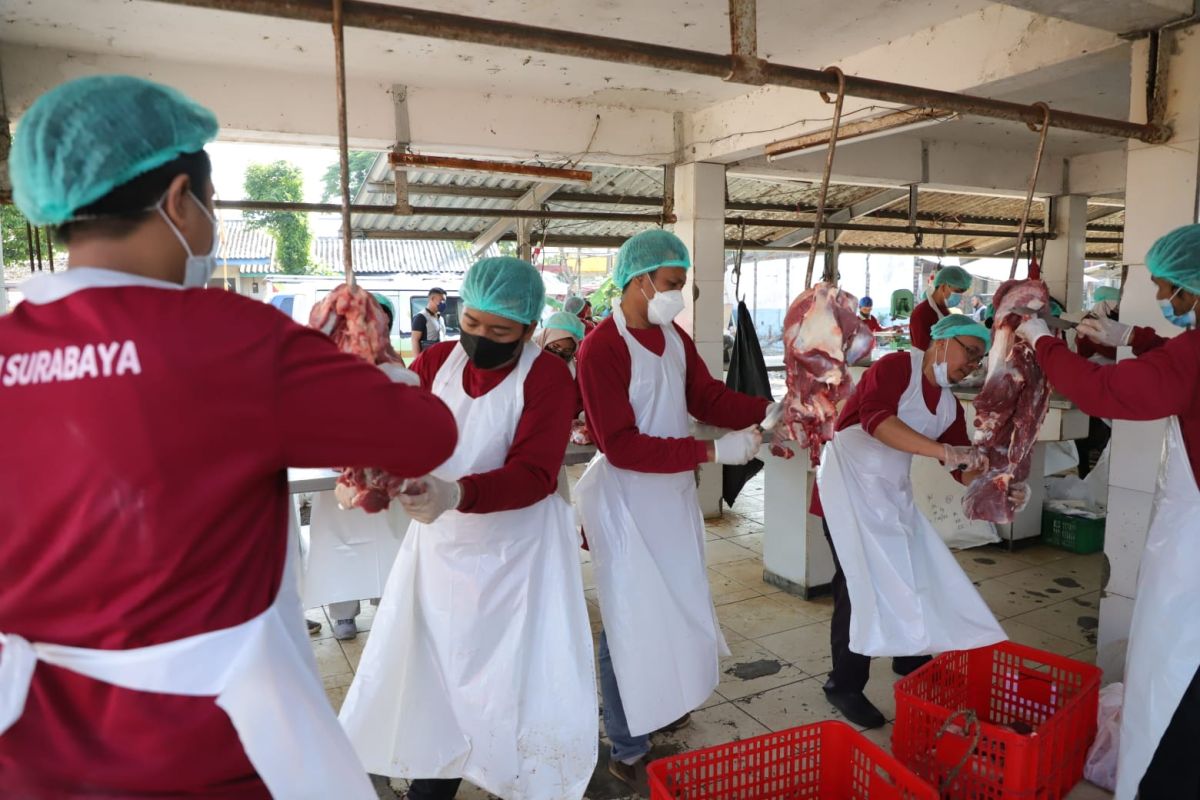
As Eid al-Adha nears in Surabaya, mosque courtyards are being cleaned, tents erected and knives sharpened. Behind the festive atmosphere, authorities are tightening safeguards to manage animal health, sanitation and urban waste.
The annual qurbani ritual in Indonesia’s second-largest city now extends beyond worship and meat distribution. Officials increasingly view it as a matter of public health, environmental management and urban planning.
Surabaya appears to be taking these changes more seriously this year. The city government has tightened supervision of sacrificial animals through a circular requiring Foot-and-Mouth Disease (FMD) vaccination, complete Animal Health Certificates, and supervision of slaughtering locations.
Meanwhile, the Surabaya Slaughterhouse has strengthened its biosecurity system, veterinary inspections, and implemented more hygienic and controlled slaughtering practices.
These steps appear administrative on the surface, but they actually reflect a shift in the city’s approach to qurbani, from an annual tradition to a matter of urban risk mitigation.
A silent threat
Indonesia’s experience with foot-and-mouth disease (FMD) outbreaks in recent years has offered valuable lessons. Thousands of livestock were infected, animal distribution was disrupted, prices surged, and public confidence weakened. Animal disease outbreaks can significantly affect the economy and food security.
As a result, the surge in livestock movement leading up to Eid al-Adha is consistently a high-risk period. Surabaya plays a critical role as a cattle distribution hub from East Java and other regions, where one undetected sick animal could cause significant impacts.
This is where a biosecurity approach becomes highly important. Antemortem and postmortem inspections carried out by veterinarians are more than just technical procedures, they also serve as the first line of defense to ensure the meat consumed by the public is safe.
Public awareness of food safety continues to increase. People are now questioning the origin of livestock, the health conditions of animals, and the hygiene of the slaughtering process.
This shift in behavior is changing the perception of slaughterhouses from being simple suburban facilities associated with odor and waste into an essential component of the public health system.
However, not all sacrificial slaughter in cities follows the same standards.
Many slaughters still take place in cramped residential areas with limited sanitation. Blood flows into the gutters, waste accumulates, and offal is washed in open drains, while residents pass by without adequate protection.
Such situations are often considered normal because of the spirit of togetherness. However, the risk of bacterial contamination and the spread of disease remains real.
In this context, the government’s recommendation to conduct slaughter at PT Rumah Potong Hewan (RPH/slaughterhouse) Surabaya Perseroda is not simply a bureaucratic policy, but part of efforts to shift sacrificial practices toward a safer, more modern, and environmentally responsible system for the city.
Modern traditions
The most significant shift in the practice of sacrifice does not rely on livestock numbers or fees, but in the way people interpret the act of sacrifice.
For years, people have witnessed slaughtering animals in the mosque courtyard as a symbol of social closeness. There is a sense of pride when residents come together to slaughter, chop, and then share the meat. This tradition strengthens the social cohesion of urban villages.
However, big cities are constantly changing. Open spaces are becoming smaller, health standards are stricter, and demands for efficiency are increasing. Under such conditions, the professionalization of slaughterhouses is becoming increasingly difficult to avoid.
This year, the Surabaya slaughterhouse is focusing solely on cattle slaughtering services, offering a full-service system, from slaughtering and chopping to packaging and distribution. This phenomenon demonstrates that the qurbani (animal sacrifice) is slowly moving toward an integrated service model.
On the one hand, this step brings greater efficiency and safety. Meat is processed more hygienically, with controlled water and stricter health supervision. However, on the other hand, it concerns the future of the collective tradition of qurbani in urban villages.
Modernization should not eliminate the social dimension of Eid al-Adha. Therefore, Surabaya’s challenge is not to choose between tradition and professionalism, but to reconcile both. Slaughter may be conducted in a modern way at slaughterhouses, but the spirit of mutual cooperation and social distribution must remain at the community level.
Furthermore, the approach to achieving a more environmentally friendly qurbani is starting to show. Some qurbani committees are bringing their own baskets to reduce single-use plastic. There are also regulations regarding witnesses to the slaughter to ensure that Sharia-compliant aspects are maintained, even though the process is carried out professionally. Small details like these demonstrate that modernization does not necessarily mean eliminating traditional values.
Amid climate change and environmental crises, the practice of qurbani also needs to take sustainability into account. Environmentally friendly packaging, organic waste management, and efficient meat distribution will become increasingly important in the years ahead.
In big cities, qurbani waste can no longer be seen as a problem of just one day. Improper handling of blood, organs, and washing waste may pollute water sources. For this reason, separate offal washing areas, sterilization of equipment, and waste management at Surabaya’s slaughterhouse represent investments in urban environmental health.
Lessons of civilization
In a modern city, Eid al-Adha sacrifice is not only a spiritual practice but also a shared responsibility to ensure public health and environmental safety. Sur