
Supreme Energy: LCOE or IRR can be considered in geothermal pricing
Geothermal developer PT Supreme Energy has assessed that levelized cost of energy (LCOE) or target internal rate of return (IRR) can be considered in setting electricity prices for geothermal power plants (PLTP).
Manager of New Opportunities (Exploration) and Technical Support at PT Supreme Energy, Mauliate Agustinus Hamonangan Sitohang, said that power purchase agreements (PPA) are one of the challenges in geothermal development because they are determined when reservoir conditions are not yet known with certainty.
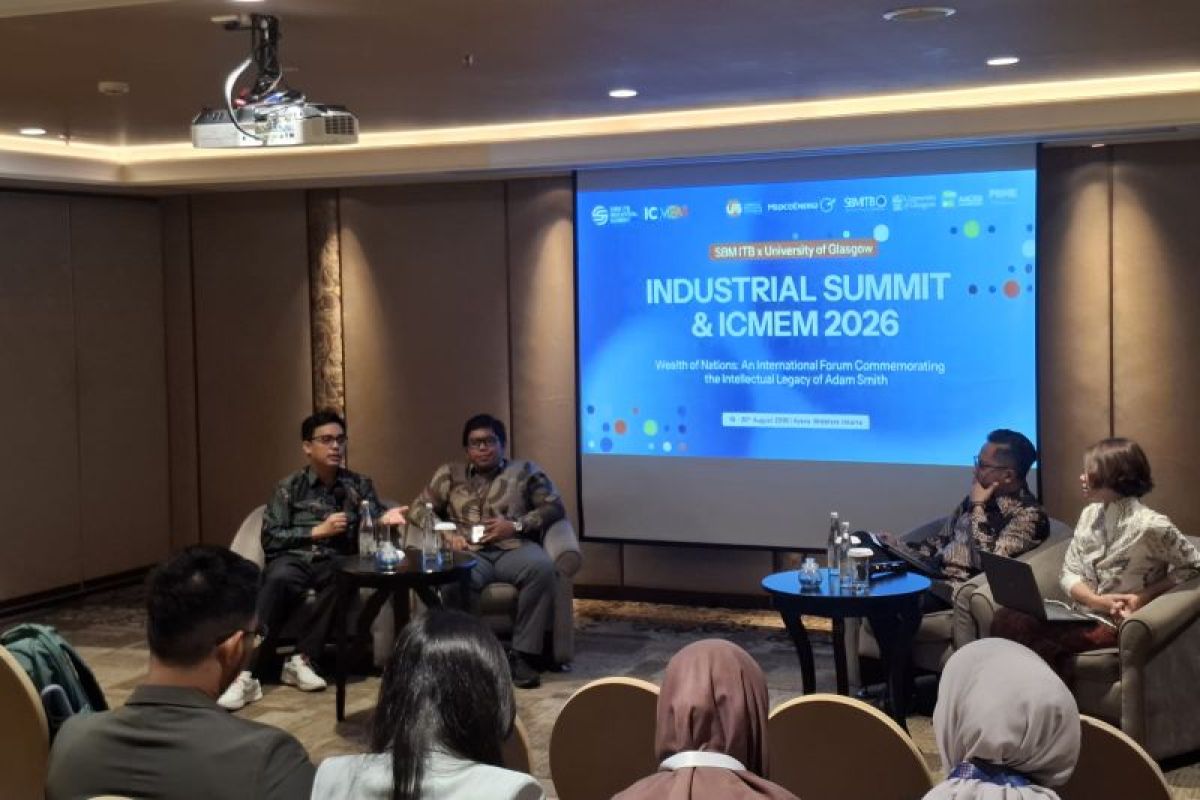
“If we look at the first challenge, especially in geothermal business, it is the PPA. Because our PPA is determined before we know the contents of the geothermal reservoir itself,” said Agus at the Industrial Summit 2026 in Jakarta on Thursday.
According to him, the nature of geothermal exploration means developers face large capital requirements as well as uncertainty in drilling results, because not all wells produce productive resources.
Agus said Supreme Energy’s drilling success rate at the exploration stage is around 33 percent. When a project enters the development drilling stage, the success rate can increase to around 80 percent.
“At the time of exploration, the success rate of drilling to obtain productive wells is 33 percent. One third, so if we drill six, two are successful,” he said.
He cited the Muara Laboh exploration in 2013 as an example, which required six wells with drilling costs of around US$7 million, or approximately Rp124.41 billion, per well, bringing the total to nearly US$42 million, or approximately Rp746.44 billion, excluding facilities.
The Ministry of Energy and Mineral Resources (ESDM) previously noted that the Muara Laboh project was originally planned to have a capacity of 220 megawatts (MW).
The exploration results yielded proven reserves of around 84 MW gross, so the initial development plan was subsequently adjusted to 80 MW net.
In the context of this economic viability, Agus mentioned LCOE, or the average cost required to produce electricity over the lifetime of a plant, as well as target IRR, the investment return rate used to assess how financially feasible or attractive a project is, as options that can be considered in geothermal development.
“In my opinion, either levelized cost of energy or, for example, target IRR, something like that,” he said.
On the other hand, Agus appreciated the support from the government and PLN to reduce exploration risk, including through government drilling and financing support.
“For sure we also appreciate a lot of assistance from PLN and the government, especially in terms of de-risking exploration. Government drilling is very much appreciated, it can be used for financing, grant financing,” he said.
Meanwhile, in the same forum, Manager of Various Renewable Energy at PT PLN (Persero) Head Office, Fandi Gunawan Sianipar, said that PLN’s electricity procurement process still refers to the highest benchmark price (HPT) set in regulations.
“Indeed, on the procurement side, we are still operating based on HPT,” said Fandi.
Presidential Regulation Number 112 of 2022 regulates the purchase price of electricity from a number of renewable energy sources, including geothermal, through HPT in stages and location factors.
Minister of Energy and Mineral Resources Regulation Number 5 of 2025 also stipulates that the price stated in the initial PLTP transaction agreement can be adjusted by considering geothermal exploration results and HPT in accordance with statutory provisions.
Supreme Energy is currently developing the Muara Laboh Unit 2 PLTP with a capacity of around 80 MW in West Sumatra, which reached financial close in 2025 and is targeted for commercial operation in 2027. The company is also planning Unit 3 with a capacity of 60 MW, targeting operation in 2034.