
Supreme Court Ruling on Vice-President Gibran’s High-School Certificate: Administrative or Constitutional?
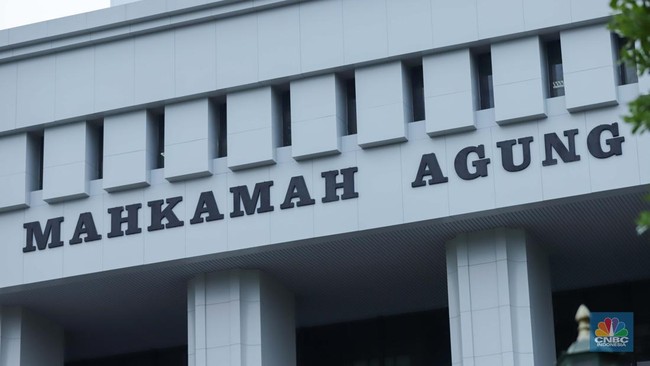
The Supreme Court’s Decision No. 742 K/TUN/2026, which granted the claimant’s cassation appeal in a case concerning the validity of the high-school education equivalency certificate in the name of Gibran Rakabuming Raka, is a legal event warranting serious attention from the perspectives of administrative and constitutional law.
The ruling is not merely an administrative matter concerning the validity of a single education certificate. More broadly, it raises fundamental questions about the validity of educational administrative documents used to meet the requirements for standing as a candidate for Vice-President of the Republic of Indonesia.
The Supreme Court’s operative order in Decision No. 742 K/TUN/2026 states: “Cassation granted; lower-court judgment overturned; court adjudicates the case itself: claimant’s action granted in its entirety.”
Since the claimant’s entire case was granted, the substance of the claims must be considered. According to publicly available case information, one of the claimant’s requests was for Certificate No. 9149/D.D1/KS/2019, dated 6 August 2019, to be declared invalid and void by law, and for it to be retrieved from whoever holds it and destroyed.
The legal inquiry therefore does not end with the status of the high-school certificate. The next question is what happens to other administrative decisions issued using or relying on that document.
This is why it is important to understand the full legal effect of the Supreme Court ruling, particularly in relation to the equivalency process for an overseas university degree used to satisfy the requirements for standing as a vice-presidential candidate.
The legal meaning of the Supreme Court ruling: nullity and ex tunc consequences
Administrative law distinguishes between a decision that may be revoked and one declared invalid. Article 70(1) of Law No. 30 of 2014 on Government Administration provides that a decision and/or action is invalid if it was:
made by a government body and/or official lacking authority;
made by a government body and/or official acting beyond their authority; and/or
made arbitrarily by a government body and/or official.
Article 70(2) expressly states that the legal consequences of such a decision and/or action are that it is not binding from the time it was made, and that all legal consequences arising from it are deemed never to have existed.
This provision relates to the administrative-law doctrine known as ex tunc, under which legal consequences apply from the time the decision was originally issued.
Accordingly, if a decision is declared invalid under Article 70, the consequence is not merely that it ceases to apply prospectively (ex nunc); it loses its binding force from the outset.
In this case, if the Supreme Court’s order and reasoning do indeed declare the high-school certificate invalid and void by law, the certificate’s status and legal consequences must be assessed on the basis that it was invalid from the beginning.
It must, however, be emphasised that the word “overturned” in the order concerning the lower-court judgment refers to a different subject from a declaration that the administrative decision under challenge is invalid and void. The Supreme Court’s full order and legal reasoning must therefore be the principal reference.
Nor should the ex tunc effect be interpreted recklessly as meaning that every other document ever connected to the certificate is automatically invalid. Each subsequent administrative decision must still be examined in terms of its legal relationship to the certificate, its basis and any defects.
The larger question: what about the bachelor’s degree equivalency?
Those defending Gibran have argued that, even if the high-school certificate is declared invalid, he still meets the education requirement because he holds a bachelor’s degree from an overseas university.
That argument refers to Article 18(3) of General Elections Commission Regulation No. 19 of 2023 on the Nomination of Candidates for President and Vice-President. It states: “Proof of graduation as referred to in paragraph (1), point m, is exempted for prospective presidential or vice-presidential candidates who do not have proof of graduation from an overseas senior secondary school and who already have proof of graduation from a university.”
At first glance, this provision could support the argument that someone who has proof of university graduation is no longer required to submit proof of high-school graduation as part of the nomination administration.
The legal question, however, is not as simple as whether a person holds a bachelor’s degree. If the degree was awarded by an overseas university, it is necessary to establish whether it underwent equivalency and recognition procedures in accordance with the applicable Indonesian law.
In this context, questions arise over the administrative requirements for the equivalency of overseas university degrees. Director-General of Learning and Student Affairs Regulation No. 02/DJ.BELMAWA/SK/2015 on Technical Guidance for Assessing Degrees from Overseas Higher-Education Institutions sets out document requirements, including:
The original degree certificate in a foreign language.
The certificate for the preceding level of education, namely senior secondary school. If secondary education was completed abroad, the equivalency document must also be provided.
Academic transcripts.
The curriculum of the institution attended.
A copy of the passport and visa held during the period of study.
Translations by a sworn translator, where required.
Additional documents if requested by an assessor.
These requirements raise an important legal question: in the process of assessing Gibran’s bachelor’s degree for equivalency, did the secondary-education documents submitted meet the applicable requirements?
If the high-school certificate declared invalid by the Supreme Court was indeed used to meet the requirements for the bachelor’s degree equivalency, the legal basis on which the equivalency decision was issued would be in question.
In other words, the issue is not only whether Gibran has a bachelor’s degree, but also whether its recognition and equivalency were obtained through a lawful administrative process.
Is the bachelor’s-degree equivalency decision also invalid?
In my view, this is one of the most important legal questions for the government to answer. Under administrative law, an administrative decision cannot be separated from its legal basis, the authority of the official who issued it, the procedure followed and the administrative facts on which it rests.
If the bachelor’s-degree equivalency decision was issued in reliance on a secondary-school document later declared invalid by the Supreme Court, it must be examined to determine whether the equivalency decision itself is legally defective.
Article 70 of Law No. 30 of 2014 may provide a basis for that examination if the equivalency decision is found to meet the criteria for invalidity set out in the provision. This does not mean that the equivalency decision automatically becomes invalid simply because the high-school certificate has been nullified. It must first be established:
Whether the secondary-school document used in the equivalency application was the same certificate declared invalid by the Supreme Court.
Whether that document was a mandatory requirement for degree equivalency when the decision was issued.
Whether the equivalency decision could still have been issued on the basis of other valid documents, without it.
Whether the decision complied with all legal requirements concerning authority, procedure and substance.
Whether there is a legal basis for maintaining the equivalency decision following the Supreme Court ruling.
If the document declared invalid was an essential requirement and no other legal basis could replace it, the validity of the bachelor’s-degree equivalency decision should be questioned.
Conversely, the government cannot simply state that the bachelor’s degree continues to satisfy the requirements without explaining how the equivalency process was conducted and whether all administrative requirements were met. In a state governed by the rule of law, the basis for every administrative decision must be capable of scrutiny.
Regulatory hierarchy: can a KPU regulation waive a requirement set by law?
Another equally important legal issue concerns Article 18(3) of General Elections Commission Regulation No. 19 of 2023. It exempts prospective presidential or vice-presidential candidates from providing proof of high-school graduation if they lack proof of graduation from an overseas secondary school but have proof of university graduation.
The question is: what authority does the KPU have to grant this exemption when the law expressly stipulates the education requirement?
Article 169(r) of Law No. 7 of 2017 on General Elections states that presidential and vice-presidential candidates must have completed at least senior secondary school, a madrasah aliyah, a vocational secondary school, a vocational madrasah aliyah, or an equivalent institution.
Article 6(2) of the 1945 Constitution also expressly provides: “The requirements for becoming President and Vice-President shall be further regulated by law.”
This constitutional provision gives the legislature the mandate to regulate the requirements for becoming President and Vice-President. The education requirement for candidates is therefore not merely a technical administrative matter that may be freely changed or waived through a KPU regulation. This raises an issue of regulatory hierarchy.
Under Articles 7 and 8 of Law No. 12 of 2011 on the Formation of Legislation, as amended, regulations made by institutions or commissions are legally binding insofar as they are mandated by higher-level legislation or made under the authority of those bodies. The KPU’s authority to issue regulations is therefore not unlimited.
The KPU is authorised to regulate nomination procedures, administrative documents, verification processes and other technical mechanisms. That authority must not, however, be interpreted as allowing it to change, reduce or depart from the substantive requirements laid down by law.
It may be argued that Article 18(3) of the KPU regulation provides an exemption only from submitting proof of high-school graduation, rather than removing the minimum education requirement itself. That argument, however, must be critically examined.
The issue is whether the exemption has a sufficient basis in delegated authority and still ensures that the substantive requirement in Article 169(r) of the General Elections Law is met.
If, in practice, the exemption allows someone to be deemed eligible for nomination without certainty that the statutory minimum education requirement has been fulfilled, the issue is no longer merely one of administrative documentation.
It concerns the limits of the KPU’s authority as a body empowered to issue implementing regulations.
Constitutional law recognises the principle lex superior derogat legi inferiori: a lower-level regulation must not conflict with a higher-level one. If the KPU regulation and the General Elections Law are normatively in conflict, judicial review by the Supreme Court under Article 24A(1) of the 1945 Constitution should be considered.
Two questions must be distinguished. First, does Article 18(3) of General Elections Commission Regulation No. 19 of 2023 have an adequate legal basis? Second, does its application in this specific case genuinely ensure compliance with the statutory education requirement? Neither question should be answered on the basis of political interests; both require legal reasoning and scrutiny.
The KPU is authorised to regulate nomination procedures, but authority over procedures is not the same as authority to change the nomination requirements. Technical regulations must not become a means of setting aside statutory provisions.
An exemption from proof of graduation is not an exemption from the education requirement
In my view, there is a fundamental distinction between an exemption from submitting evidence and an exemption from a substantive requirement.
Article 18(3) of the KPU regulation must be read systematically alongside Article 169(r) of the General Elections Law. Article 169(r) sets a minimum education requirement of senior secondary school or equivalent, while Article 18(3) exempts candidates who already have proof of university graduation from submitting proof of high-school graduation.
The two provisions are not necessarily in conflict if Article 18(3) is intended only to regulate the form of evidence required. In principle, someone with a valid university degree has completed a level of education higher than senior secondary school. The important question, however, is how to establish that the university qualification is valid, recognised and usable under Indonesian law.
If the university degree was obtained overseas, its recognition and equivalency cannot be disregarded. Article 18(3) therefore cannot justify ignoring questions about the validity of the education documents underpinning recognition of the university qualification.
An exemption from submitting a secondary-school certificate does not mean exemption from the statutory education requirement. This is the difference between substantively meeting a requirement and merely satisfying the administrative requirements for nomination.
The Supreme Court ruling must be respected and implemented
In a state governed by the rule of law, a court judgment is not simply an administrative document that may be implemented or ignored according to particular interests. It must be respected and implemented in accordance with its operative order and legal effects. If the Supreme Court has declared an administrative decision invalid and void, the relevant government officials must take account of the consequences.
In this context, the ministry responsible for education should review all administrative documents connected with the bachelor’s-degree equivalency process.
That review does not mean the government must immediately revoke the equivalency decision. It must, however, explain whether the decision has an independent legal basis or instead depends on a document declared invalid by the court. If a legal defect is found, the government should act in accordance with the procedures set out in the Law on Government Administration.
Conversely, if the equivalency decision rests on another valid and defensible legal basis, the government should explain this transparently. A court ruling must not be implemented differently simply because the person concerned holds political office or public office.
Constitutional consequences: Articles 7A and 7B of the 1945 Constitution
The issue ultimately intersects with the Constitution. Article 7A of the 1945 Constitution provides that the President and/or Vice-President may be removed from office during their term by the People’s Consultative Assembly, on a proposal from the House of Representatives, if they are proven to have committed certain legal violations or no longer meet the requirements for holding office.
One of the grounds expressly listed is a
Source: jawawa.id (https://jawawa.id/newsitem/supreme-court-ruling-on-vice-president-gibrans-high-school-certificate-administrative-or-constitutional-1793623869)
Originally published by CNBC Indonesia (https://www.cnbcindonesia.com/opini/20261102181215-14-781668/putusan-ma-soal-suket-sma-wapres-gibran-administrasi-atau-konstitusi), translated from Indonesian