
Supreme Court Issues SEMA 4/2026, Prohibits Cassation Against Acquittals
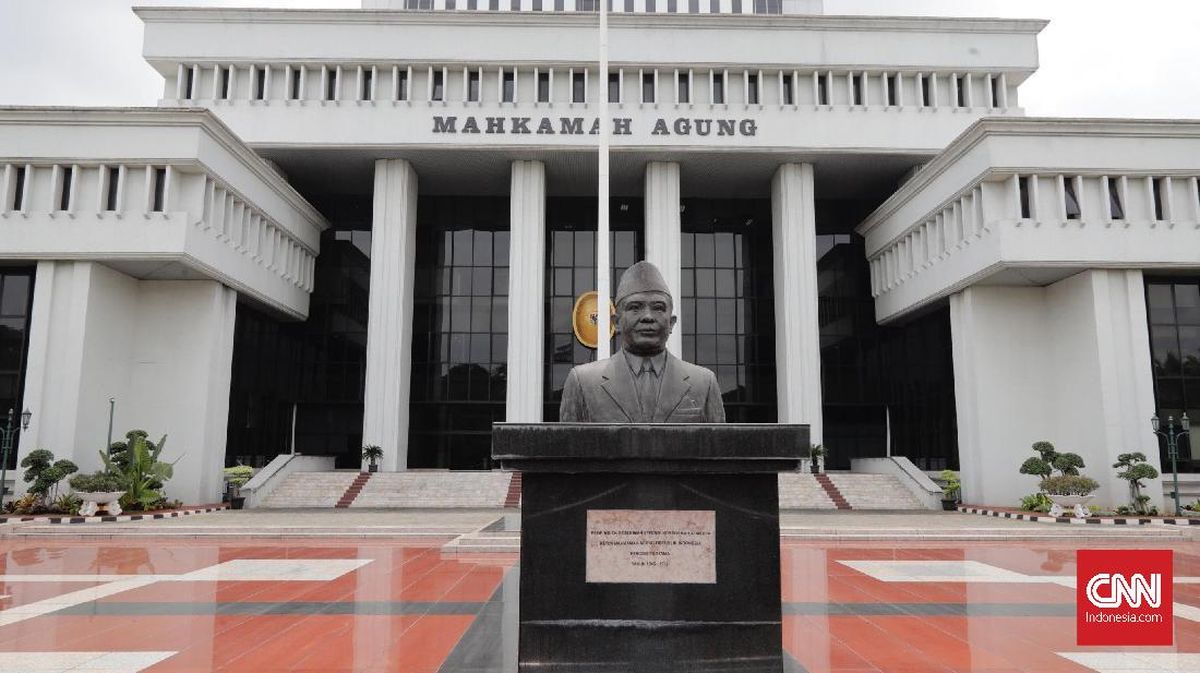
The Supreme Court (MA) has issued Supreme Court Circular Letter (SEMA) Number 4 of 2026, which regulates the prohibition on filing cassation appeals against acquittals.
“SEMA Number 4 of 2026. This SEMA provides firm guidance regarding legal remedies in criminal cases. First, against acquittals, both appeal and cassation are absolutely not permitted,” said Chief Justice Sunarto during the commemoration of the 81st anniversary of the Supreme Court of the Republic of Indonesia on Wednesday (19/8).
Meanwhile, regarding rulings of ‘ontslag van rechtsvervolging’ (dismissal of charges), still within the same SEMA, the defendant must be released from detention as soon as the ruling is pronounced. If the public prosecutor appeals, the authority to detain transfers to the high court.
“Third, appeals or cassation requests that do not meet the time limit or are submitted without a memorandum of appeal are declared not to meet formal requirements,” said Sunarto.
He added that for cases that do not meet formal requirements, the chief of the district court will issue a determination that cannot be subject to any legal remedy, and the case file will not be sent to the appellate court or the Supreme Court.
“This SEMA revokes the provisions regulated in SEMA Number 8 of 2011. With the issuance of this SEMA, the Supreme Court aims to provide legal certainty to justice seekers and create unity of law regarding differences in interpretation in filing legal remedies against acquittals and dismissals,” he said.
In addition, the Supreme Court also issued two other regulations. First, SEMA Number 2 of 2026, which was issued to guarantee legal certainty and protect the rights of justice seekers in filing cassation requests.
This SEMA regulates the time limit for filing cassation, set at 14 days from the date the high court ruling is notified to the defendant or the public prosecutor. However, this provision only applies until 1 August 2026. After that, cassation filings will again refer to Article 298 and Article 300 of the Criminal Procedure Code (KUHAP), namely Law Number 20 of 2025, which is 14 days from the date the appellate ruling is read out in a public hearing.
The Supreme Court has instructed all appellate courts to immediately prepare electronic trial infrastructure and facilities and has updated the court information system to ensure effective implementation of these provisions by 1 August 2026.
Then SEMA Number 3 of 2026. Sunarto explained that this SEMA was issued to provide guidance for judges in the general courts in handling pretrial cases that intersect with the subject matter of cases that will be or have been transferred to the district court. This SEMA is a follow-up to the dynamics in judicial practice related to the application of Article 163 paragraph 1 letter e of Law 20/2025 concerning the Criminal Procedure Code.
“The purpose of issuing this SEMA is to provide legal certainty regarding differences in the handling of pretrial cases, as well as to realise the principles of simple, speedy and low-cost justice,” said Sunarto.