
Supreme Court Implements Flexible Work, Judges and Staff WFH Every Friday
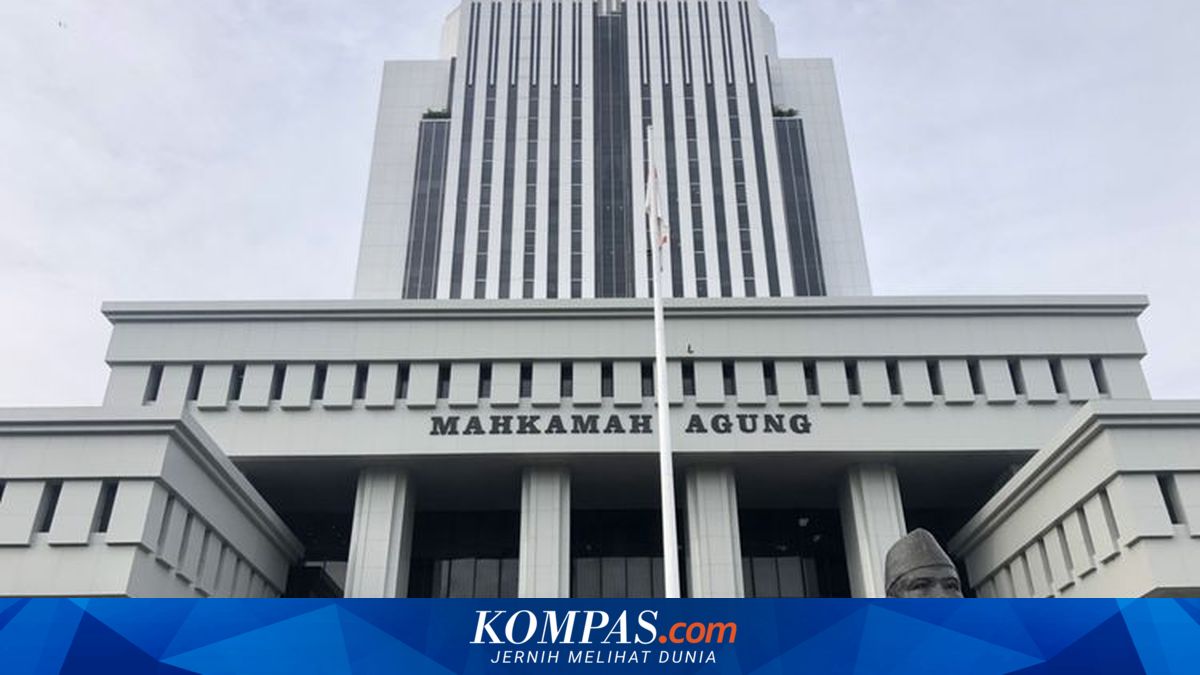
The Supreme Court (Mahkamah Agung, MA) is implementing a flexible work system, namely working from home (WFH) every Friday for judges and staff in the institution. This system is regulated in Supreme Court Circular Letter (SE) No. 4 of 2026, which follows the Circular Letter from the Minister of State Apparatus Utilization and Bureaucratic Reform (PANRB) No. 3 of 2026. “The performance of official duties for Supreme Court Judges and Staff shall be carried out through a combination of location flexibility, namely: 1). Official duties at the office (work from office/WFO) for 4 (four) working days in 1 (one) week, namely on Monday, Tuesday, Wednesday, and Thursday,” states the SE signed by MA Secretary Sugiyanto, quoted on Thursday (9/4/2026). “2). Official duties at home/residence (work from home/WFH) for 1 (one) working day in 1 (one) week, namely on Friday,” it continues. Meanwhile, leaders of JPT Madya, JPT Pratama, Appellate Level Work Units, and First Instance Work Units are asked to regulate the implementation of WFH every Friday. “Taking into account the characteristics and urgency of tasks/work; the ability of employees and court apparatus to work independently, communicate effectively with superiors and colleagues, and respond to task instructions; the ability to optimally apply information technology when working flexibly; output from services conducted online or offline in accordance with established standards,” states the SE. Leaders of JPT Madya, JPT Pratama, Appellate Level Work Units, and First Instance Work Units are also asked to arrange WFH and WFO work schedules with compositions according to the conditions of their respective work units, with the percentage of personnel implementing WFH at most 50 percent of the total number of judges and employees. “Create a scheme for mechanisms to control and supervise the implementation of WFH and WFO,” states SE MA 4/2026. In addition, leaders of JPT Madya, JPT Pratama, Appellate Level Work Units, and First Instance Work Units are asked to ensure that the implementation of flexible official duties by location at home/residence does not reduce the quality of work. “The implementation of tasks and functions of work units continues to run effectively, without disrupting the smooth administration of justice and the quality of public services,” states the SE. Direct superiors monitor their subordinates to ensure achievement of determined performance targets and evaluate the work of employees implementing WFH. “This Circular Letter takes effect from the date of issuance and will be evaluated periodically in accordance with provisions and circulars from the Ministry of PANRB,” states the MA SE.