
Supreme Court Corrects State Losses in Tin Corruption Case, Here's Why
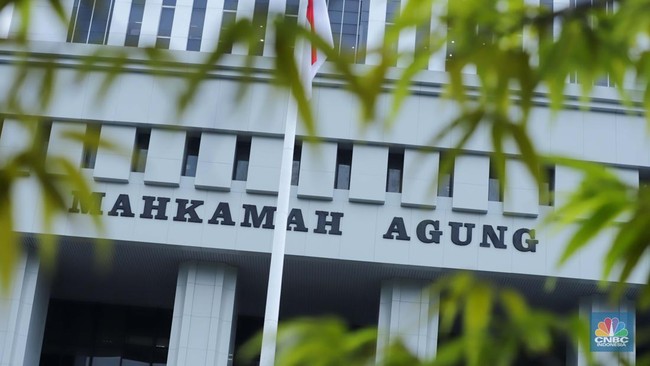
The Supreme Court (MA) has corrected the state loss figure in the tin trading corruption case involving defendant Alwin Albar, former Director of Production Operations at PT Timah Tbk. The loss originally calculated at Rp 300 trillion has been revised to Rp 28.9 trillion. The primary reason is that the MA decided to exclude environmental damage elements worth Rp 271 trillion from the calculation of losses in the criminal corruption case, as it was deemed to refer to a different legal regime. Details are set out in Decision Number 11179 K/Pid.Sus/2025.
The Cassation Panel of Judges for this case, led by Prim Haryadi, detailed the separation of the loss components in its legal considerations. He emphasised that the basis for determining state financial losses in a corruption case must be based on a value that can be calculated with certainty. ‘The total loss consists of overpayments that did not undergo adequate feasibility studies amounting to Rp 28 trillion, while other losses are in the form of environmental damage consisting of ecological losses, environmental economic losses, and recovery costs worth Rp 271 trillion,’ the panel stated in its ruling, as quoted from an official statement on Wednesday (12/8/2026).
The MA considers it inappropriate for environmental damage to be directly calculated as a state financial loss in a corruption case. This is because the legal aspects related to state losses and environmental losses have different characteristics and law enforcement objectives. ‘Although environmental losses, whether due to environmental damage or ecological damage, can be calculated and assessed by experts, including the recovery costs, this does not automatically mean that environmental damage becomes part of state financial losses,’ the Supreme Court ruling continued.
In the ruling document, the judge validated the loss figure originating from overpayments for equipment leasing and tin ore payments to partners. This value is based on audit results showing price mark-ups due to the neglect of adequate feasibility study procedures. ‘That the loss amount of Rp 300,003,263,938,131.14 consists of overpayments (price mark-ups) for the Processing and Smelting Equipment Rental Cooperation activity between PT Timah Tbk and private smelters, and the value of tin ore payments to PT Timah Tbk mining partners, which did not undergo adequate feasibility studies, totalling Rp 28,933,575,919,431.14,’ the ruling document stated.
According to the MA, separating the loss values is necessary so that the recovery of environmental damage caused by mining can be prosecuted through a separate case. This is also considered to optimise law enforcement so that each legal regime operates according to its court’s competence. ‘Declaring environmental damage to be included in the state financial loss in the a quo case is inappropriate, because the environmental damage valued at Rp 271,069,688,018,700.00 should be a separate offence and prosecuted separately under the environmental law regime, so that the recovery of the damaged environment can be carried out immediately,’ the panel wrote in its ruling. The ruling also refers to Supreme Court Circular Letter (SEMA) Number 2 of 2024 concerning the authority of state institutions in determining state losses. Despite correcting the loss amount, the Supreme Court still rejected the cassation appeals from both the defendant and the public prosecutor, while making improvements to the previous court’s ruling.