
Supreme Court Candidate Highlights Tax Court Reform Amid Digital Economy Complexity
The digital economy has enabled global businesses to reap significant economic benefits from the Indonesian market without maintaining a permanent physical presence. This phenomenon is seen as creating new challenges in taxation while demanding fundamental reform of the Tax Court so that it can handle increasingly complex disputes.
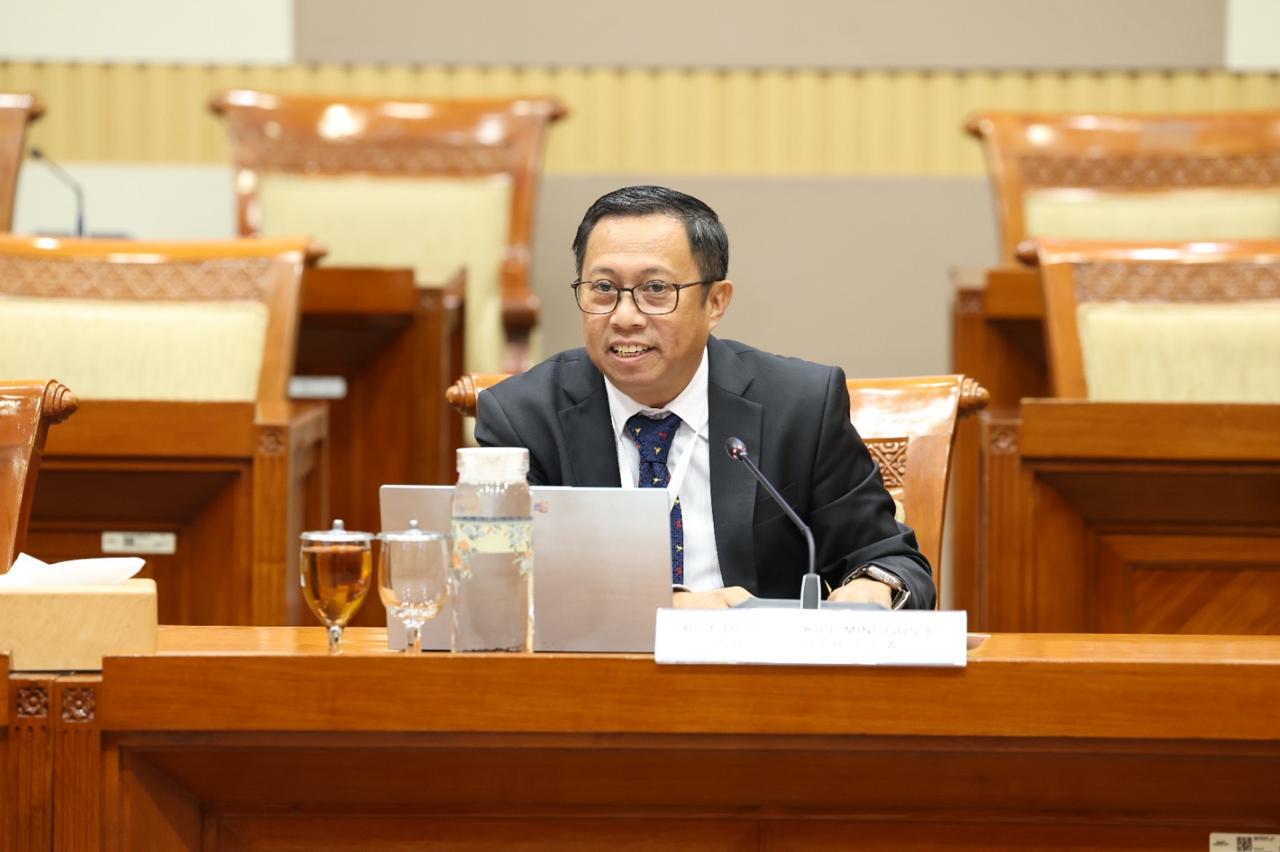
Yeheskiel Minggus Tiranda, a candidate for Supreme Court justice in the State Administrative Chamber specialising in tax, stated that the development of cross-border digital transactions has fundamentally altered the economic structure. Platform-based business models now allow global companies to operate across jurisdictions without being bound by conventional physical presence.
“The digital economy has fundamentally changed the structure of national economic transactions. Cross-border transactions based on digital platforms are growing rapidly, so global business models have now obtained significant economic benefits from the Indonesian market without a permanent physical presence,” Yeheskiel said in a statement on Saturday (15/8).
The Professor of Law at Sultan Agung Islamic University in Semarang emphasised that this condition raises issues of fiscal justice. While domestic business entities comply with the conventional tax regime, cross-jurisdictional digital business actors can often minimise their tax obligations by exploiting loopholes in international law.
The Indonesian government has responded through various regulations, including the VAT collection scheme for trade through electronic systems (PPN PMSE). By mid-2025, this scheme was reported to have contributed around Rp40 trillion in state revenue. However, Yeheskiel considers that the substantive regulatory updates have not been matched by strengthening on the adjudicative or dispute resolution side.
He also highlighted challenges to the permanent establishment principle, which is now difficult to apply to digital business models. At the global level, this challenge is being addressed through the two-pillar solution framework of the OECD/G20 Inclusive Framework on BEPS.
“Pillar One regulates the reallocation of a portion of taxing rights over large multinational companies to market jurisdictions, while Pillar Two establishes a global minimum tax rate through the Global Anti-Base Erosion Rules,” he explained.
Beyond the economic aspect, Yeheskiel highlighted the institutional dualism of the Tax Court. Currently, technical judicial oversight rests with the Supreme Court, but organisational, administrative, and financial oversight remains under the Ministry of Finance.
This situation is considered problematic because the Ministry of Finance also oversees the Directorate General of Taxes, which is a party in tax disputes. “This configuration raises conceptual issues regarding the independence of judicial power as guaranteed by Article 24 of the 1945 Constitution,” he asserted.
The urgency of this reform has grown stronger following Constitutional Court Decision No. 26/PUU-XXI/2023, which mandates the full transfer of Tax Court oversight to the Supreme Court by 31 December 2026 at the latest. This aims to realise a one roof system to guarantee judicial independence.
Future challenges also include the implementation of the Coretax System, which is predicted to increase the volume of tax disputes due to stricter compliance monitoring. Yeheskiel warned that improvements in tax administration must be accompanied by the capacity of judicial institutions.
“Without strengthening institutional capacity, adding an adequate number of tax judges, and utilising judicial technology, the increased caseload risks slowing dispute resolution and reducing legal certainty for taxpayers,” he said.
He recommended harmonising procedural law between the Tax Court and the State Administrative Court, as well as establishing clear evidentiary standards for cross-jurisdictional digital transactions and crypto assets to provide tax certainty.
Previously, Commission III of the House of Representatives approved 11 Supreme Court justice candidates and three ad hoc judge candidates at the Supreme Court on Thursday (13/8). For the State Administrative Chamber (Tax), the approved names were Yeheskiel Minggus Tiranda, Maftuh Effendi, and L.Y. Hari Sih Advianto.
Source: jawawa.id (https://jawawa.id/newsitem/supreme-court-candidate-highlights-tax-court-reform-amid-digital-economy-complexity-1786776681)
Originally published by Media Indonesia (https://mediaindonesia.com/politik-dan-hukum/922127/calon-hakim-agung-soroti-reformasi-pengadilan-pajak-di-tengah-kompleksitas-ekonomi-digital), translated from Indonesian