
Supreme Court Cancels Plan to Raise Retirement Age to 65; Workers Call for New Rules
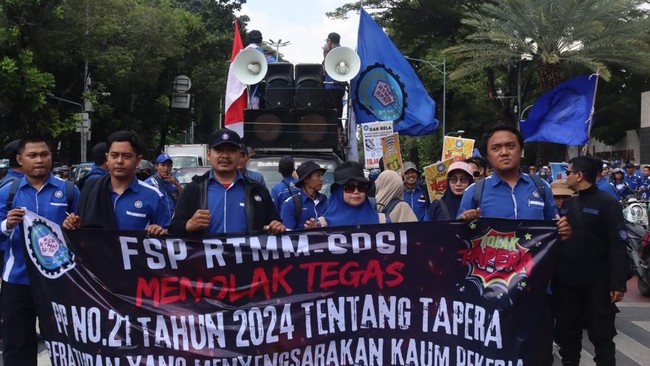
The Supreme Court’s decision to annul the provision for gradually raising the retirement age to 65 marks an important moment for reform of the National Pension Security programme.
The Federation of Tobacco, Food and Beverage Workers’ Unions (FSP RTMM-SPSI) has urged the government to follow up the decision promptly so that workers have legal certainty and protection after entering retirement.
FSP RTMM-SPSI chairman Henry Wardana said the government must not allow the issue of the age at which people can receive pension benefits to remain unresolved. The Supreme Court has issued Decision No. 18 P/HUM/2026, declaring Article 15 of Government Regulation No. 45/2015 invalid and not generally binding because it conflicts with Law No. 40/2004 on the National Social Security System.
‘The decision is an entry point for reform of retirement-age security in Indonesia,’ Henry said at the Grand Panorama Hotel in Bandungan, Semarang Regency, Central Java, on Saturday (31 October 2026), according to a press release cited on Tuesday (3 November 2026).
Henry said the government has a maximum of 90 days to implement the Supreme Court’s decision. He called on it to prepare replacement regulations quickly so workers do not face uncertainty in accessing their pension rights.
Supreme Court Cancels Plan to Raise Retirement Age to 65
Supreme Court Decision No. 18 P/HUM/2026 has drawn workers’ attention because it concerns the age at which people can receive pension benefits from BPJS Employment. Previously, Article 15 of Government Regulation No. 45/2015 set the initial retirement age at 56. The government then raised it to 57 from 1 January 2019. Thereafter, the retirement age was to increase by one year every three years, reaching 65 in 2043.
In its judicial review ruling, the Supreme Court declared Article 15 of Government Regulation No. 45/2015 invalid and not generally legally binding because it conflicts with Law No. 40/2004 on the National Social Security System.
The government must now formulate new provisions on the age limit for accessing pension benefits, including transition arrangements for workers who have already retired or are approaching retirement.
‘The implication is that the government must introduce new rules on the age at which people can access pension benefits,’ Henry said.
Workers Retire at 55 but Must Wait for Benefits
Henry said the previous rules had caused practical problems for workers. Many companies in Indonesia set employees’ retirement age at between 55 and 58, while the age for accessing pension benefits continued to rise under Government Regulation No. 45/2015.
This created a gap between the time workers stopped working and the time they could receive pension benefits. As a result, people who no longer earned an income after retiring from their company could still have to wait years before accessing their pension benefits.
‘Under the old schedule, they would have to wait as long as 10 years to claim pension benefits. That is why the government must act quickly,’ he said.
According to Henry, the issue concerns not only workers’ economic rights but also the certainty of social protection for people who have devoted decades to their employers.
BPJS Employment Could Face a Surge in Claims
Uncertainty over the age at which people can receive benefits could also create administrative problems for BPJS Employment.
Henry warned that without clear replacement regulations, workers could interpret differently when they are entitled to file a claim after stopping work.
That situation could trigger a surge in claims and make it harder for BPJS Employment to serve its members.
‘Without legal certainty, everyone could file a claim when they stop working, potentially causing a surge in claims,’ he said.
Henry therefore urged the government not to focus solely on changing the retirement-age limit. It should also prepare administrative, funding and service mechanisms that can accommodate members’ needs.
FSP RTMM-SPSI Proposes Five Pension Reform Priorities
Following the Supreme Court’s decision, FSP RTMM-SPSI has proposed five priorities for reforming the National Pension Security programme. The proposals are intended to inform discussions between the government, employers and workers’ representatives.
The five priorities are:
Legal certainty on the age for accessing benefits and transition arrangements. The government should set a clear age limit for accessing pension benefits and provide protection for workers during the transition.
Adequate benefits and minimum protection. The programme should provide sufficient benefits to ensure workers retain economic protection after they stop working.
Fair financing and contribution compliance. The government should ensure balanced financing and encourage all parties to meet their contribution obligations.
A clearly defined fiscal role for the state. The state’s contribution to the programme’s sustainability should be set out through clear and measurable fiscal policy.
Transparency, accountability and member services. Programme management should prioritise disclosure, accountability and accessible services for members.
Henry said the five priorities should be discussed comprehensively so that regulatory changes do more than resolve the age-limit issue: they should also strengthen protection for workers in retirement.
Calls for Government Forum Within 30 Days
To speed up discussions, FSP RTMM-SPSI has invited the Ministry of Manpower, BPJS Employment, the Ministry of Finance, employers, trade unions, the House of Representatives and academics to come together.
Henry proposed that the government open a discussion forum within 30 days and present a follow-up draft and reform roadmap within 60 days of the press conference. He stressed that these proposed timeframes are advocacy targets set by FSP RTMM-SPSI, not deadlines imposed by the court.
‘We propose opening a forum within 30 days and presenting a follow-up draft and roadmap within 60 days of the press conference. These are advocacy targets we have put forward, not deadlines set by the court,’ he said.
Henry said he hoped the government would respond promptly to the Supreme Court ruling by drawing up a new policy that provides legal certainty, ensures the programme’s sustainability and protects workers’ rights as they enter retirement. Reform of the National Pension Security programme, he said, must ensure that workers do not lose economic protection when they finish their working lives.
Source: jawawa.id (https://jawawa.id/newsitem/supreme-court-cancels-plan-to-raise-retirement-age-to-65-workers-call-for-new-rules-1793681492)
Originally published by CNBC Indonesia (https://www.cnbcindonesia.com/opini/20261103104816-14-781814/ma-batalkan-skema-pensiun-65-tahun-buruh-desak-aturan-baru), translated from Indonesian