
Supreme Court Accepts Appeal over Gibran’s Diploma; Hasto Says ‘No Lie Lasts for Ever’
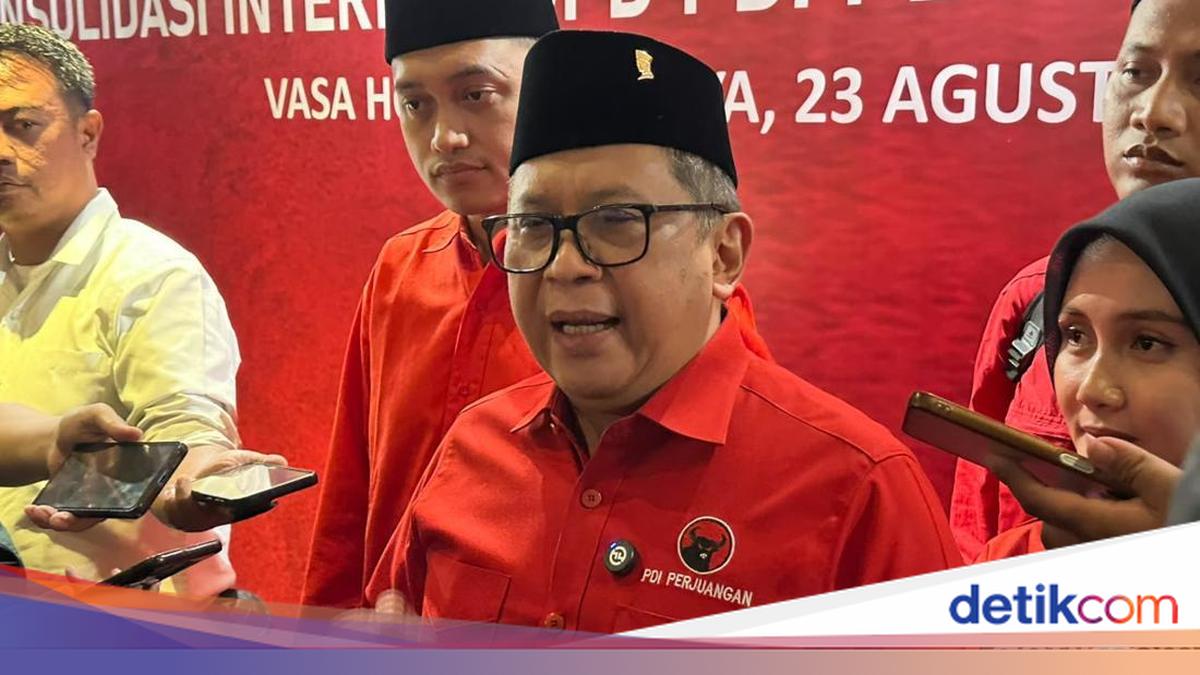
PDIP Secretary-General Hasto Kristiyanto said the Supreme Court’s decision to grant an appeal concerning Vice-President Gibran Rakabuming Raka’s senior-secondary education equivalency certificate had further strengthened questions over whether constitutional requirements for presidential and vice-presidential candidates had been met. Hasto said there was no lie that lasted for ever in politics and argued that such issues needed to be corrected.
“This also proves that in politics there is no lie that lasts for ever, particularly when it is carried out through an abuse of power. That is where the truth will find its own way,” Hasto said in a statement on Saturday (31 October 2026).
Hasto said the Supreme Court ruling had once again raised questions about the equivalency of Gibran’s diploma, which had previously come under scrutiny during proceedings at the Constitutional Court.
“With the Supreme Court’s decision, this further reinforces the point that Gibran’s diploma equivalency was based on a certificate, even though during the Constitutional Court hearing the diploma itself could not be found,” he said.
Hasto said the diploma issue was not merely an administrative matter. In his view, it concerned a fundamental requirement that a candidate for leadership must meet under the Constitution.
“This has touched on something very fundamental: the constitutional requirement that a candidate must, at the very least, hold a senior-secondary or equivalent qualification has not been met,” he said.
Hasto also referred to Constitutional Court Decision No. 90 of 2023, which changed the age-limit rules for presidential and vice-presidential candidates. He said the process had also been marked by the intervention of power and a serious ethical breach involving Anwar Usman, who was then chief justice of the Constitutional Court.
“And this was compounded by Constitutional Court Decision No. 90 of 2023, in which power was also brought to bear on the age issue, alongside the serious ethical violation involving ‘Uncle Usman’, who was chief justice of the Constitutional Court at the time,” Hasto said.
“Added to that were efforts to intervene through the exercise of power, which ultimately enabled Gibran to qualify as a vice-presidential candidate, followed by an abuse of power through the enormous social-assistance spending that has put public finances under strain during Mr Prabowo’s tenure, as well as the deployment of ‘brownshirts’ and so on. All of this completes the picture of various forms of abuse of power,” he added.
Hasto said he believed the public would respond to and seek to correct these issues. He said public aspirations could be channelled through political parties and other political and constitutional mechanisms.
He also referred to calls by several PDIP cadres for Gibran to resign as vice-president, including Komarudin Watubun and Andreas Hugo Pareira.
“Mr Komarudin and Mr Andreas Pareira have said that he should resign. This is the voice of a growing number of people. It must not be ignored,” Hasto said.
PDIP needs other parties’ support for an inquiry motion
Hasto said PDIP needed the support of other political parties if it was to pursue a possible inquiry motion in the House of Representatives. With 110 parliamentary seats, or about 18 per cent of the House, PDIP could not rely on its own strength to advance the move.
“PDIP has a little over 18 per cent of the strength in the House. We have only 110 seats, so dialogue with other parties is also needed. Amid the increasingly widespread process of delegitimisation now taking place, we believe other parties will also listen to these voices,” Hasto said.
“This must become an issue for us as a nation, not a matter for Party A, Party B or the Indonesian Democratic Party of Struggle. It concerns all of us. If it is not addressed, it will create a prolonged moral crisis and a prolonged crisis of leadership by example,” he added.
Asked about cross-party discussions, Hasto said talks had so far been held with several parties.
“We have only held discussions with a few parties, because consolidation in the House will naturally take place,” he said.
Supreme Court grants appeal over Gibran’s diploma
The Supreme Court had earlier granted an appeal filed by a resident, Subhan, concerning the certificate equating Vice-President Gibran Rakabuming Raka’s overseas senior-secondary education with Indonesian qualifications. The court ruled that the certificate was invalid and void by law.
“Appeal granted. The judex facti decision is overturned. The court adjudicates the case itself: the plaintiff’s claim is granted in full,” the ruling in case No. 742 K/TUN/2026 said, according to the Supreme Court’s official website on Friday (30 October).
Subhan’s appeal followed his lawsuit at the Jakarta State Administrative Court (PTUN Jakarta), case No. 62/G/2026/PTUN.JKT. The defendant was the Ministry of Primary and Secondary Education.
In his lawsuit, Subhan sought the following:
That his claim be granted in full.
That Certificate No. 9149/D.D1/KS/2019, issued in Jakarta on 6 August 2019 by the Directorate-General of Primary and Secondary Education, be declared invalid and void by law.
That the certificate be retrieved from whoever held it and destroyed.
That the defendant be ordered to pay the legal costs.
Subhan’s claim was initially not accepted by the Jakarta State Administrative Court. He appealed, but the High Administrative Court upheld the lower court’s decision. Subhan then lodged an appeal with the Supreme Court, which ultimately granted his claim.
Certificate No. 9149/D.D1/KS/2019 is the document equating Gibran’s overseas senior-secondary education with Indonesian qualifications, which he used to register as a vice-presidential candidate in 2024.
In its ruling, the Constitutional Court said it had found no evidence of Gibran’s overseas senior-secondary diploma, on which the equivalency certificate had been based.