
Supporting the Energy Transition, SMI Injects Funding into Solar PV Projects Financed with European Capital
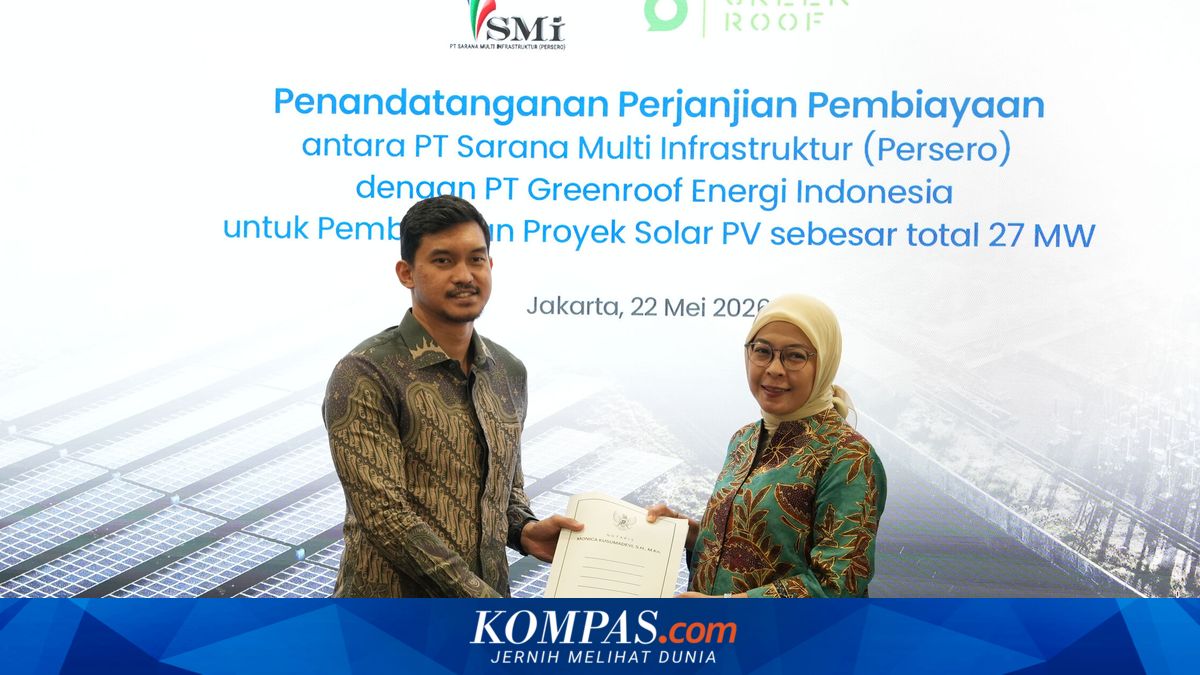
JAKARTA, KOMPAS.com — The drive to reach Indonesia’s target for the share of new and renewable energy (EBT) in the energy mix now hinges on the speed of private and corporate sector funding. PT Sarana Multi Infrastruktur (Persero), or SMI, has officially injected an investment credit facility of up to Rp125 billion to PT Greenroof Energy Indonesia (GREI)/CN Greenroof Asia (CNGRA). The funds are earmarked specifically for a project-financing scheme for Solar Photovoltaic (PV) plants owned by GREI operating in the commercial and industrial sector. Through the signing of the agreement on Friday (22 May 2026), the collaboration links domestic liquidity channels with the international investment ecosystem in Southeast Asia. GREI’s expansion in the domestic market is supported by a complex foreign shareholding structure. Its parent company, CN Green Roof Asia Pte. Ltd., is a joint venture formed by Climate Fund Managers (CFM) through the Climate Investor One (CI1) platform and Norfund. CI1 is a US$1 billion blended finance facility focused on clean energy infrastructure in developing markets. The financing is supported by public and private global funds, including the European Commission through the Global Gateway programme that targets high-quality green infrastructure investments. In 2024, Norfund recorded capital commitments of more than US$4 billion in Southeast Asia, Sub-Saharan Africa, and Central America, with about 40 percent of the allocation earmarked for the green energy sector. Sylvi J. Gani, Director of Financing and Investment at SMI, explained that deploying this funding is part of the corporation’s mandate to accelerate the strengthening of Indonesia’s green finance ecosystem. She said SMI is committed to supporting the development of new and renewable energy through sustainable and impactful financing. For the commercial and industrial (K&I) sector, the biggest barrier to rooftop PV adoption is the high upfront cost of capital.