
Supporting State Revenue, POPSI Requests Methodology for Proving Underinvoicing
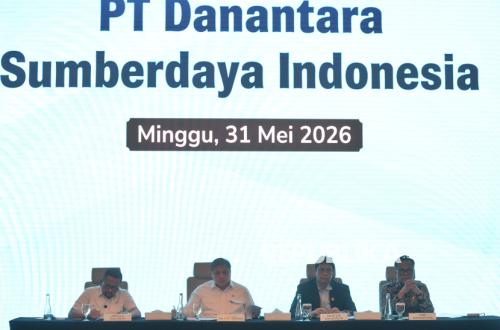
Finance Minister Purbaya Yudhi Sadewa has recently addressed the issue of underinvoicing in several exports. Similarly, the Minister of Agriculture, Amran Sulaiman, has raised this issue as a basis for the formation of Danantara Sumberday Kas Indonesia (DSI) to increase state revenue.
Underinvoicing practices are estimated to cause the state to lose between Rp 500 trillion and Rp 600 trillion per year. Consequently, the Indonesian Palm Oil Farmers’ Organisation Association (POPSI) is questioning the calculation methods used for underinvoicing to ensure they are not based merely on assumptions.
POPSI General Chairman Mansuetus Darto fully supports the government’s efforts to increase state revenue, strengthen international trade governance, and take action against any proven legal violations. However, he emphasised that any strategic policy capable of altering the palm oil export trade must be built upon strong evidence and a transparent methodology.
“We support the increase in state revenue and law enforcement against anyone proven to have committed violations. However, if a claim is used as the basis for major changes in export governance, then the methodology, data sources, and proof processes must be disclosed openly to the public,” Mansuetus stated in a press release in Jakarta on Wednesday (1/7/2026).
He believes that claims regarding the potential loss of state revenue due to underinvoicing, transfer mispricing, or other forms of irregularities require further explanation. This includes details regarding calculation methodologies, data sources, economic assumptions, validation processes, and the legal basis used.
Mansuetus noted that such transparency is essential so that the public can objectively assess the urgency of the proposed policy changes. POPSI also reminded that transfer pricing, transfer mispricing, and trade misinvoicing are distinct concepts.