
Supporting Food Self-Sufficiency, Baitul Arqom Islamic Boarding School Strengthens Agriculture and Livestock Sectors
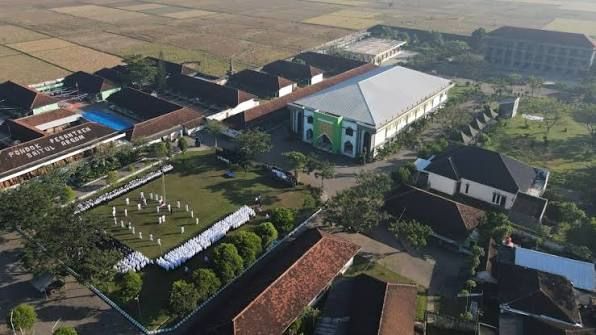
Baitul Arqom Islamic Boarding School in Balung, Jember, East Java, is strengthening its agricultural and livestock programmes as part of an effort to support national food security. These activities also serve as an educational platform for students to develop farming and animal husbandry skills.
The leader of Baitul Arembom Islamic Boarding School, K.H. Izzat Fahd, stated that the agricultural and livestock activities are not only aimed at meeting the internal needs of the boarding school but also at providing benefits to the surrounding environment.
“Students at Baitul Arqom are not only equipped with religious knowledge but are also directly trained in farming and livestock rearing. The benefits of this endeavour are felt immediately, including supporting the sustainability of the Free Nutritious Meal (MBG) programme, which is a focus of President Prabowo Subianto’s Asta Cita,” Izzat said in a press statement on Friday (11/9).
According to him, developing agricultural and livestock skills is part of the effort to build the boarding school’s self-sufficiency. Students are expected to possess not only religious expertise but also practical skills that can be applied after completing their education.
Muhammad Imaduddin, from the Research and Development Management Agency of Waqf and Business Units at Baitul Arqom, stated that economic independence is a key asset for boarding schools in supporting government programmes.
“Baitul Arqom Islamic Boardings School has a very strong foundation in its business independence, both through waqf management and the potential of the school’s business units. We are ready to synergise and contribute to supporting government programmes to realise an independent, advanced, and prosperous Indonesia,” said Imaduddin.
He noted that the development of productive businesses within the boarding school environment can be directed towards strengthening economic resilience while supporting food supply needs. This model is considered scalable for other educational institutions and community groups.
Izzat hopes that the food self-sufficiency pattern developed by the boarding school can be implemented more widely. He believes such steps are crucial to strengthening community food security amidst rising prices of several basic commodities and extreme weather conditions.
“We hope the food self-sufficiency system used by the boarding school can be emulated by other educational institutions and the wider community. The goal is to maintain our food security amidst the rising prices of several basic commodities and prolonged El Niño conditions,” he added.
The development of agriculture and livestock at Baitul Arqom is intended to run alongside religious education and the management of the school’s business ventures. This step is expected to create a community-based food self-sufficiency ecosystem while strengthening the boarding school’s contribution to national food security.