
Supported by TEP UI, Sambas Residents Transform Barren Land into Vegetable Gardens
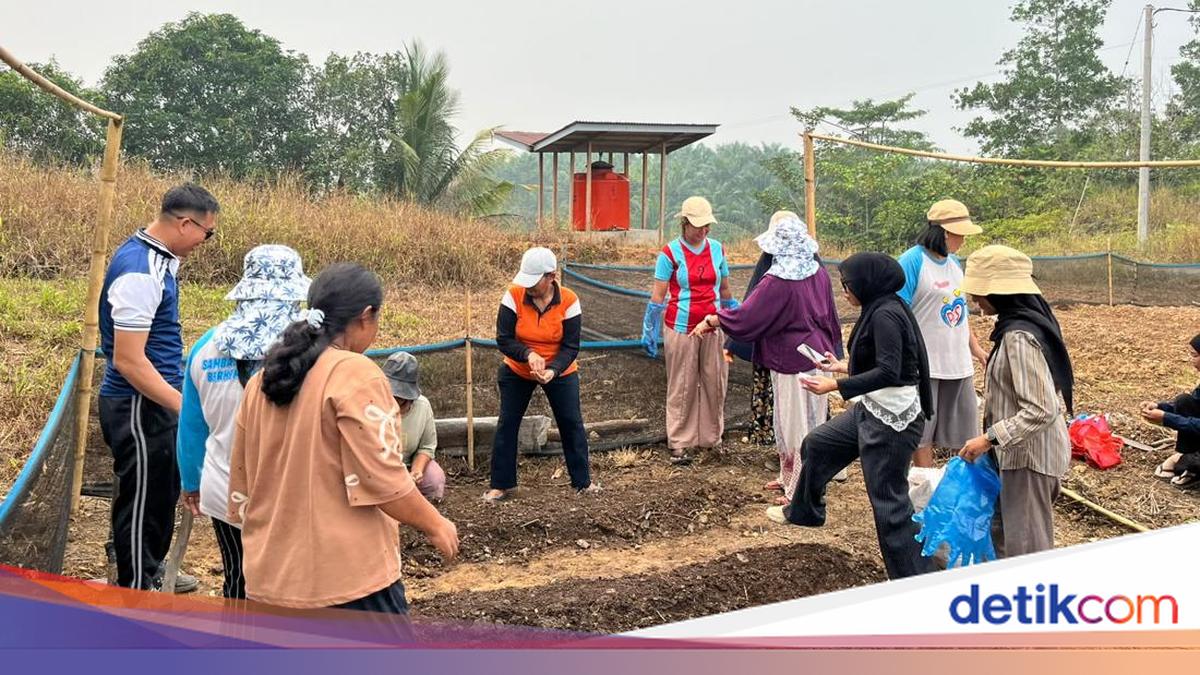
The community of Sebunga Village, located in the Gerbang Mas Perkasa Transmigration Area, Sambas Regency, West Kalimantan, is now able to reduce daily grocery expenses while achieving family food independence.
This tangible benefit has been directly experienced by residents after their home yards, which were previously barren and rocky, were transformed into vegetable gardens through collaborative efforts with the University of Indonesia’s Patriot Expedition Team (TEP UI).
Ana Sofia, a resident and owner of a pilot garden in Sebunga, expressed her joy, noting that the programme provides productive activities for housewives. “We are happy with the presence of the Patriot Expedition Team; the women here now have productive activities. The vegetable yields can be used for daily consumption, eliminating the need to buy them. Buying vegetables from Sambas is far, requiring a two-hour journey,” Ana stated in a written report on Wednesday (30/09/2026).
Meanwhile, Ola, another transmigrant resident, noted that the physical condition of the land was previously the main obstacle in the area. “The soil here is dry, yellow, and rocky, with no water. It is not that we do not want to plant vegetables, but it is difficult because plants die easily,” said Ola.
Responding to these challenges, TEP UI organised a Focus Group Discussion (FGD) on Saturday (29/08) to determine locations and select 10 primary commodities, including cucumbers, chillies, tomatoes, and medicinal plants. The processing was carried out in stages, starting with soil loosening using hand tractors provided with assistance from the Sajingan Besar Police Chief, the application of dolomite lime, and soil nutrient enrichment using palm oil waste and organic fertiliser.
Rahayu, a representative of TEP UI, expressed hope that this yard optimisation programme, based on the Integrated Farming concept, can continue independently by the local community. “This yard optimisation is part of the Integrated Farming concept. We hope that with the presence of local champions and social agreements, this programme will continue sustainably and independently,” said Rahayu.
Efforts towards food self-sufficiency in this transmigration area align with the priority policy directions of the central government. The President of Indonesia, Prabowo Subianto, has emphasised the importance of food self-sufficiency amidst global uncertainty. “In today’s world, a world full of conflict and wars everywhere, we must achieve food self-sufficiency; we must achieve energy self-sufficiency. We must not depend on other nations,” stated Prabowo.
Furthermore, the Coordinating Minister for Infrastructure and Regional Development, Agus Harimurti Yudhoyono (AHY), added that the ‘Patriots’ should map the problems faced by the community and find the best actionable solutions to advance the local economy. “Because these problems are ultimately local in context. So, we may think globally, but we must act locally. In the end, it is about the local level,” said AHM.
The principle of delivering sustainable benefits was also echoed by the Minister of Transmigration, M. Iftitah Sulaiman Suryanagara. “The transformation of transmigration today is not merely about moving populations, but about ensuring that prosperity grows within those areas,” said Iftitah.