
Support and Notes from Legislators on WFH Policy to Save Fuel
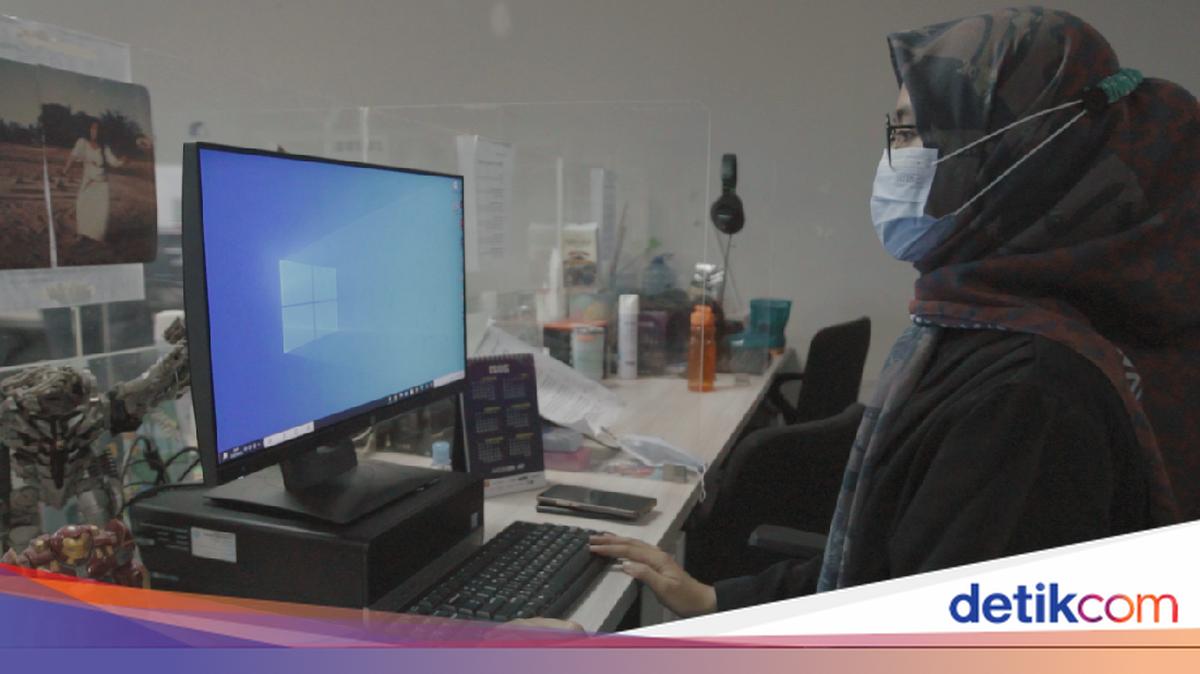
The government has established a work-from-home (WFH) policy every Friday for civil servants (ASN) as an effort to save petroleum fuel (BBM) amid the Middle East conflict. Support and notes have come from Senayan regarding the policy.
This WFH policy is one of eight national work culture transformations as an adaptive and preventive step. The announcement was officially delivered by Coordinating Minister for the Economy Airlangga Hartarto in an online press conference on Tuesday (31/3/2026).
Airlangga stated that the policy has been calculated based on experiences following the COVID-19 handling. The policy aims to encourage the implementation of a digital-based work system while increasing efficiency.
“Why Friday? Because some ministries have already done that, working four days a week with applications, this is post-COVID,” said Airlangga.
Airlangga also mentioned that the workload on Fridays is not as heavy as on other days. However, he emphasised that public services will continue to operate despite the implementation of WFH one day a week for ASN.
“We chose Friday because it’s half, meaning not full from Monday to Thursday. But public services will still run,” Airlangga said.
The determination of the WFH day close to the Saturday-Sunday weekend has elicited responses from Senayan. They have provided support along with notes regarding the policy. Here is a summary.
Support came from the NasDem Faction. Deputy Chair of NasDem Commission II DPR Ujang Bey assessed that WFH for fuel saving must be implemented immediately.
“I think the government must have studied and calculated it with full consideration before taking that policy step. Regardless, the fuel saving policy (WFH) indeed needs to be carried out as soon as possible by the government, considering we never know when the signs of the Iran vs Israel and US war will end,” Ujang told reporters on Wednesday (1/4/2026).
Nevertheless, Ujang emphasised the importance of periodic evaluations of the policy’s implementation. The government, he said, must continue to analyse the strengths and weaknesses of the WFH policy.
“Whether the policy can be changed in timing or added. It all depends on how effective the policy impacts fuel savings,” he said.
Furthermore, Ujang warned of the potential for misuse of the WFH policy. He reminded that WFH is not an extension of the weekend holiday.
“Indeed, there were some concerns from friends in Commission II yesterday, don’t let the weekend WFH policy be seen as a long holiday and used as an opportunity to holiday with family or hang out with friends,” he said.
In agreement, Deputy Chair of PKB Commission II DPR RI Muhammad Khozin assessed that the government has special considerations regarding the regulation. He hopes that WFH every Friday will be evaluated periodically.
“But the government has discretionary authority in determining WFH as a manifestation of government administration,” said Khozin.
“However, we request that the implementation of WFH every Friday be evaluated periodically and supervised consistently by ministries, agencies, and local governments,” he added.
He wants the implementation of WFH on Fridays to meet the target of reducing BBM consumption. In addition, he continued, ASN productivity is expected to remain maintained.
“Besides the implementation of WFH on Fridays, we encourage the central and local governments to take this momentum seriously to design better public transportation in the regions. In addition, the implementation of WFH also becomes a momentum for air pollution control,” he said.
Member of Commission II who is also Head of PKS Bappilu Mardani Ali Sera stated that the WFH policy reported to his side could efficiency office budgets by up to 32 percent. He hopes the fuel saving goal from the WFH implementation can be achieved.
“For BBM, a study is needed, but yesterday’s meeting with BKN (State Civil Service Agency) efficiency in the office can be 32 percent in one day for electricity, water, official vehicles to operational costs,” said Mardani opening his opinion to reporters on Wednesday (1/4/2026).
He emphasised the need for thorough socialisation so that the policy runs effectively in suppressing energy use. Mardani also reminded the importance of strict supervision so that work productivity does not decline.
“First, detailed supervision is needed. Second, thorough socialisation is needed. Third, ensure evaluation is done carefully. Finally, ensure productivity does not decrease. In fact, it must increase. It needs to be continued by suppressing BBM consumption by facilitating public transportation,” he said.
Deputy Chair of PDIP Commission II DPR and also PDIP DPP Chairman Deddy Sitorus provided notes on the policy. He requested that WFH every Friday be evaluated if it is not effective.
“Yes, to be honest, I’m confused if Friday is chosen for WFH, because there is potential that it will not be effective in suppressing BBM consumption,” Deddy told reporters on Wednesday (1/4/2026).
“We’ll see how effective the choice is later and it is very possible to be evaluated, especially if the Middle East war continues prolonged,” he continued.
According to him, the government should have a clear calculation basis in determining the WFH implementation day. Because, he said, the policy is not only related to ASN mobility, but also impacts various other aspects.
“I don’t understand the basis for choosing long weekend as WFH day, for that we wait for the government’s explanation first. Because to decide the WFH day, there must be psychosocial calculations, economic activity projections, mobility patterns and public consumption as well as many other calculations based on various scenarios,” he explained.
Deddy said the policy needs to be tested for effectiveness through measurable data. Among them is the BBM consumption graph and public mobility movements.
“Later, the BBM consumption graph can be seen, da