
Supply Chain Becomes a Critical Factor in F&B Industry Growth
The expansion of the food and beverage (F&B) industry is driving an increased need for stable and consistent raw material supplies. The growth of coffee shops, modern beverage outlets, and online sales systems has made supply chain efficiency a key factor for culinary entrepreneurs.
Data from the Indonesian Central Statistics Agency (BPS) shows that the food and beverage industry consistently remains one of the manufacturing sub-sectors with the largest growth contribution to the national Gross Domestic Product (GDP). During the economic recovery period, this sector grew at an average of approximately 4 to 5 per cent, supported by changes in urban lifestyles and the increasing consumption of ready-to-eat products.
This growth has direct implications for the demand for raw materials, particularly natural sweeteners, which are a primary component of various modern beverage products. Instability in flavour or commodity availability is considered capable of affecting operational efficiency and business margins, especially for MSMEs (Micro, Small, and Medium Enterprises) that move quickly to follow market trends.
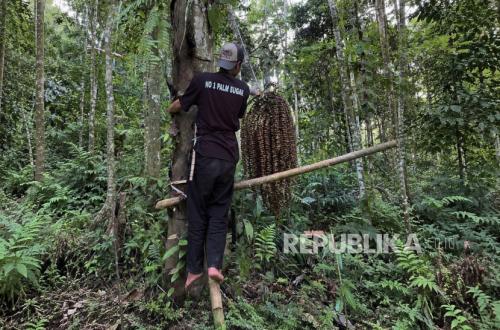
Responding to these needs, CV Jagoan Food, through its Palmarie brand, is developing a raw material supply system based on business-to-business (B2B) and MSME requirements. Operating since 2019, the company focuses on the distribution of palm sap-based sugar with standards of flavour consistency tailored to the needs of the commercial industry.
The company conducts needs mapping based on the type of culinary business. For the beverage segment, such as boba and milk tea, premium brown sugar variants are provided, designed to produce a stable caramelisation character. Meanwhile, the trend for espresso and latte-based coffee is addressed through the provision of liquid palm sugar with an authentic aroma profile.
The Director of CV Jagoast Food, Arie Adrian, explained that the high dynamics of the F&B industry make logistics management and raw material quality control decisive factors for business sustainability. “The current dynamics of the F&B market demand both speed and supply consistency so that business actors can maintain product quality and operational efficiency,” Arie stated on Monday (18/5/2026).
According to him, supply chain stability is no longer merely a matter of distribution, but also the ability to adjust the characteristics of raw materials to ever-changing market needs.
“Therefore, our operational strategy centres on optimising measurable production capacity and implementing strict hygienic feasibility standards. This aims to ensure that F&B businesses no longer have to face fluctuations in the quality of natural sweeteners, which risk altering their flavour identity,” he said.
Amidst the ongoing growth of the F&B sector, the readiness of raw material providers to maintain quality, supply continuity, and distribution efficiency is expected to increasingly determine the long-term competitiveness of culinary businesses.