
Supervision of Subsidised Diesel Distribution Needs Strengthening
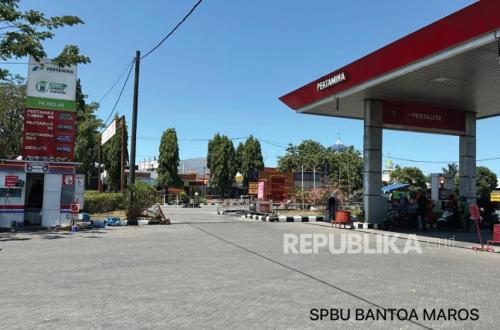
Supervision of subsidised diesel distribution needs to be strengthened to ensure that distribution proceeds according to quotas and the needs of the community in various regions. This oversight must cover the entire distribution chain, starting from national and regional availability and fuel terminals, to distribution at petrol stations.
Long queues of logistics vehicles accessing subsidised diesel have occurred in several regions of Sumatra and Kalimantan. This condition does not necessarily indicate a national shortage of fuel stocks; therefore, it must be viewed alongside quota management, regional availability, distribution, and the distribution conditions at the petrol station level.
The Executive Director of the Center for Energy Security Studies (CESS), Ali Ahmudi Achyak, stated that the government already has a tiered mechanism for managing subsidised fuel quotas, ranging from national and regional levels to distribution agencies. Therefore, conditions at petrol stations must be viewed in conjunction with quota management and distribution at previous levels.
“If queues occur, do not immediately conclude that our fuel stocks are low. We must look at national stocks, regional stocks, fuel terminals, and stocks at petrol stations. If stocks at the national and regional levels are secure, the question is what is happening at the lower level,” Ali said on Tuesday (23/09/2024).
According to Ali, distribution supervision is particularly important in regions facing infrastructure and transport connectivity challenges, such as Sumatra and Kalimantan. Geographical conditions and limited transport mode options in certain areas can affect the smoothness of distribution to petrol stations.
“If long queues occur, especially to the point of disrupting activities and driver safety, the logistics and distribution systems must be examined. Do not only look at the size of the quota,” said Ali.
Ali noted that quota management at the petrol station level must go hand-in-hand with distribution monitoring. Each petrol station has a quota that must be managed to meet consumer needs throughout the designated period, while simultaneously ensuring that subsidised fuel is received by entitled users.
In addition to distribution, supervision must also address the potential for irregularities. Repeated purchases of subsidised fuel or its diversion for illegal resale outside of petrol stations can affect distribution to rightful consumers.
“If there is unofficial sale of subsidised fuel around petrol stations or along transit routes, this must be viewed as a matter of law enforcement. No matter how large the quota is, if there are irregularities, the problem will not be resolved,” he said.
Therefore, Ali stated that supervision needs to be carried out in an integrated manner by looking at the entire distribution chain, from national and regional quotas to fuel terminals and individual petrol stations. Digitalisation, the reliability of distribution facilities, and information exchange between parties are considered helpful in detecting distribution disruptions or potential irregularities more quickly.
According to Ali, coordination between the central government, local governments, the Downstream Oil and Gas Regulatory Agency (BPH Migas), state-owned energy companies, distribution businesses, and law enforcement agencies is also necessary to maintain smooth distribution.
“What needs to be strengthened is supervision from upstream to downstream. The central government, local governments, BPH Migas, and state-owned energy companies must work together to improve the system and increase oversight. Once the system is regulated, we must ensure that field irregularities do not result in the people who need it most being the ones disadvantaged,” said Ali.