
Superstition Makes Stigmatised Homes a Tough Sell in Japan, But Solutions Emerge
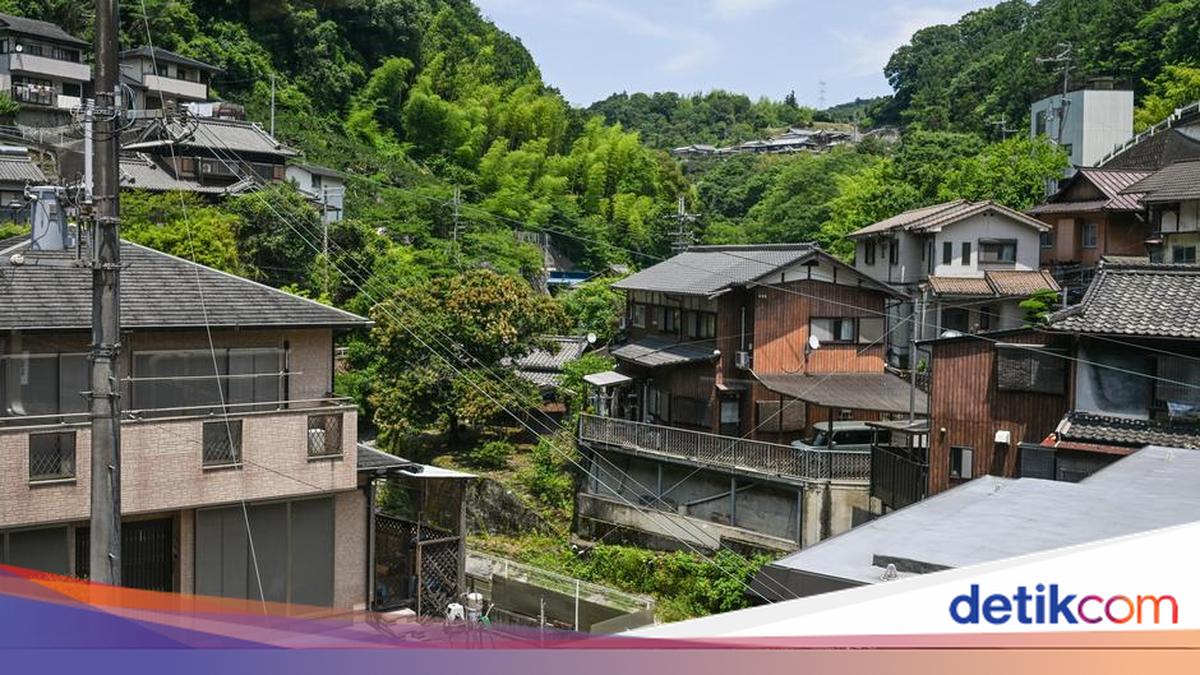
A two-storey house in the southern suburbs of Yokohama appears to have been unoccupied for a long time. The downstairs windows are tightly sealed with metal shutters, the paper sliding doors on the upper floor are beginning to decay, and the garden is overgrown with weeds. With a little renovation and expense, the house could once again become a comfortable home. However, no Japanese citizen wants to buy it. The reason is that the house has a dark history. In Japan, such properties are known as ‘jiko bukken’, which translates to ‘stigmatised property’, and it has been empty for at least five years. Something bad happened there, perhaps a suicide, a fatal fire, or the lonely death of an elderly resident. Murder is also a primary reason why a property is shunned.
Kazutoshi Kodama, President of Kachimode Co., a specialist property firm, believes that ‘jiko bukken’ represent a financial burden for owners and a business opportunity for him. The company he founded in December 2022 helps owners of properties with a history of tragic events manage their rental assets. One of the services they offer is a thorough ‘ghost investigation’, according to Kodama. Far from being considered strange, demand for this service is growing rapidly. ‘A portion of Japanese society still considers death to be impure or to carry a negative aura,’ Kodama told DW. ‘Death is synonymous with impurity and bad luck. Consequently, they believe that being too close to death will bring them misfortune. As a result, quite a few Japanese people are reluctant to go near such a property, let alone rent or buy it.’
Renting or selling a ‘jiko bukken’ is no easy task. In Japan, estate agents have a legal obligation to inform potential buyers or tenants if a house has a history of a tragic event. There are even websites that map the locations of stigmatised properties across Japan, complete with the reasons why the house is listed. Most relate to fires, the discovery of a person’s body long after their death, or suicide. However, some listings only provide vague notes such as: ‘further information available through the estate agent.’ According to Kodama, homeowners with such a history typically have to reduce the rent by up to 30% in major cities with high housing demand. In other areas, the price reduction can reach 50%. ‘There are some properties that, despite being continuously advertised for rent, remain empty for 500 days,’ he said. ‘I even know of a property that was empty for more than 1,000 days. In short, such properties end up as mere empty buildings, and the concept of a price reduction no longer has any effect.’
However, some tenants feel more at ease after Kachimode carries out a ‘cleansing’ process that is far more thorough than simply replacing the carpet, fixtures, and wallpaper. ‘My company conducts what we call a ghost investigation,’ said Kodama. ‘We stay overnight in the room where the incident occurred, from 10 p.m. until 6 a.m. the following morning. We conduct video recordings, audio recordings, electromagnetic wave checks, room temperature measurements, humidity and air pressure readings, thermal imaging, and noise surveys,’ Kodama explained. ‘The goal is to prove that the room where someone died has been thoroughly renovated and is now clean, and to demonstrate that there are no poltergeist phenomena, ghostly apparitions, or other mysterious occurrences.’
Kachimode’s service is unique in Japan. Kodama collaborates with a university professor who has expertise in monitoring supernatural phenomena. A single overnight investigation service is priced at ¥88,000, or approximately Rp9 million. Once the investigation is complete, the homeowner receives a full report that estate agents can use to convince potential tenants that no ‘evil spirits’ remain in the house. Kodama says the equipment used in the investigations sometimes captures unusual events, such as a camera suddenly stopping recording or a microphone experiencing interference. ‘Even so, in the vast majority of cases, what is considered abnormal cannot be replicated and is ultimately deemed a one-off event,’ he said. ‘However, there are also properties where various mysterious phenomena continue to occur consistently for over a year.’
Meanwhile, Joey Stockerman, co-founder of AkiyaMart, a company that promotes vacant houses in Japan, says the number of abandoned properties in the country continues to rise. Many are in rural areas experiencing population decline, but a significant number are also in city centres. ‘There are many empty houses in Japan, even surprisingly so in urban areas. The causes vary, from families disagreeing on the fate of a house to owners feeling the house is not fit for sale. However, there are also many properties that carry a stigma,’ Stockerman told DW. According to a government survey at the end of 2024, there are 9 million vacant homes in Japan, accounting for about 13.8% of all housing in the country. Although many factors cause the high number of empty homes, superstition and belief also contribute to the problem. ‘Japanese people can often be very superstitious,’ Stockerman said. ‘Renting a place that was once the site of a person’s death can be extremely difficult.’