
Supermarkets Attacked Across Europe as Food Crisis Looms
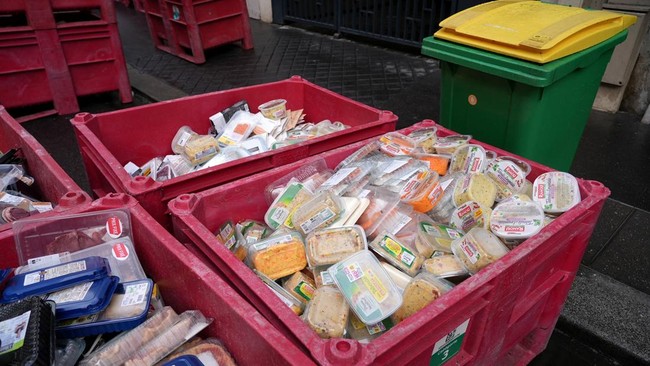
A mysterious wave of hacking has spread across Europe. Hackers deliberately breached and disrupted temperature-control systems in refrigerators and freezers at dozens of retailers and supermarkets, from Sweden to Belgium, forcing stores to discard large quantities of food.
The cyberattacks, which caused refrigeration temperatures to rise dramatically, hit supermarket giants Ahold Delhaize and Colruyt in Belgium and Luxembourg. Swedish grocery retailers ICA and Coop, as well as Swedish home-furnishings retailer IKEA, also confirmed that their operations had been affected by hacking.
“Everything is ruined. There was a cyberattack and the temperature in all our freezers shot up to 50 degrees Celsius,” said Engla Ingwall, a sales manager at an ICA franchise in Stockholm, Sweden, as quoted by Reuters on Tuesday (3 November 2026).
The incident follows a similar attack last month that affected hundreds of supermarkets in France. Hackers took control of refrigeration-unit temperature systems, triggering fires and the mass destruction of food stocks.
Although no individual or group has claimed responsibility, the systematic attacks have put European authorities on high alert. The incidents are viewed as a hybrid threat deliberately targeting vital infrastructure used by the public, amid heightened geopolitical tensions in the region since Russia’s 2022 invasion of Ukraine.
The Kremlin has consistently denied involvement in sabotage operations or cyberwarfare.
“It is not yet clear who is behind these attacks. All IT systems could be vulnerable, and artificial intelligence (AI) can now be exploited to break into those weaknesses,” said Katrien Eggers, a spokesperson for Belgium’s Centre for Cybersecurity.
Retail sector an easy target for digital sabotage
From refrigerators and heating systems to security cameras and alarms, industrial equipment that was once mechanical is now connected to the internet through the Internet of Things (IoT) and can be controlled remotely. This digital transition has created new openings for cybercrime.
Some of the disabled refrigeration units were found to use temperature-control technology made by Danish company Danfoss, the same supplier targeted in the attacks in France.
The European Commission said the incidents posed a serious threat that could disrupt the region’s economic stability.
“This is a deliberate attempt to damage the food supply chain and erode consumer confidence. It is a stark warning that we must take seriously,” said EU Agriculture Commissioner Christophe Hansen.
The effects of the hacking also reached Ireland, where wholesaler Musgrave had to withdraw chilled products from 13 SuperValu stores. In Belgium, Carrefour reported that 15 of its 700 stores had been affected, while local butcher De Laet & Van Haver said it had lost as much as €15,000 (Rp304 million) after meat spoiled when refrigeration temperatures were illicitly raised to 18 degrees Celsius.
Tom Hegel, a cybersecurity researcher at SentinelOne, said the absence of ransom demands suggested the attacks were primarily acts of industrial sabotage or a geopolitically motivated operation by a nation-state.
“The retail sector is an especially easy target because it operates thousands of temperature-control devices, building-management systems and point-of-sale terminals. Hackers who gain access to an exposed control panel leave almost no digital trace,” Hegel said.
Source: jawawa.id (https://jawawa.id/newsitem/supermarkets-attacked-across-europe-as-food-crisis-looms-1793692290)
Originally published by CNBC Indonesia (https://www.cnbcindonesia.com/tech/20261103120026-37-781844/supermarket-diserang-di-mana-mana-krisis-pangan-di-depan-mata), translated from Indonesian