
Super Typhoon Bavi Wreaks Havoc Across Pacific and East Asia
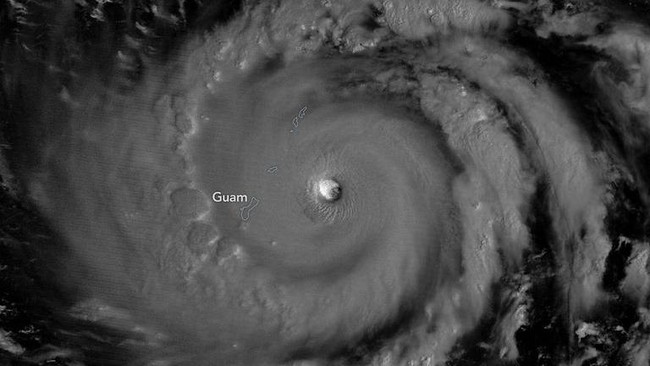
Super Typhoon Bavi has left a trail of destruction across several nations in the Pacific and East Asia, affecting the Mariana Islands, Guam, the Philippines, Taiwan, and China. For the second time in three months, a powerful typhoon struck the U.S. territories of the Northern Mariana Islands and Guam in early July 2026. Bavi reached its peak intensity as it approached the islands on the night of 5 July, packing winds of 290 kilometres per hour alongside torrential rain and a dangerous storm surge. Night-time imagery from the VIIRS instrument on the NOAA-20 satellite captured the typhoon’s eye as it passed over Rota, north of Guam. Bavi intensified into a super typhoon on 4 July, becoming the third Category 5 cyclone of the year, fuelled by sea surface temperatures of around 30 degrees Celsius. The storm caused extensive damage across Guam, Rota, and Saipan, downing power lines, flooding roads, and damaging buildings, including a water distribution station on Rota. U.S. Coast Guard crews worked to clear navigational hazards and reopen ports as conditions improved. This damage compounded the destruction from Super Typhoon Sinlaku, which had struck the islands in mid-April. By 8 July, Bavi remained a powerful storm over the Philippine Sea, with maximum sustained winds of 250 km/h. Forecasts indicated a turn towards Taiwan, Japan’s Ryukyu Islands, and mainland China, with gradual weakening expected. Meteorologist Jeff Masters noted that the storm’s behaviour is typical during a strong El Niño, which allows typhoons to form further east and intensify over warm waters for longer before reaching Asia. Bavi made landfall in Zhejiang province, eastern China, late on Saturday, bringing strong winds and heavy rain. Chinese authorities evacuated over 1.7 million people and issued high-level weather warnings. Hundreds of flights were cancelled, rail services were reduced, and schools and ferry services were suspended. In Fujian province, more than 3,700 people were evacuated from high-risk areas, and over 17,000 emergency responders were placed on standby. In the Philippines, the typhoon-enhanced southwest monsoon triggered landslides that killed at least 17 people. Taiwan reported 36 injuries, mostly from road accidents in heavy rain, and evacuated around 14,210 people, primarily from Taichung and Hualien, while schools, offices, and most restaurants were closed.