
Super El Niño Turns the Ocean Grey
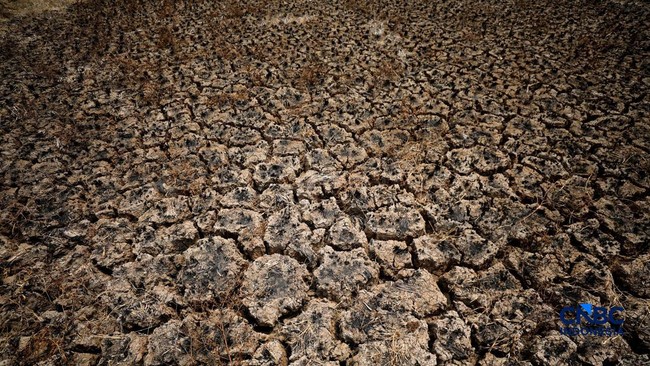
Jakarta, CNBC Indonesia — Recent NASA satellite imagery has revealed that Super El Niño has changed the colour of the world’s oceans. The equatorial Pacific, which was previously green, suddenly turned blue over the past year.
El Niño is said to disrupt ocean currents that bring cold, nutrient-rich water to the surface. These nutrients are vital to photosynthesising plankton, which give the region its striking emerald-green colour.
Without this food supply, the plankton die of starvation, and the barren, lifeless expanse of deep blue returns to the Pacific.
A side-by-side comparison with satellite data from 2025 shows that the region retained its characteristic green hue throughout that year. However, the latest data, which run through this month, show that the area around the equator has turned entirely blue.
El Niño is part of a natural climate cycle known as the El Niño–Southern Oscillation (ENSO). Every two to seven years, the pattern brings a warm El Niño period or a cooler La Niña phase.
During El Niño, warm water gathers in the equatorial Pacific off the coast of South America. This raises average temperatures and affects global weather patterns.
Scientists now believe the Earth is in the early stages of a very powerful El Niño cycle, which could trigger catastrophic effects in the coming months and throughout 2027.
As of October, the National Oceanic and Atmospheric Administration (NOAA) forecasts an 83% probability that this will be the strongest El Niño since records began in 1950. Meanwhile, NASA satellite measurements show that sea-surface temperatures in the eastern Pacific are currently 1.7°C (3°F) above the long-term average and could rise further in the coming months.
The ‘belt’ of warm water has expanded throughout the spring and now covers millions of square miles, stretching from the coast of South America to the heart of the Pacific.
This is also the first El Niño year since NASA launched the PACE (Plankton, Aerosol, Cloud, Ocean Ecosystem) satellite in 2024, giving scientists an unprecedented view of the unfolding threat.
The Ocean Colour instrument on PACE observes the ocean in hyperspectral colour, measuring wavelengths across the visible, ultraviolet and infrared spectra.
‘Some people think water is just blue, but it is amazing to see how many colours the ocean has,’ said Dr Matthew Kehrli, a principal research scientist at NASA’s Goddard Space Flight Center, as quoted by the Daily Mail on Wednesday (21 October 2026).
During El Niño, the trade winds that usually push warm water west towards Australia weaken or even reverse. This reduces the upwelling of nutrient-rich water from deeper parts of the ocean, causing a decline in algae and making the water bluer, as seen in PACE observations.
The decline in algae could also trigger a cascade of effects throughout marine ecosystems. This may force other animals to move to new breeding grounds in search of phytoplankton.
‘You have expectations about what you think will happen, but seeing the results visually in the data products you are working on in real time is very satisfying,’ he said.