
Sunlight turned into electricity as technology transfer advances the green transition
Jakarta (ANTARA) – After travelling for more than an hour south-east of Jakarta, the route reaches Kota Bukit Indah Industrial Estate in Purwakarta Regency, West Java Province.
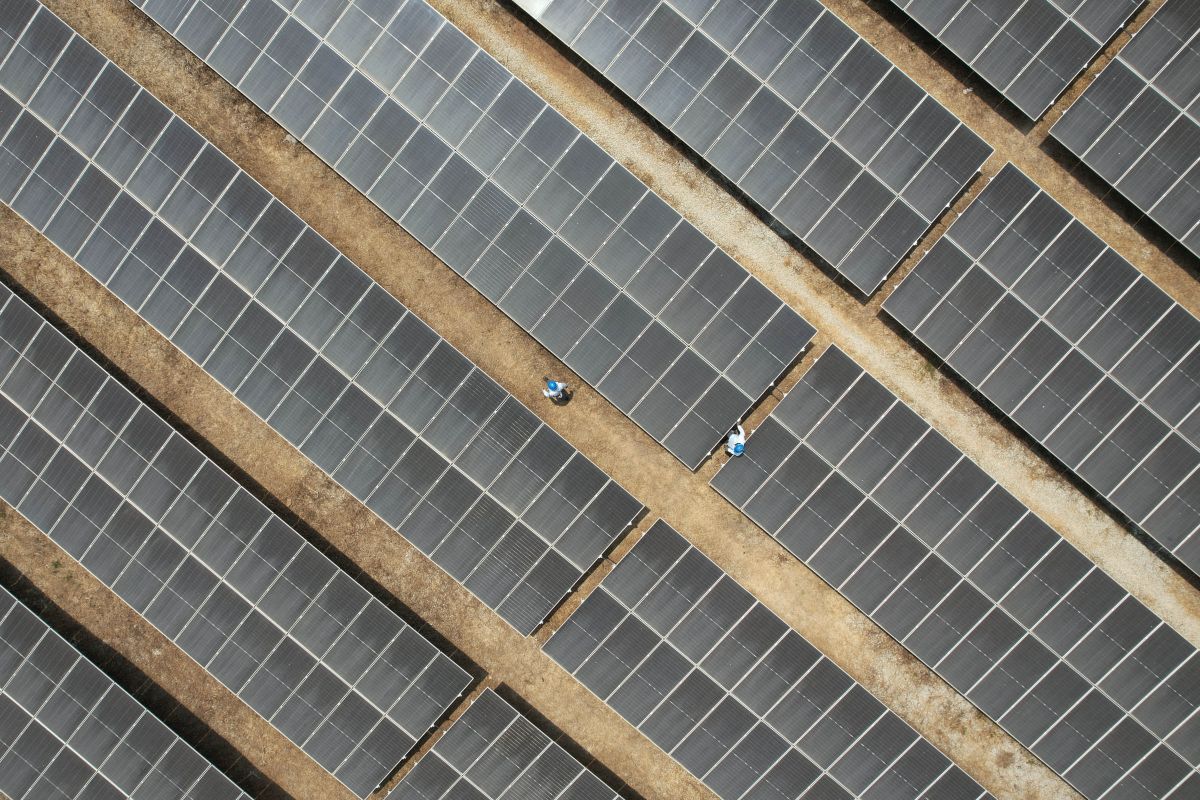
Behind rows of trees, lines of grey solar panels stretch across the contours of the land, glinting in the sunlight.
Here, sunlight is converted into electricity and supplied to the industrial estate, providing clean power to its factories.
This is the Karawang Solar Power Plant (PLTS), a 100-megawatt-peak (MWp) ground-mounted facility built by PowerChina Hubei.
The project was connected to the electricity grid in July 2024 and officially began operating in August that year.
The plant is now operating steadily, while the technical experience gained during construction continues to serve local workers in their day-to-day jobs.
“I didn’t understand the system very well before. Now I can operate it smoothly. I also want to learn how to programme it,” power plant operator Salas Panji said, pointing to a screen in the control room.
Salas, 25, who studied electrical engineering, has worked at the plant for two years.
Every day, he records the amount of electricity generated and monitors the condition of the equipment. If he detects a problem with a transformer, inverter or supervisory control and data acquisition (SCADA) system, he reports it immediately.
When he first started, Salas was unfamiliar with the system. Through training and daily practice, he gradually mastered the basic operation of the plant’s equipment and systems.
Inverters, transformers, photovoltaic modules and other equipment each have different operating requirements, so technicians need to keep learning and gaining experience.
For Salas, the job has not only allowed him to apply what he learned at university, but has also introduced him to new technology.
“Working here is very interesting because this is the field I have always wanted to work in,” he said. He hopes the plant’s electricity output will continue to increase and that Indonesia will make greater use of advanced renewable-energy technologies in the future.
Salas’s experience in developing his professional skills illustrates how technology transfer began during the plant’s construction.
Yang Xiaopei, a project manager from PowerChina Hubei, told Xinhua that resources for building large-scale ground-mounted solar projects in Indonesia were relatively limited during the construction period.
Previously, most ground-mounted solar projects in Indonesia had smaller capacities.
The number of local subcontractors with experience in large-scale projects was limited, while there were also not enough skilled workers able to install solar-panel support structures.
Heivenly continues to work at the plant, in safety management. His duties include explaining work plans, potential hazards and preventive measures to workers, and checking that safety procedures are followed.
He said that working with Chinese workers had shown him how exchanges of knowledge and technology could help local workers gain experience.
To address the skills shortage, the project team assigned skilled workers from China to train local workers. In total, more than 300 local workers were trained as skilled installers, with the highest daily installation rate reaching 2.5 MW.
From on-site demonstrations to practical installation work, Chinese technicians shared their experience through hands-on instruction. This helped keep construction on track and gave local workers the opportunity to take part in building a large-scale solar plant.
Helmi Faisal Kamil, a technician from Bandung, told Xinhua that the solar plant covers approximately 80 hectares and has a planned installed direct-current (DC) capacity of 100.78 MW. It consists of five land blocks and 24 generating units.
“The electricity generated is received by the industrial estate’s management and then distributed to the relevant factories to provide clean energy for industrial activities,” Helmi said.
In addition to supplying clean electricity, the project’s construction and operation have created jobs for local people.
Muhamad Heivenly, a safety supervisor at an Indonesian company involved in the project, previously worked alongside Chinese technicians.
He said that although the two sides sometimes needed interpreters to communicate, Chinese workers and managers were willing to share their experience and help improve the skills of local workers.
“They teach us the things they know how to do. They hope that we can master those skills too,” he said.
At the height of construction, the project employed around 800 to 1,000 workers, Heivenly said.
The workforce at the site has fallen since construction was completed. However, plant operations, equipment inspections and maintenance still require local workers, giving some of them the opportunity to learn about the new-energy sector.
Heivenly said solar-energy development could help reduce dependence on coal and other conventional energy sources.
He hopes Indonesia will build more projects like this in the future so that the country can make better use of its abundant solar potential.
The sun continues to shine on the rows of solar panels as the electricity they generate flows into the industrial estate.
Alongside clean energy, technology exchange and the development of skilled workers are important outcomes of the project. Through technological cooperation, the Chinese company is helping to improve local workers’ skills while supporting the development of clean energy and Indonesia’s green transition.