
Sunlight-Reflecting Satellites Spark Concern Among Astronomers
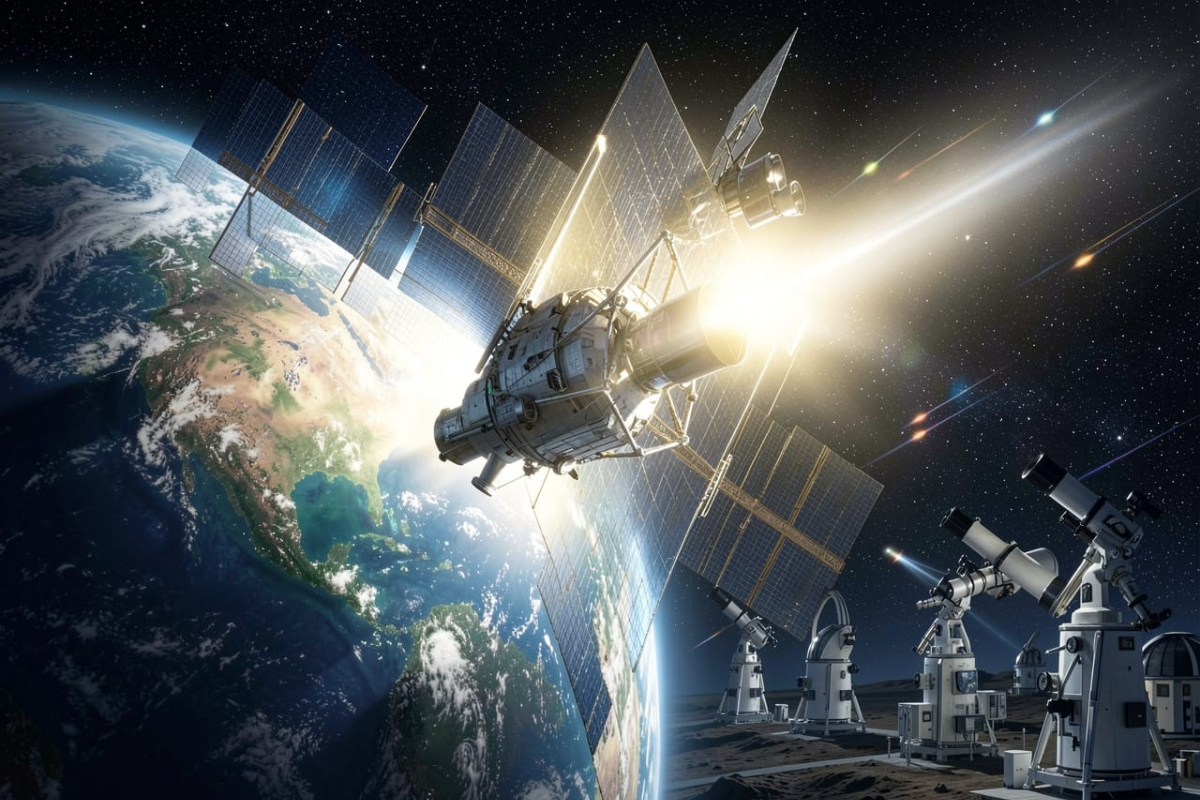
The planned use of satellites capable of reflecting sunlight onto the Earth’s surface is drawing attention from astronomers. The technology is being developed to harness sunlight after sunset, but it simultaneously raises concerns about its impact on night sky conditions and astronomical observation activities. One project under scrutiny is Reflect Orbital, a company developing satellite technology with reflectors or mirrors in space. In a filing with the Federal Communications Commission (FCC), the company proposed a plan to operate the Earendil-1 satellite to test space reflector technology designed to beam sunlight to specific locations on the Earth’s surface. The satellite is planned to operate in an orbit approximately 625 kilometres above Earth. This technology fundamentally has a different purpose from conventional communications satellites. The reflector is designed to direct sunlight to specific areas so that the Earth’s surface remains illuminated even after the sun has dipped below the horizon. The concept could potentially be used to support solar power plants or specific lighting needs. However, the ability to reflect light from orbit is precisely the problem for astronomers. Sunlight reflected by objects in low Earth orbit can enter the field of view of telescopes and produce bright streaks on astronomical images. This condition can disrupt observations of very faint celestial objects. The European碉堡 Southern Observatory (ESO) has even modelled the impact if Reflect Orbital were to develop a constellation of up to 50,000 reflecting satellites. Simulation results show that light reflected and then scattered by the atmosphere could make the sky around the Very Large Telescope (VLT) three to four times brighter. Astronomers’ concerns are not limited to sunlight-reflecting satellite projects. The growth in the number of satellites in low Earth orbit in general has become a concern for the astronomy community. Research published in Nature shows that reflected light from satellites can produce bright streaks on astronomical images and potentially disrupt both ground-based and space-based telescopes. If the number of satellites continues to grow, the problem could become increasingly complex. Reflected light does not always have to be directed straight into a telescope to cause interference. Light scattered by the atmosphere can also increase the background brightness of the sky, making faint astronomical objects more difficult to observe. Nevertheless, light-reflecting satellite technology is still in the development and testing phase. The main issue is not simply whether the technology can work, but how its use can proceed without sacrificing the interests of astronomical research. Therefore, astronomers and related institutions are pushing for mitigation measures, such as controlling satellite reflectivity, regulating satellite orientation, providing accurate orbital data, and coordinating with the astronomy community. Such efforts are necessary so that the development of the space industry can proceed alongside efforts to preserve the dark night sky for scientific research.