
Sunan Drajat Islamic Boarding School Embraces Saint's Philosophy to Achieve Economic Independence
Sunan Drajat, one of the Wali Songo (the nine saints of Islam), was renowned for his high social spirit, generosity, and dedication to the prosperity of his community. During his era, the saint, originally named Sayyid Raden Qosim, succeeded in advancing social welfare in the northern coast of Lamongan, East Java.
This spirit is being maintained to this day by the Sunan Drajat Islamic Boarding School (Ponpes). Located at the same site as the original boarding school left by Sunan Drajat, the institution, which is now known for its economic independence, began its modern iteration in 1977.
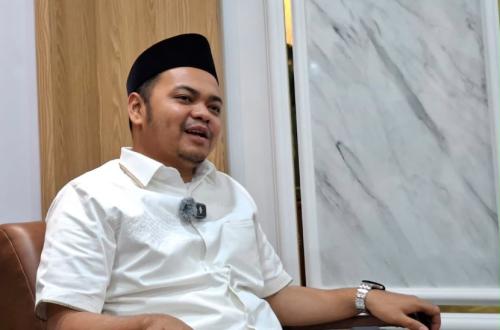
“He (Sunan Drajat) always held the philosophy of giving, giving, giving, giving. We are motivated to expand this business as much as possible to ensure educational independence,” said the Director of Economy at Ponpes Sunan Drajat, Gus Anas Al Hifni, at his office on Friday (25/9/202cap).
Gus Anas revealed that students studying at Ponpes Sunan Drajat must meet four indicators: possessing a student’s character, having an entrepreneurial mindset that is a blessing to the universe (rahmatan lil alamin), possessing a global outlook, and maintaining noble character (akhlakul karimah).
The second indicator, according to him, is something not many other boarding schools possess. In addition to deepening their religious knowledge, students at Ponpes Sunan Drajat also learn the fundamentals of entrepreneurship.
Consequently, the Sunan Drajat Ponpes Foundation has a dedicated division managing the economy to develop existing economic potential. Gus Anas has been part of this division since 2018.
From there, Gus Anas began developing the economic aspects of the boarding school. Initially, business activities relied on simple units such as cooperatives and department stores. Subsequently, the school’s enterprises continued to expand.
He introduced the simple idea that a boarding school should not merely be a place of education, but should also possess economic resources to support both education and the surrounding community. This idea aligns with the philosophy of Sunsem Drajat.
The school’s business units have grown incrementally. From trade, the business has expanded into perfumes, restaurants, livestock, garment production, salt, and even a school-run e-commerce platform. Today, the Sunan Drajat economic ecosystem has grown into dozens of business units.
This development is supported by various parties, including Bank Indonesia (BI), which assisted in the initial construction of the Sunan Drajat Ponpes Economic Building, a distribution centre (DC), and the strengthening of business management capacity.
“The emergence of other businesses began with the cooperative and department stores. And the initial initiative from BI to help us was crucial. In that sense, BI has been one of our most significant contributors,” said Gus Anas.
The results are tangibly felt in the educational sector. Currently, the Sunan Drajat Ponpes Economy can provide a subsidy of approximately Rp 16 billion per year for the school’s needs, ranging from infrastructure development and scholarships to other educational requirements.
The impact of this independent economy is felt not only within the school environment but also by the surrounding community. A direct example can be found across from the school complex, where approximately 250 MSMEs (Micro, Small, and Medium Enterprises) are connected to Sunan Drajat’s economic activities.
These MSME players purchase their trading supplies from the Ponpes Sunan Drajat department store. They also receive shopping vouchers of approximately Rp 300,000 per shop per year as part of a community empowerment programme.
Regarding the department store, the developed business model is designed to involve the community. When opening branches, the school partners with community members who own shop lots or land.
The school provides the remaining components, including working capital, human resources, operational systems, and digital management. Regarding human resources, Gus Anas ensures that the majority will be recruited from the local area.
“If we open a department store in a certain area, we can ensure that most of the staff come from that area. This is because we want to reduce unemployment. That is the essence of being beneficial,” said Gus Anais.
This partnership model has allowed Sunan Drajat’s department stores to expand significantly. The network is now reported to have reached approximately 200 branches, spreading even beyond East Java.
What Ponpes Sunan Drajat is doing aligns with Bank Indonesia’s focus on developing the boarding school economy. For BI, boarding schools possess great potential to become part of the halal value chain while driving the economy of the surrounding community.
The Deputy Head of the Bank Indonesia East Java Provincial Representative, Rifki Ismal, stated that the development of the boarding school economy has at least two objectives: first, to encourage the economic independence of the boarding school, and second, to develop the community surrounding the school.
“While the authority over boarding schools lies with the Ministry of Religious Affairs, BI develops them as part of the halal value chain, specifically for the Sharia-compliant products and businesses found within the schools,” said Rifki.
Rifki noted that the development of boarding school businesses has begun to reach international markets. He mentioned that several products from the mentored boarding schools have even successfully entered the export market.
“Some boarding schools have gone export. Their products have been exported to Japan, America, and Europe,” he added.
To strengthen this potential, BI mentors boarding schools through the Association of Boarding School Business Economics (Hebitren). Mentorship covers everything from improving product quality and standards to packaging and opening access to export markets.
Rifki stated that BI’s development of the boarding school economy has been ongoing for about eight years. In its development, these efforts have been strengthened through synergy with Hebitren. The development of boarding school business units is positioned as part of the effort to strengthen the halal value chain and stimulate a broader economy.
Source: jawawa.id (https://jawawa.id/newsitem/sunan-drajat-islamic-boarding-school-embraces-saints-philosophy-to-achieve-economic-independence-1790816019)
Originally published by Republika (https://sharia.republika.co.id/berita/tm6j0p416/ponpes-sunan-drajat-bawa-filosofi-sang-wali-menuju-kemandirian-ekonomi), translated from Indonesian