
Sun Life Asia Financial Resilience Index: Financial Security Declines Amid Cost of Living Pressures
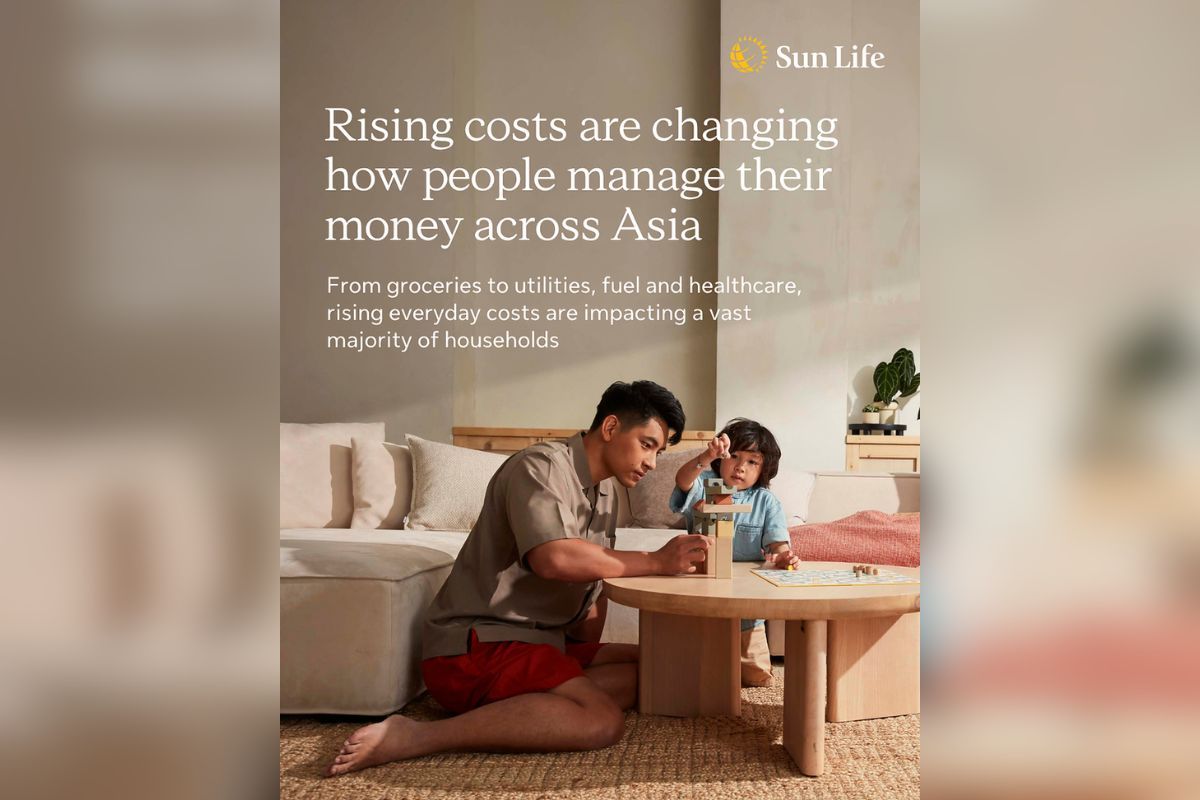
Sun Life Asia today launched its third Financial Resilience Index, revealing new insights into the impact of the cost-of-living crisis across Asia. As high inflation continues to affect the global economy, this year’s report shows that rising living costs are continuing to pressure families, weakening financial resilience and making households less prepared for the future. Budgets are severely stretched, with more than eight in ten survey respondents (83%) saying it has become harder to meet monthly expenses due to inflation.
The findings highlight the real-world impact of inflation resulting from geopolitical and macroeconomic issues, including tensions in the Middle East and consequent oil price shocks, thereby tightening family budgets. The rising cost of daily necessities is the most pressing pressure for households in Asia, with grocery prices affecting 95% of the population, followed by utility costs (94%), transport fuel (92%), cooking fuel (91%), and healthcare services (91%).
According to nearly half (48%) of survey respondents, rising costs are the biggest barrier to controlling their finances. This indicates that financial decision-making in 2026 is heavily influenced by affordability. As a result, households are making short-term sacrifices to balance their books, but these compromises are at the expense of long-term financial security and the ability to face future challenges.
David Broom, Chief Client and Distribution Officer at Sun Life Asia, said, “What stands out this year is the sheer weight of cost pressures and their effect on changing financial behaviours. Rising living costs are forcing people to rethink how they manage their day-to-day finances as the cost of food, fuel, and household bills increasingly squeeze budgets. As a result, many are becoming more focused on short-term financial decisions, and this shift is beginning to impact their financial resilience.”
Amid uncertain economic conditions, the percentage of households with strong financial resilience fell from 32% in 2025 to 25% this year. As family financial reserves dwindle, only 13% say they feel completely secure about their financial situation, down from 19% last year. This further underscores the scale of the financial impact in Asia. To cope with increased daily spending, people are making short-term financial plans and taking decisions that undermine long-term financial stability. Short-term decisions are the primary cause of declining financial resilience in Asia; one in four respondents is drawing down savings, 27% are reducing or skipping essential spending, and 10% are postponing pension contributions.
Managing day-to-day expenses is the top priority for 53% of respondents over the next 12 months, outweighing saving, investing, or long-term planning. More than half (55%) of respondents have no financial plan or only plan up to a year ahead, and 61% would not be able to survive for more than six months without external financial support if they lost their job or fell ill.
Although cost-of-living pressures are felt across Asia, the impact is not felt evenly. Financial literacy is a key differentiating factor. Those with stronger financial knowledge and skills are far more likely to feel confident about their financial situation and remain optimistic about the future despite current challenges. Households with higher levels of financial literacy tend to be more confident (by up to 48 percentage points), more likely to feel optimistic (by up to 43 points), and experience stress less frequently (by up to 14 points). This difference is also reflected in behaviour, as households with stronger financial capabilities are more likely to plan for the future and maintain long-term financial habits, while others remain focused on short-term spending.
Amid difficult economic conditions, access to financial information has significantly evolved, including the increased use of generative AI tools in financial decision-making. Around two-thirds (60%) of respondents said they regularly use GenAI tools for financial advice, compared to 18% in 2025. However, greater access to information has not yet consistently resulted in universally improved levels of financial confidence and preparedness.