
SUN Develops Green Mining Ecosystem in East Kalimantan
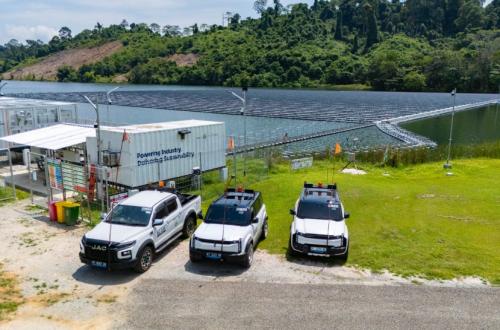
JAKARTA – The mining industry is beginning to explore electrification to reduce its reliance on diesel fuel and control operating costs. SUN, an energy and electrification solutions provider, is preparing to develop power generation capacity of up to 80 megawatts (MW), a 160 megawatt-hour (MWh) battery storage system and more than 1,000 electric vehicles to support mining operations in East Kalimantan.
The development of the green mining ecosystem was marked by a groundbreaking ceremony on 30 October 2026. The project integrates renewable energy generation, battery storage, charging infrastructure, electric vehicles and fleet management systems.
SUN Mobility Director Karina Darmawan said electrification was increasingly relevant to mining companies because reliance on diesel posed challenges involving costs, distribution and fuel supply certainty.
“For the mining industry, electrification is no longer merely a sustainability strategy; it is a business decision to improve efficiency and competitiveness. Reliance on diesel brings challenges involving costs, distribution and supply certainty. With technology continuing to advance, mining companies now have more options to manage their energy needs more efficiently and reliably,” Karina said in a press release on Wednesday (4 November 2026).
The project includes plans to use a floating solar power plant at a void, or disused mine pit, that has filled with water. Using the area is expected to add a source of renewable energy without requiring new land.
The electricity generated by the solar plant will be supported by a 160 MWh battery energy storage system (BESS). The system will store and regulate electricity supply in line with the mine’s operational needs.
For transport, SUN is preparing to expand its fleet by more than 1,000 electric vehicles. The fleet will include light operational vehicles and vehicles supporting mining logistics.
The ecosystem will also include electric vehicle charging stations, workshop facilities, maintenance services and a Fleet Management System to monitor and manage vehicle use.
Karina said mining electrification required all supporting infrastructure to be ready, rather than simply replacing diesel-powered vehicles with electric ones.
“Mining electrification is not just about replacing diesel vehicles with electric vehicles. The most important thing is to ensure the entire ecosystem is ready, including energy supply, charging stations, workshops, maintenance and fleet management systems,” she said.
The initial investment required is also a challenge for mining companies adopting the technology. To address this, SUN is offering an Electrification as a Service business model that allows companies to use electrification services without upfront capital expenditure (CAPEX), depending on the scope of services and partnership arrangements.
Under the model, SUN provides planning, infrastructure construction, technology, and operational management and maintenance. Mining companies can use the services without having to build all the electrification infrastructure themselves.
“Through a service model without upfront investment, we want to make it easier for customers to adopt electrification while providing certainty of operational support. This implementation is the first step towards broader development, including the expansion of more than 1,000 electric vehicles,” Karina said.
SUN says integrating renewable energy, battery storage and electric vehicles could reduce the mining industry’s reliance on diesel fuel distribution. Integrated management of energy and fleets is also expected to improve the efficiency of mining operations.