
Sun Bears, Orangutans, and Red Langurs Reappearing in Indonesia: What is Happening?
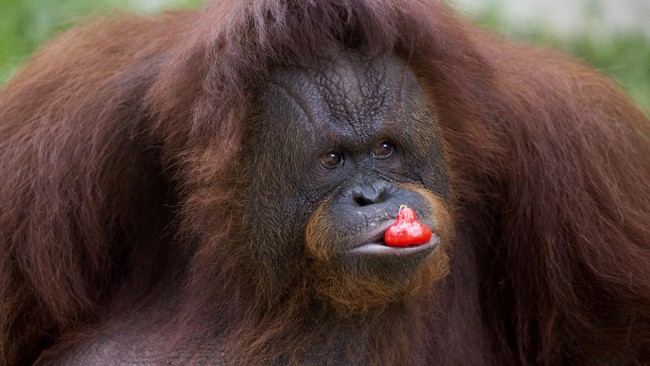
Sun Bears, Orangutans, and Red Langurs are increasingly appearing again in Indonesia; what is behind this?
Jakarta, CNBC Indonesia - Ecosystem restoration is not merely about replanting trees in areas damaged by business activities or environmental disturbances. The Society for Ecological Restoration (SER) defines it as the process of assisting the recovery of original ecosystems that have been degraded, damaged, or destroyed.
This recovery encompasses the return of ecosystem functions, ranging from species composition, community structure, and physical conditions to ecological processes.
In practice, restoration can be achieved by improving vegetation and hydrology, controlling invasive species, and reintroducing wildlife to their habitats. Therefore, one significant sign that an ecosystem is beginning to recover is when an area becomes capable of providing habitats for wildlife once again. The appearance of wildlife indicates not only that the area is turning green again but also that it is starting to function as a place for foraging, shelter, and breeding.
These recovery efforts are underway in various regions of Indonesia. Latest data from Forestix of the Ministry of Forestry shows that forest and land rehabilitation in 2024 was conducted across all provinces, with East Kalimantan recording the largest area, reaching approximately 30,838 hectares.
Sun Bears to Red Langurs Begin to be Monitored
One of the latest developments can be seen in the Nusantara Capital City (IKN), East Kalimantan. In June 2026, the IKN Authority reported that sun bears, red langurs, sambar deer, and various types of forest birds are being more frequently monitored within the Nusantara area.
According to the IKN Authority, the presence of these animals coincides with efforts to restore the natural functions of the area through the ‘smart-forest city’ concept. Parts of the Ica area were previously dominated by monoculture plantations with lower biodiversity; thus, recovery is directed not only towards tree planting but also towards rewilding, or restoring natural ecosystem functions.
From 2022 to 2026, approximately 5 million trees have been planted. Two wildlife corridors have also been constructed along the Balikpapan - IKN Toll Road to reconnect previously fragmented habitats. The connection to wildlife lies in habitat quality. Increasingly diverse vegetation can provide food and protection, while connectivity between areas allows wildlife to move more freely. Consequently, the increased appearance of wildlife can serve as a signal that the ecological functions of the area are beginning to reform, although this does not automatically mean that populations have fully recovered.
Orangutans Return to Restored Forests
A more mature example can be seen in Pematang Gadung, Ketapang, West Kalimantan.
According to Mongabay, the area suffered damage due to a major fire in 2015, which was subsequently restored through the replanting of vegetation, including fruit trees that serve as food sources for orangutans. By early 2026, approximately 300 hectares of the area had been restored with more than 150,000 trees. In 2024, camera traps recorded orangutans using the restoration area for the first time. Birds and wild boars have also begun to reappear.
This case demonstrates that restoration takes time. Trees must not only grow but also rebuild the habitat structure, provide food, and create safe spaces before wildlife can utilise them again. However, this recovery remains vulnerable. Fires struck parts of the area again in 2026, showing that restoration success can be threatened if pressures on the habitat resurface.
Why is the Return of Wildlife Important?
An ecosystem that appears green is not necessarily fully recovered. The latest 2026 standards from the Society for Ecological Restoration assess recovery based on various attributes, including species composition, ecosystem structure, ecological function, physical condition, and relationship with the surrounding landscape.
Wildlife is a vital part of this process. The presence of various fauna species indicates that the area is beginning to provide basic needs such as food, shelter, breeding habitats, and connectivity with other ecosystems. Wildlife also helps maintain ecosystem functions; some species disperse seeds, assist in vegetation regeneration, control other organism populations, and serve as part of the food chain.
Therefore, the success of restoration cannot be measured solely by how many trees are planted or how much area has turned green. More importantly, it is whether the ecosystem is once again capable of performing its functions and sustaining life in the long term.
Source: jawawa.id (https://jawawa.id/newsitem/sun-bears-orangutans-and-red-langurs-reappearing-in-indonesia-what-is-happening-1788267356)
Originally published by CNBC Indonesia (https://www.cnbcindonesia.com/research/20260901151826-128-764064/beruang-madu-orangutan-lutung-merah-ramai-muncul-lagi-di-ri-ada-apa), translated from Indonesian