
Sumitronomics 4.0: Danantara Indonesia and Investment Discipline
In the early 1950s, Indonesia faced a monumental challenge: translating political sovereignty into the capacity to produce goods, build industries and reduce economic dependence. Prof. Sumitro Djojohadikusumo, then Minister of Trade and Industry, responded with the 1951 Economic Urgency Plan and the Benteng Programme—an effort to build national industry while developing indigenous entrepreneurs.
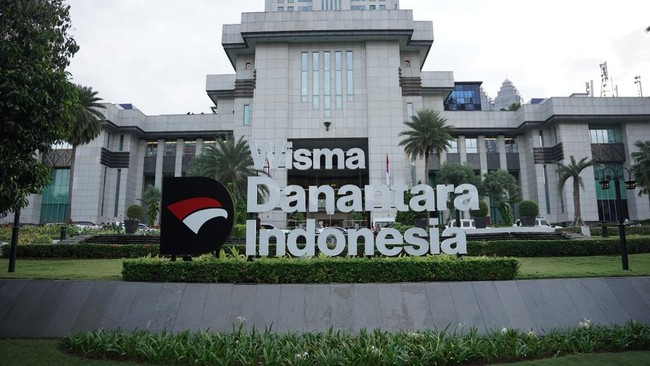
More than seven decades later, the challenge has taken a different form. The Daya Anagata Nusantara Investment Management Agency (Danantara), launched on 24 February 2025, offers an opportunity to consolidate the management of state assets and direct investment towards development priorities. But the scale of its assets does not automatically guarantee higher productivity, economic independence or public welfare.
The central question is not simply how much capital the state controls, but how that capital is allocated, how risks are managed and how benefits are distributed. This is where Sumitro’s ideas meet the realities of Indonesia’s economy today.
From the Benteng Programme to Danantara
In its time, the Benteng Programme provided support—including import licences and market protection—to strengthen national entrepreneurs. But its implementation faced serious problems. Some recipients failed to develop the capacity to run independent businesses.
In a practice known as the “Ali-Baba” arrangement, the licence holder (“Ali”) served only as a formal intermediary, while the business itself was controlled by a better-capitalised and better-connected partner (“Baba”).
This historical lesson does not mean that state intervention is always misguided. The problem lies in the design of incentives. Protection without capability-based selection, performance targets, oversight and time limits will simply encourage rent-seeking. State support should strengthen productive capacity, not create permanent dependence on government assistance.
This principle applies to Danantara. Consolidating state-owned enterprise (SOE) assets could improve investment coordination and efficiency, and strengthen bargaining power. But a much larger scale also magnifies the consequences of misallocating capital. If investment decisions are not transparent or oversight is ineffective, losses will be concentrated and ultimately weigh on the public interest.
In 1993, Sumitro said that around 30 per cent of development funds were leaking away. This figure was based on his assessment of Indonesia’s high incremental capital-output ratio (ICOR) compared with other ASEAN countries. It is therefore better understood as an estimate of investment wastage, not verified evidence that 30 per cent of the budget was stolen. Its message remains stark: large-scale investment does not guarantee commensurate results when oversight is weak.
Danantara therefore needs discipline from day one. Every project should have a clear economic rationale, realistic cash-flow projections, a risk assessment and auditable success indicators. Projects that fail to meet their targets should be improved or stopped. Being labelled “strategic” must not exempt an investment from accountability.
The entrepreneurial state and Danantara’s three mandates
Under the “entrepreneurial state” framework developed by Mariana Mazzucato (2013), the state can drive innovation by taking on risks that the private sector avoids. However, most SOE portfolios are in established sectors such as banking and telecommunications. In these sectors, the main challenges are operational efficiency and productivity, rather than simply early-stage technological experimentation. The entrepreneurial-state perspective should therefore be applied selectively.
Before considering Danantara’s mandates, the figures need to be clarified. The IMF’s 2026 projection that Danantara’s assets could reach about US$900 billion (63 per cent of GDP), with initial funding of US$20 billion, must not be mistaken for cash readily available to spend. Asset value, liquidity, cash flow, liabilities and funding capacity are different things. The public needs reporting that distinguishes assets under management, sources of investment funds, borrowing and investment returns.
Danantara must also clearly distinguish between three mandates. First, commercial investments should generate returns commensurate with their risks and cost of capital.
Second, strategic investments may accept volatility or lower financial returns, provided their economic benefits are measurable—for example, higher productivity, technological capability or stronger domestic supply chains. Third, public-service assignments should have clear objectives, funding sources and transparent compensation from the state.
Separating these mandates would prevent two serious errors. Commercial losses must not be disguised as “sacrifices for the national interest” without evidence of public benefit. Nor should public-service obligations be covertly imposed on companies in ways that obscure their financial performance.
Agency risks and safeguards
The roots of the problem are explained by the agency theory of Jensen and Meckling (1976): when owners—in this case, the public—and managers have different interests and information is asymmetric, monitoring costs and the risk of misconduct increase.
Janos Kornai (1986) adds the concept of the “soft budget constraint”: organisations may take excessive risks because they expect the state to cover their losses. Managers may reap the gains, while the public is left to bear potential losses.
Safeguards must be concrete: independent assessments of major investments, stress tests, limits on exposure and leverage, disclosure of related-party transactions, and regular reviews. The decision to stop an unviable project should be treated as part of good governance, not as a failure to be concealed.
Norway’s Government Pension Fund Global and Singapore’s Temasek offer useful comparisons, but they are not blueprints to be copied wholesale. The more relevant principles are transparency, accountability and a clear separation between commercial objectives and public assignments, as emphasised in the Santiago Principles and OECD guidelines.
The legal framework and fiscal implications
Investment discipline cannot be sustained without a legal framework and credible oversight. Law No. 1 of 2025, Law No. 16 of 2025 and Government Regulation No. 19 of 2026—which amends Government Regulation No. 10 of 2025—show that Danantara’s institutional framework continues to evolve. But formal powers do not, by themselves, ensure good governance.
The broader the managers’ authority to borrow, pledge assets or write off assets and receivables, the more important transparency and clear risk limits become. The public has the right to know the level of debt exposure and how material decisions affect companies’ financial health.
The fiscal dimension cannot be ignored either. The transfer of SOE dividends to Danantara is associated with a reduction in government dividend revenue of around 0.4 percentage points of GDP in 2025. Changing the route through which dividends are received is not merely an administrative matter: it concerns the complex relationship between investment financing, state budget revenue and risks that may ultimately fall on the state. Rules on profit distribution and the use of dividends must be transparent.
Economic democracy and measures of success
Ultimately, Danantara’s success must be measured against Article 33 of the 1945 Constitution. The envisioned economic democracy embodies the principles of solidarity, equitable efficiency, sustainability and self-reliance. Efficiency and public prosperity are not opposing goals; they must go hand in hand.
As a thought experiment, Danantara could be imagined as a “giant co-operative” in which citizens have ownership rights and a voice. The idea is a reminder that state assets should, in essence, benefit society.
However, Hansmann (1996) shows that collective ownership carries high decision-making costs, while Ostrom (1990) argues that shared management succeeds only when there are clear rules, monitoring and sanctions.
A more realistic approach is not to distribute assets to every citizen, but to broaden public participation in creating and sharing economic benefits. Danantara should ensure that SOEs build partnerships with co-operatives, micro, small and medium-sized enterprises (MSMEs), and domestic suppliers. It must be stressed, however, that partnerships must not become a source of permanent dependence.
Clearly, Danantara’s success cannot be measured solely by the value of its assets or the number of its projects. Indicators should include returns relative to the cost of capital, productivity, earnings quality, debt ratios, domestic value added, the creation of quality jobs, and verifiable economic benefits. These indicators must be reported regularly so the public can assess results, not just promises.
Source: jawawa.id (https://jawawa.id/newsitem/sumitronomics-4-0-danantara-indonesia-and-investment-discipline-1793170253)
Originally published by CNBC Indonesia (https://www.cnbcindonesia.com/opini/20261028131805-14-780167/sumitronomics-40-danantara-indonesia-dan-disiplin-investasi), translated from Indonesian