
Sumedang DPKP directs farmers to plant secondary crops amid El Niño threat
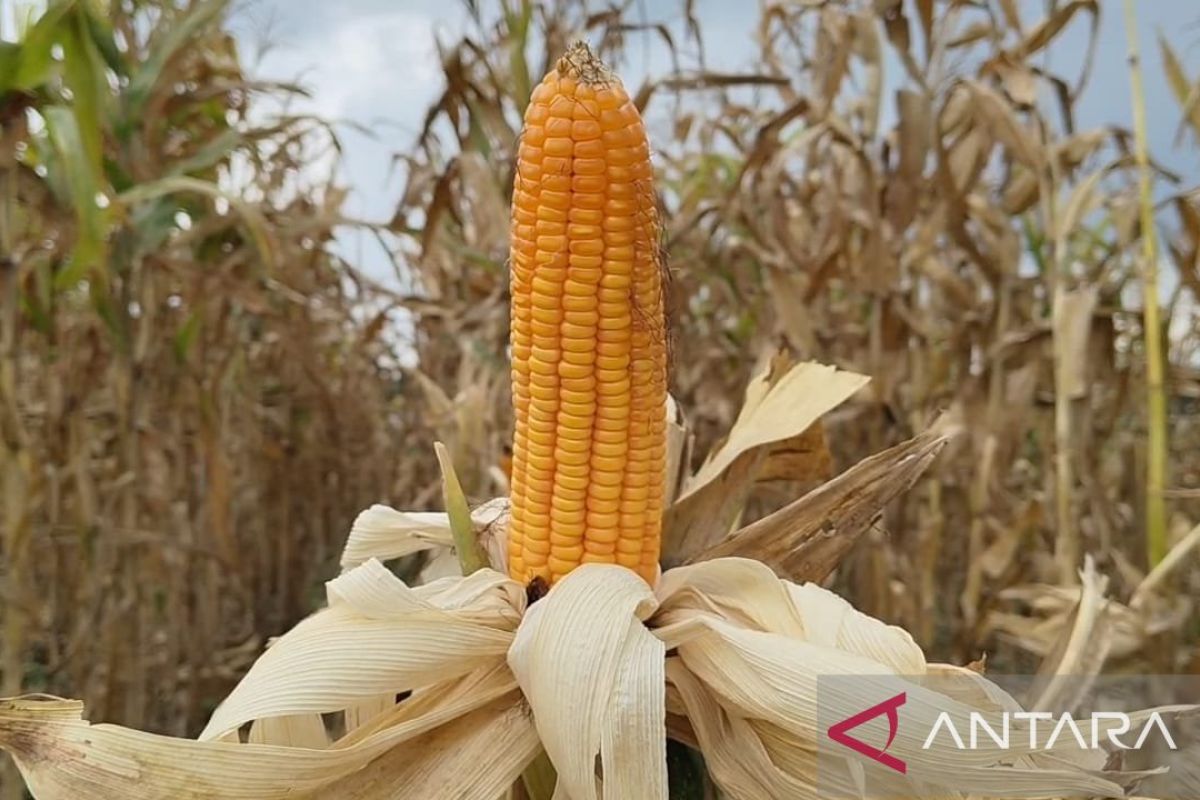
Sumedang (ANTARA) - The Food Security and Agriculture Office (DPKP) of Sumedang Regency, West Java, is directing farmers to adjust their planting patterns by cultivating secondary crops (palawija) to sustain food production in the face of potential El Nino or a prolonged dry season.
Iwan Gustiawan, Head of the Food Security Division at the Sumedang DPKP, said the planting pattern adjustment is based on regional mapping, the crop index (IP) and water availability so that farmers do not face the risk of harvest failure.
“If paddy fields rely on only one harvest per year, the risk is naturally greater. Farmers are being encouraged to adjust their planting patterns — where possible, they can harvest twice or plant other commodities that are more resistant to the dry season,” he said in Sumedang on Tuesday.
He explained that the regional government carries out food vulnerability mapping every year to determine which areas are suitable for rice and which are better suited to other commodities requiring less water.
“In Jatinunggal, for example, some areas fall under crop index one, so we direct them to other commodities. Farmers do not need to force it, as it must accord with the mapping,” he said.
According to Iwan, when rainfall is low, farmers can switch to secondary crops such as maize, sweet potato and cassava, so that food production continues whilst also protecting farmers’ incomes.
According to data from the Sumedang Regency Statistics Agency (BPS), the regency’s shelled maize production in 2025 reached 79,565 tonnes, whilst cassava production stood at 88,575 tonnes according to regional food data.
Meanwhile, sweet potato is one of Sumedang’s flagship commodities, notably through the development of Cilembu sweet potato, cultivated across some 460 hectares with production of around 7,820 tonnes per year.
These secondary crop outputs are seen as worth continued promotion, so they can serve as alternative commodities in maintaining farmers’ economic productivity through what is forecast to be an extended dry season.
Iwan said crop diversification forms part of the regional government’s climate change strategy, giving farmers alternative commodities when land conditions do not support rice cultivation.
“What matters is that food production continues. If water conditions do not allow for rice, it can be shifted to more suitable commodities,” he said.
Beyond encouraging crop diversification, the Sumedang DPKP is also strengthening the Regional Government Food Reserves (CPPD) as an instrument to safeguard food availability during production disruptions or emergencies.
The regency’s CPPD stock currently stands at around 321.1 tonnes of rice, above the minimum regional food reserve requirement of roughly 220 tonnes.
He explained that the CPPD can be used for natural disaster response, food vulnerability situations and other emergencies, with distribution based on proposals from villages which are then verified through the sub-district and relevant officials.
Source: jawawa.id (https://jawawa.id/newsitem/sumedang-dpkp-directs-farmers-to-plant-secondary-crops-amid-el-nino-threat-1785228963)
Originally published by Antara (Indonesian) (https://www.antaranews.com/berita/5669185/dpkp-sumedang-arahkan-petani-ke-palawija-hadapi-ancaman-el-nino), translated from Indonesian