
Sumbawa Regent: BRIN Research to Form Basis of Indigenous Peoples Policy
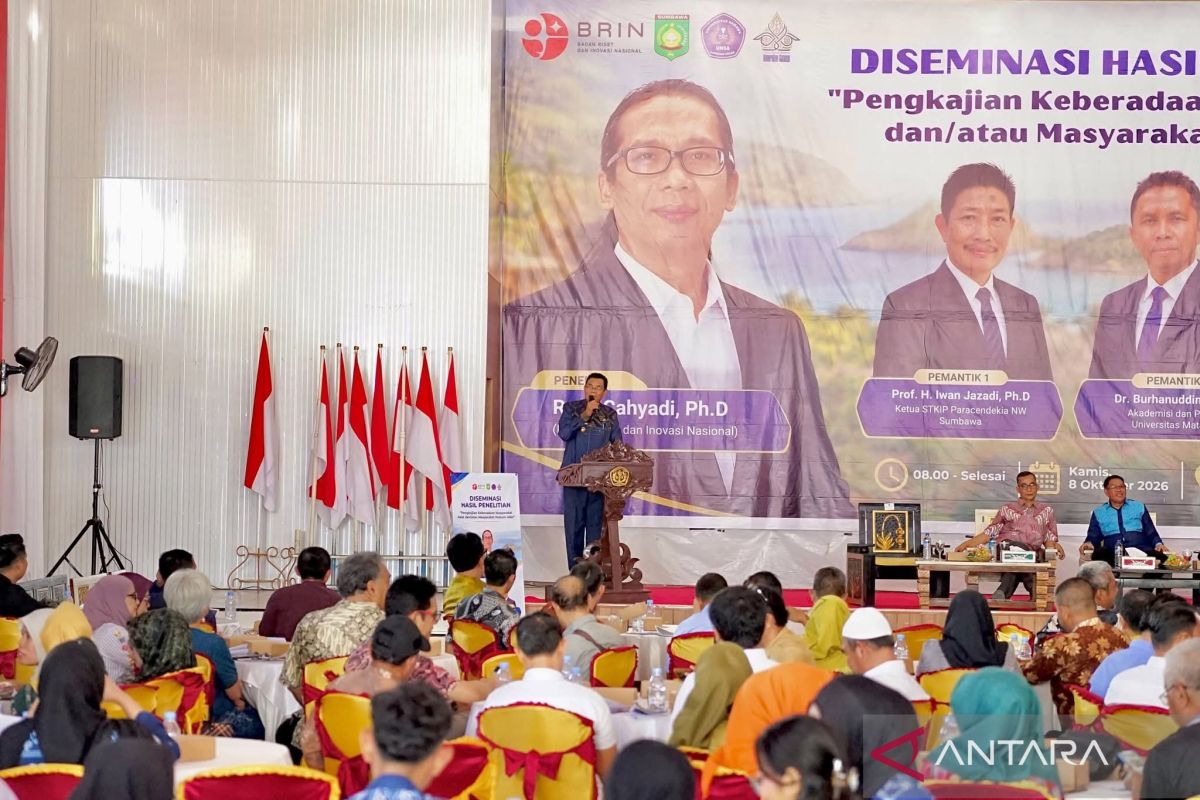
Sumbawa Regent Syarafuddin Jarot has called for research by the National Research and Innovation Agency (BRIN) on indigenous communities to serve as a basis for local policy, including how to address customary-law claims by the Cek Bocek Selesek Reen Suri (CBSR) community.
“Customary matters need to be studied scientifically, not on the basis of opinions, assumptions or tales, so that we can use the findings as a foundation for policy,” he said while opening a presentation of research findings on indigenous and/or customary-law communities at the University of Samawa auditorium in Sumbawa Regency, West Nusa Tenggara, on Friday.
According to the study’s executive summary, the BRIN team concluded that CBSR does not meet the legal criteria for recognition as an indigenous customary-law community under the provisions used as the study’s reference.
The research took a multidisciplinary approach, covering history, anthropology, archaeology, linguistics, geographical mapping and law.
It examined CBSR’s claims of indigenous identity, including a claim to around 28,975 hectares of land, demands for compensation of more than Rp7 trillion, and historical accounts concerning the Awan Mas Kuning principality. The issues have developed amid changing land use and mining activity in the Elang Block area.
The researchers said the evidence examined was not sufficient to demonstrate historical continuity or fulfil the elements required for customary-law community status under the legal framework used in the study.
The study also recommended reviewing Village Regulation No. 1 of 2020. The report said the regulation could not serve as a basis for establishing customary territory because it was deemed to exceed the village’s administrative authority and did not meet the required verification procedures.
The BRIN study forms part of efforts to resolve a dispute between the CBSR community and PT Amman Mineral Nusa Tenggara, which was previously mediated by the National Commission on Human Rights (Komnas HAM) in July 2023.
The Sumbawa Regency Government subsequently appointed BRIN to conduct a scientific, multidisciplinary study.
The local government hopes the findings will provide a reference for addressing competing claims and preventing prolonged social conflict. However, the research conclusions should be distinguished from a formal legal decision by the authorised institutions.
The study also recognised CBSR as a real socio-political community. Its conclusion that the community does not meet the legal criteria for customary-law status does not remove the basic rights of its members as citizens protected by law.
The research team also highlighted experiences of marginalisation, the dynamics of the mining industry and unequal power relations at local level as part of the social context. It said any response should take the community’s circumstances into account as well as the question of formal recognition.
Jarot said research on indigenous communities was relevant amid Sumbawa’s accelerating development, including plans for an integrated poultry industry, national salt production, the Samota area and large-scale mining investment.
He said development should deliver tangible benefits to local people by creating jobs, developing micro, small and medium-sized enterprises (MSMEs) and expanding economic opportunities for residents.
He stressed that investment and community interests should not be set against each other, but managed with due regard for the protection of residents, the environment and the sustainability of their living spaces.
“We do not need to set customary institutions and customary law against investment, or communities against investment. What we need is to collaborate, oversee and safeguard investment while protecting the interests of the public,” he said.
He hoped the research would not remain merely a document, but would be used as a reference for evidence-based policymaking that takes account of community interests and sustainable development.
He also linked sustainable development to the Sumbawa Hijau Lestari programme, which includes reforestation in critical areas, forest protection, restoration of areas threatened by environmental damage and carbon-emissions reduction.
Those attending included Sumbawa Regional Secretary Dr H. Budi Prasetyo; three deputy speakers of the regional legislative council and several members; BRIN researcher Rusli Cahyadi, PhD; University of Mataram researcher Dr Burhanuddin, MHum; and academics, customary leaders, representatives of indigenous communities, Komnas HAM, the Indigenous Peoples’ Alliance of the Archipelago (AMAN) and other stakeholders.
Source: jawawa.id (https://jawawa.id/newsitem/sumbawa-regent-brin-research-to-form-basis-of-indigenous-peoples-policy-1791507230)
Originally published by Antara (Indonesian) (https://www.antaranews.com/berita/5777905/bupati-sumbawa-penelitian-brin-jadi-dasar-kebijakan-masyarakat-adat), translated from Indonesian