
Sumbawa pushes blue economy centred on Saleh Bay
Sumbawa (ANTARA) - The Sumbawa Regency Government in West Nusa Tenggara is encouraging the development of a blue economy in the Saleh Bay area through the management of marine and tourism potential that involves local communities.
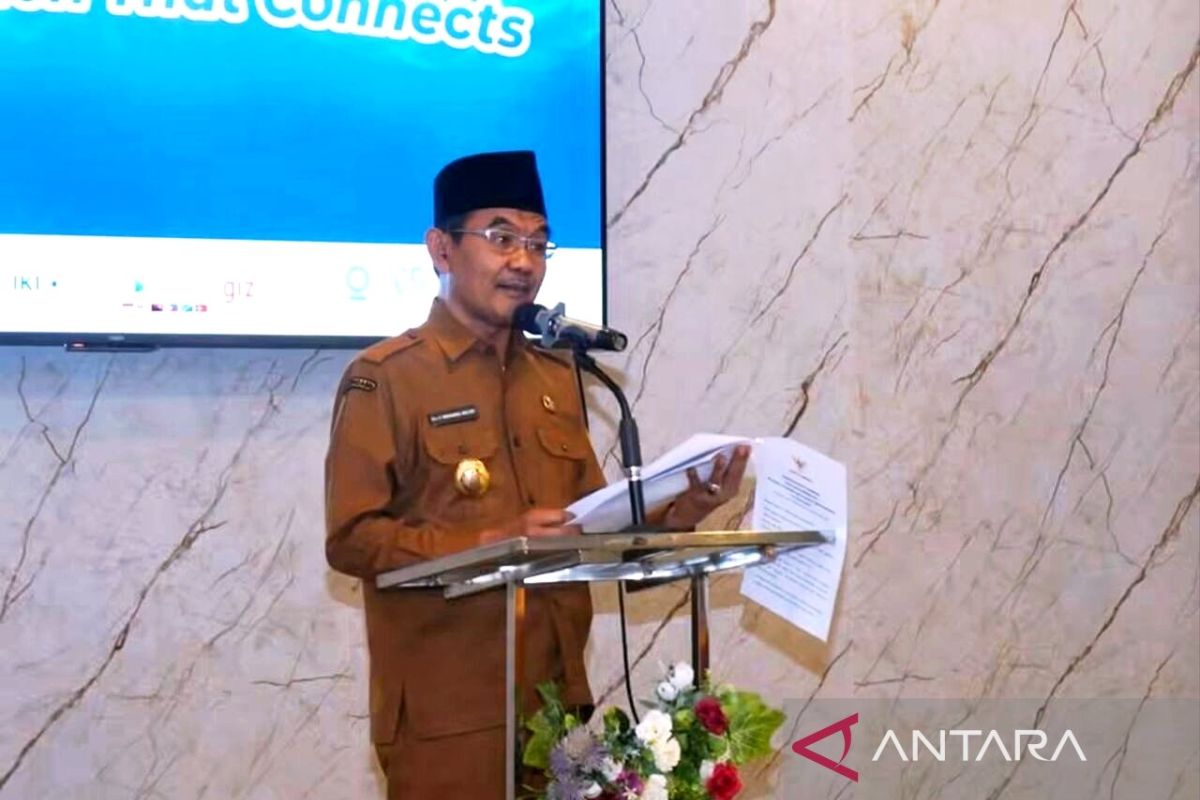
Deputy Regent of Sumbawa H. Mohamad Ansori said Saleh Bay holds great potential to be developed as a marine tourism destination as well as a source of livelihood for coastal communities.
“Conservation and community welfare are not contradictory. Both can go hand in hand and strengthen one another when managed with a community-based approach,” he said while attending The Regional Exchange event at the Sumbawa Grand Hotel hall on Tuesday.
According to Ansori, Saleh Bay covers an area of approximately 1,459 square kilometres and serves as one of the important whale shark habitats in Indonesia. A number of studies also show that the area functions as a nursery ground for whale sharks.
The presence of whale sharks represents one of the marine tourism potentials that needs to be managed with due regard to the area’s carrying capacity. Regulating tourism activities, including the number of boats and tourists as well as safe distances from the animals, is considered essential to maintaining the destination’s sustainability.
Ansori said experience in community-based tourism management has already developed in several parts of Sumbawa, one of which is Labuhan Jambu Village in Tarano Subdistrict.
The village has become a learning site for coastal area and tourism management through community involvement, with support from various parties, including the Indonesia Conservation Foundation.
In his view, this experience can serve as a lesson in developing Sumbawa’s marine potential by positioning local communities as an important part of area management.
The Sumbawa Regency Government, he continued, is encouraging cooperation between village governments, community groups, business actors, the tourism sector, conservation institutions, and development partners in developing the region’s marine potential.
Beyond Saleh Bay, the Saleh, Moyo, and Tambora (SAMOTA) area forms part of the UNESCO World Biosphere Reserve designated in 2019.
Ansori believes this status is an important asset for Sumbawa to strengthen the development of nature-based tourism while increasing its benefits for the region and its people.
He expressed hope that The Regional Exchange event would become a space for sharing experiences between stakeholders from Indonesia and Timor-Leste in managing coastal and marine resources.
“Exchanges of knowledge and experience like this are expected to strengthen the management of Sumbawa’s potential so that it delivers benefits to communities and the region,” he said.
The event brought together governments, communities, conservation institutions, and stakeholders from Indonesia and Timor-Leste to share practices in managing coastal and marine resources.