
Sumbawa Customs Collects Rp1.44 Trillion in State Revenue, Driven by Mining Sector
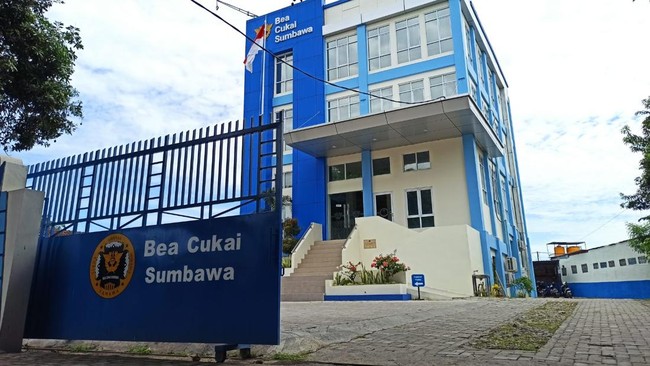
The Sumbawa Customs and Excise Office (KPPBC TMP C Sumbawa) has recorded state revenue of Rp1.44 trillion during the first four months of 2026. This figure represents more than double the annual target set by the government, equivalent to 228.1%, and has even surpassed the total revenue achieved throughout 2025.
Sugeng Hariyanto, Head of KPPBC TMP C Sumbawa, stated that the surge in revenue largely stems from mineral concentrate exports, which are still benefiting from export permit relaxations valid until April 2026. The largest contributor was Export Duty, amounting to Rp1.43 trillion, followed by Import Duty at Rp14.28 billion and Excise at Rp274 million. The high revenue was also influenced by rising global commodity prices, particularly copper concentrate, which saw an increase in the Export Reference Price (HPE) at the start of 2026.
Growing global demand for renewable energy and electric vehicles has driven up the demand for copper. This momentum has been utilised by major mining companies in the Sumbawa region, including PT Amman Mineral Nusa Tenggara (AMNT), to increase export activities. This export surge has created a significant ripple effect for the region, boosting port logistics, supporting service industries, and driving regional trade. According to BPS data, West Nusa Tenggara (NTB) Province recorded an economic growth of 13.64% in Q1-2026, the highest in the Bali-Nusa Tenggara region, driven by an 827% surge in overseas exports.
However, behind the high state revenue, significant dynamics are underway. The government is currently pushing for the downstreaming of the mining industry through the construction and optimisation of smelter facilities. Once smelters are fully operational, concentrate exports are expected to decrease gradually, and the pattern of state revenue is projected to change. This aligns with the implementation of export duties on gold commodities, which officially took effect at the end of 2025, aimed at ensuring national gold does not remain merely an intermediate export product but moves further down the value chain to strengthen the national industry.
Sugeng noted that this achievement represents a ‘windfall’ that serves as vital capital for the state during the transition towards full downstreaming. Conversely, Sumbawa Customs also faces significant supervisory challenges. Up to April 2026, officers successfully seized 626,816 illegal cigarette sticks in their jurisdiction, nearly matching the total enforcement of 689,204 sticks throughout 2025.
The massive circulation of illegal cigarettes in Sumbawa indicates that excise violations remain a serious threat to state revenue and the sustainability of the legal industry. To strengthen supervision, the office is utilising Tobacco Product Excise Revenue Sharing Funds (DBHCHT) through three main pillars: joint market operations with local authorities, public education for retailers and distributors, and the strengthening of field intelligence to map illegal suppliers in the NTB region.
Looking ahead, the Sumbawa region is expected to remain a vital hub for the national mining industry, particularly with the development of the Elang Project managed by PT Amman Mineral Nusa Tenggara (AMMAN), which is considered one of the world’s largest copper and gold deposits, alongside the potential 2 billion tonnes of gold resources managed by PT Sumbawa Timur Mining (STM). Sugeng concluded that as the industry shifts towards downstreaming, the role of Customs is no longer just about collecting revenue, but also about managing the economic transition to ensure a balance between fiscal, industrial, and community interests.