
Sumatran Orangutan Population Plummets Drastically, Experts Reveal Causes
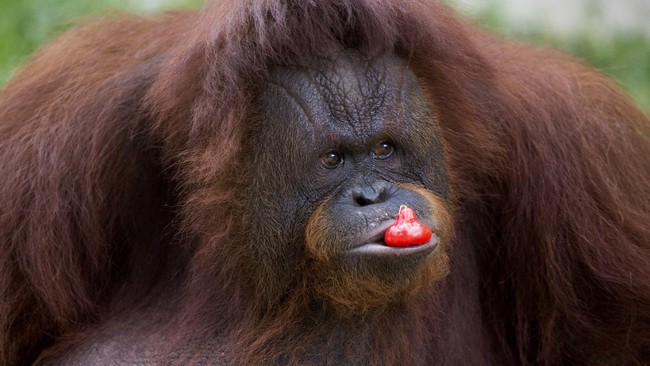
The population of the Sumatran orangutan (Pongo abelii) has experienced a significant decline over the past decade. The latest survey results indicate that numbers have shrunk by nearly 20 per cent over a 12-year period, making the existence of this endemic Indonesian species increasingly alarming.
Dede Aulia Rahman, a researcher at IPB University from the Department of Forest Resource Conservation and Ecotourism, Faculty of Forestry and Environment, stated that the situation must be treated as a conservation emergency. He noted that based on survey results from the 2021-2023 period, the Sumatran orangutan population is estimated to be around 11,694 individuals, a decrease from approximately 13,846 individuals in 2011.
Using comparable methods and observation areas, the Sumatran orangutan population was recorded to have shrunk by about 19.5 per cent over 12 years, or an average of 1.8 per cent annually. The largest population centre remains in the Leuser Ecosystem Area (KEL). This area supports around 84 per cent of the Sumatran orangutan population, making the sustainability of the KEL a crucial factor for the species’ future. A more worrying situation is occurring for the Tapanuli orangutan (Pongo tapanuliensis), whose population is estimated to be only around 716 individuals spread across three metapopulations in the Batang Toru Ecosystem.
"This figure is very serious because orangutans are not animals capable of recovering their population quickly," Dede said.
Dede explained that habitat loss remains one of the main threats to the survival of orangutans. Research shows that around 76 per cent of the variation in population change between metapopulations is influenced by forest loss. Throughout 2011 to 2023, approximately 94,399 hectares of forest in the orangutan distribution area were recorded as lost. The loss of forest areas was triggered by a number of factors, ranging from plantation expansion, infrastructure development, and mining to illegal encroachment.
However, Dede stressed that habitat shrinkage is not the only cause of the continued pressure on orangutan populations. Killings due to human-orangutan conflict, poaching, illegal trade, and habitat fragmentation also exert significant pressure on the species’ survival. "It is not accurate to contrast habitat loss with killings or conflict as if they are separate threats. The two reinforce each other," Dede said.
Dede explained that habitat loss and forest fragmentation can push orangutans into plantations and human settlements. This situation ultimately increases the risk of conflict, capture, and killing of orangutans. The threat is increasingly serious because orangutans have a very slow reproduction rate. Female orangutans generally give birth to only one offspring, with an interbirth interval of about seven to nine years.
This characteristic means that orangutan populations require a long time to recover when individuals are lost due to human activity or habitat loss. Dede also warned that the risk of local extinction will become greater if habitat loss and fragmentation, as well as deaths from human activity, continue. The threat particularly looms over small metapopulations and the Tapanuli orangutan. Therefore, conservation efforts are considered necessary in an integrated manner. Some of the steps needed include halting the loss of important habitats, maintaining and restoring ecological corridors, and suppressing orangutan deaths due to human activity.
"Collaboration between the government, businesses, academics, communities, and conservation organisations is also considered important to maintain the remaining orangutan population," he explained.