
Sumatran Elephant Population Grows with Birth of Calf at Lembah Hijau Wildlife Park
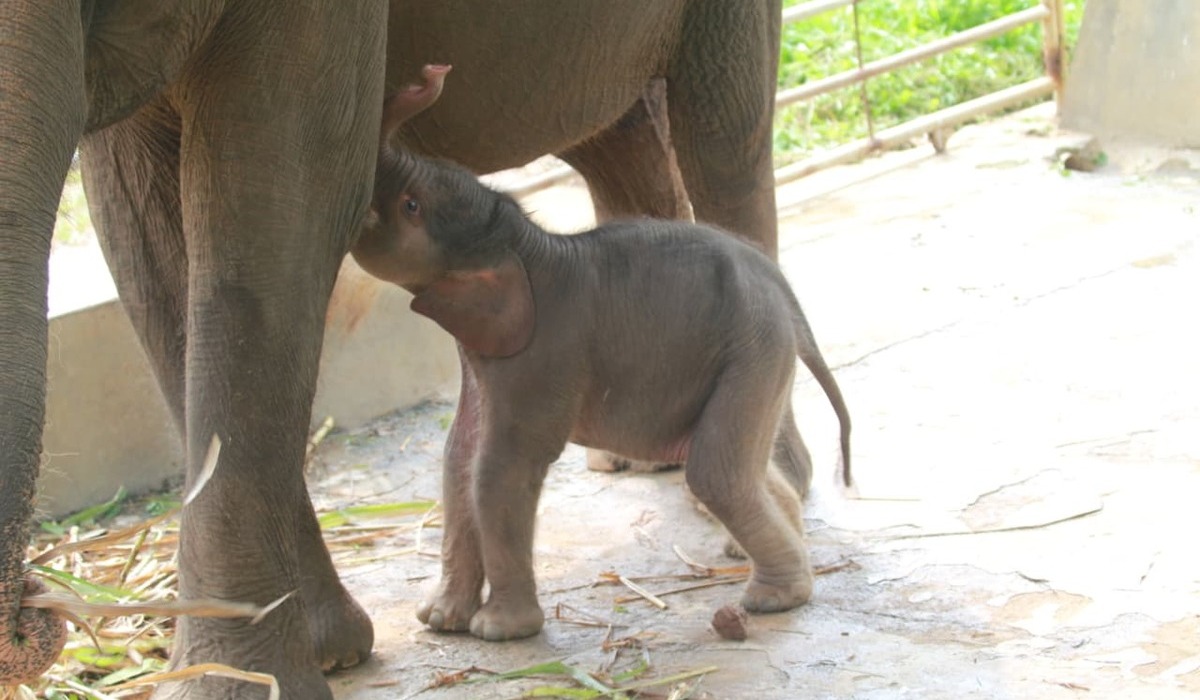
The Lembah Hijau Wildlife Park in Lampung has again recorded success in its conservation programme with the birth of a female Sumatran elephant calf on 5 June 2026. The calf, weighing 123 kilograms, is the second offspring of breeding pair Aris (29) and Mega (27). The birth increases the managed population of Sumatran elephants and represents an important milestone in the sustainable breeding programme for this rare species.
Lembah Hijau Wildlife Park President Commissioner Irwan Nasution stated that the success demonstrates the institution’s commitment to supporting Sumatran elephant conservation through ex-situ programmes. “The birth of this elephant calf is tangible proof of Lembah Hijau Wildlife Park’s commitment to supporting Sumatran elephant conservation. We will continue to improve management quality, care, and breeding programmes as a real contribution to Indonesia’s rare wildlife conservation efforts,” Irwan said in an official statement. The calf is currently in healthy condition and continues to be monitored by the mahout team and medical staff to ensure optimal growth and development.
Appreciation was also conveyed by the Head of the Bengkulu Natural Resources Conservation Agency (BKSDA), Agung Nugroho. According to him, the successful birth demonstrates the synergy between conservation institutions, professional staff, and wildlife managers in supporting Sumatran elephant conservation. “We welcome the successful birth of this Sumatran elephant calf and the consistency of Lembah Hijau Wildlife Park in supporting the conservation programme. This success shows that synergy between conservation institutions, professional staff, and wildlife managers can make a positive contribution to Sumatran elephant conservation efforts in Indonesia,” he stated.
Forestry Minister Raja Juli Antoni noted that efforts to save Sumatran elephants are not only carried out through habitat protection and handling human-elephant conflict in the wild, but are also strengthened through ex-situ conservation programmes at institutions that meet wildlife management standards. As a form of recognition for the achievement, Raja Juli bestowed the name “Rut” on the newborn calf. “We give the name Rut as a symbol of friendship and appreciation to the Government of Norway, particularly Mrs Rut Krüger Giverin, who has consistently demonstrated commitment and real contribution in supporting forest conservation and environmental agendas in Indonesia,” said Raja Juli. He expressed hope that Rut will grow up healthy and become a symbol of hope for the future sustainability of the Sumatran elephant population.
Director General of Natural Resources and Ecosystem Conservation at the Forestry Ministry, Satyawan Pudyatmoko, assessed the birth as proof of a successfully and consistently run breeding programme. According to him, this achievement demonstrates that conservation institutions can contribute to the preservation of protected wildlife while still prioritising animal welfare principles. “The successful breeding of Sumatran elephants at Lembah Hijau Wildlife Park is a clear example of conservation institutions’ contribution to supporting protected wildlife conservation. This success proves that the conservation function can run optimally without neglecting the principles of animal welfare,” he said. The second successful birth from the Aris and Mega pair reinforces hopes for increasing the Sumatran elephant population, both under the management of conservation institutions and in their natural habitat. The government believes that synergy between government, conservation institutions, academics, the business world, and the community is key to safeguarding the future of one of Indonesia’s protected species.