
Sumatra Disaster Recovery Task Force Chief Reports Progress
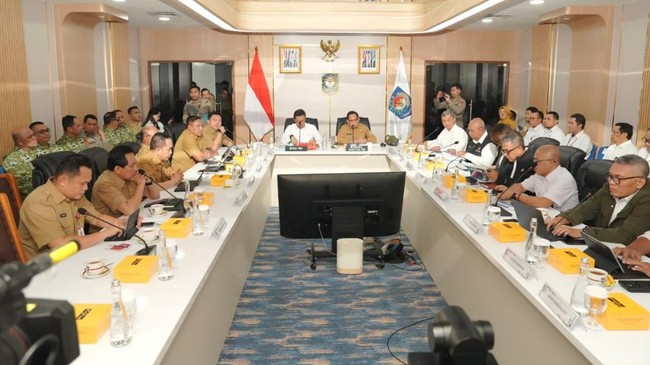
Home Affairs Minister Muhammad Tito Karnavian, who heads the Task Force for the Acceleration of Rehabilitation and Reconstruction (PRR) following the Sumatra disasters, has stressed the need to speed up work on rivers affected by sedimentation to prevent further flooding. Meanwhile, infrastructure and basic services in Aceh, North Sumatra and West Sumatra continue to recover.
Tito said the floods and landslides that hit the three provinces in November 2025 had a wide-ranging impact on people’s lives. According to PRR Task Force data as of 26 October 2026, the disasters affected 53 regencies and municipalities, 498 sub-districts, and 4,533 villages and urban wards.
Even so, the more than two million people who were displaced have now returned to their homes or other accommodation, meaning no evacuees are still living in tents.
The government is conducting rehabilitation and reconstruction in stages over three years, from 2026 to 2028, in line with President Prabowo Subianto’s direction. The programme involves 33 ministries and government agencies and is set out in a master plan comprising 11,520 activities.
On infrastructure, Tito said affected roads and bridges had generally been restored to operational condition. Repairs have been carried out jointly by the Ministry of Public Works, the Indonesian Military (TNI), the National Police and other relevant parties.
However, some regional bridges still require further work, particularly as some infrastructure has been hit again by subsequent disasters.
“On average, all the bridges and roads are now operational, apart from a few regional bridges. Everyone is working on them together—the Public Works Ministry, the TNI and the National Police,” he said, according to a written statement on Monday (26 October 2026).
Recovery is also under way in basic public services. Tito said government activities in Aceh Tamiang, which had previously been disrupted by mud deposits, were now running again.
Mobile communications services have also been restored, while most health services have resumed operations. However, six auxiliary community health centres in North Sumatra still require further attention.
Despite the progress, Tito warned that continued heavy rainfall in northern and western Sumatra was posing a challenge to the recovery effort.
Further flooding has occurred in several areas, including Padang, Solok, Central Tapanuli, Southeast Aceh, Pidie Jaya and Aceh Tamiang. Some road sections and bridges that had already been repaired have also been damaged again.
Tito said sedimentation in affected rivers was one factor increasing the risk of renewed flooding. Of the 137 rivers targeted for normalisation across the three provinces, sediment deposits have reduced their capacity and flow, meaning intense rainfall could cause them to overflow.
“When there is a lot of sediment and heavy rainfall, the water spills over and causes flooding. That means there are continuing follow-on disasters, and we are working to address them,” he said.
Tito has therefore asked the Ministry of Public Works to accelerate work on rivers affected by sedimentation as part of efforts to reduce the risk of further flooding. Faster action is needed to prevent repeated infrastructure damage and ensure rehabilitation and reconstruction proceed more effectively.
He said the PRR Task Force, working with ministries, government agencies and local administrations, would continue to oversee the programme to ensure it stays on track and delivers tangible benefits to communities affected by the disasters in Sumatra.